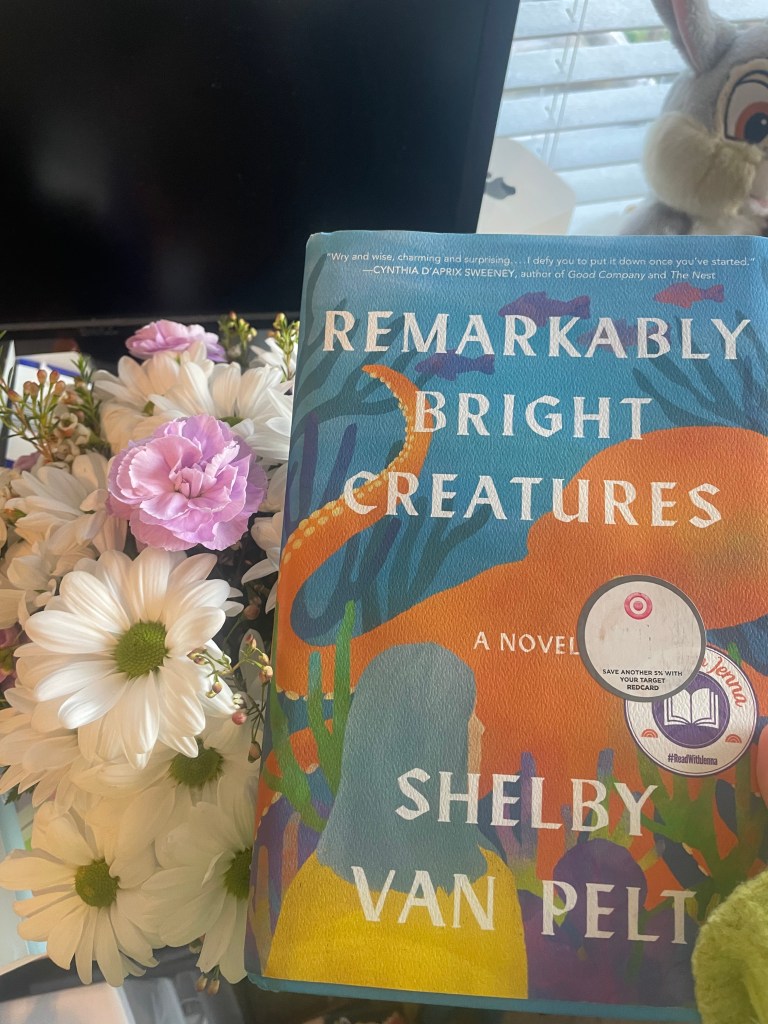
‘Remarkably Bright Creatures’ Review

“Remarkably Bright Creatures by Shelby Van Pelt is a heartwarming novel about unlikely connections and healing from loss. It follows Tova Sullivan, a lonely widow who works the night shift at an aquarium in a small Washington town, where she befriends Marcellus, a remarkably intelligent giant Pacific octopus. Still grieving her son’s mysterious disappearance decades earlier, Tova finds her life unexpectedly intertwined with Cameron, a young man searching for his identity. Narrated in part by the witty and observant Marcellus, the story explores themes of grief, friendship, and the surprising ways lives can intersect and transform.”

I would definitely say the characters are the best part of *Remarkably Bright Creatures*. I loved Marcellus as soon as we were introduced to him, and I honestly wished we had more of him as a character. All these characters feel extremely real; they could be you or people in your life. They are living real lives without the spectacular instances you usually see in books, but it also shows how remarkably beautiful our lives are because of some very simple things and highlights the importance of the relationships we have. If you’re a fan of the found family trope, oh my gosh, you need to pick up this book because it is the perfect example of that trope. My only issue with the characters was with Cameron; honestly, I think he should’ve been aged down a little. He was very immature for being in his 30s, and some of his plotlines seemed pointless. I didn’t really like how his character arc was handled, but we do have to remember this is a debut book from the author.

I really liked the setting of *Remarkably Bright Creatures*. The town of Sowell Bay is painted so well; it’s another trope for those who are fans of small towns, and I do think you will enjoy this setting. Again, we’re seeing just normal people in normal settings like an aquarium, a grocery store, and a paddle shop. There was one weird instance, though—I could be wrong on this—but early in the book, with Cameron’s plotline, I was pretty sure it mentioned that we were in Merced, California, and later it’s constantly referred to as Modesto. I was picturing the Bay Area, but no, we’re in Central California. Again, maybe this is just something I missed or it could be a typo.

The writing was good; there weren’t any real standout moments for me, but I do think the story was conveyed well. Again, I really loved Marcellus’s chapters and just how clever they were. The only time I really struggled was with Tova’s chapters. I don’t know if it was just my headspace at the time, but during her chapters, my mind would wander off a lot. Everything wrapped up nicely at the end.However, I have no complaints about the writing whatsoever. It was good.

Now, this is not a plot-heavy book, as I stated in the first paragraph of the review. This is a character-driven story, but don’t go in thinking it’s going to be boring or that not much is happening. While not a lot is happening, I love focusing on the relationships between these characters and how you can be of different ages—you could be 30 or you could be 70—but still have the same struggles in life. Life, with all its emotions and experiences, isn’t one linear thing; it’s different for everybody. At the end of the day, we are all human—or maybe one of us in this book is an octopus! 

It was such a beautiful story of finding yourself, and that can happen at any age. Don’t think that just because you’re in your 20s and you haven’t found yourself yet that you’re a failure; you have your whole life to do so. Don’t beat yourself up. This is a story for misfits, animals and humans alike, about how you might feel like you don’t fit, but one day you are going to find that group of people you just click with. 

Another thing I loved was how animals can bring people together, even if they don’t necessarily mean to, just by being themselves. Maybe we need to be more like that as humans. Now, let’s talk a little bit about the intrigue. I did predict a lot of what would happen in this book, but I’m not upset about it because the author sprinkled in little instances early on in the story—Easter eggs—that didn’t really click into place until later, when I thought, “Oh my gosh, how did I miss that? I should have known this plot was going to unfold the way it did!” 

Even if I did predict it, the Easter egg work was fantastic. I do wish I had felt a little more emotional pull towards the story and its characters. Again, this could just be a me problem; the week I read this book was one of the craziest weeks of my life, filled with so many outside emotions, and maybe I wasn’t fully engaging with my reading. 

However, I really enjoyed this book, and it’s probably the one I found closest to the works of one of my favorite authors, Fredrik Backman. So definitely, if you like his books, give this one a go. I think it will be a great summer read. Also, the paperback came out recently. This was the highest rated contemporary fiction book on my TBR according to Goodreads. I loved this book and would recommend that you pick it up!

4 out of 5 stars

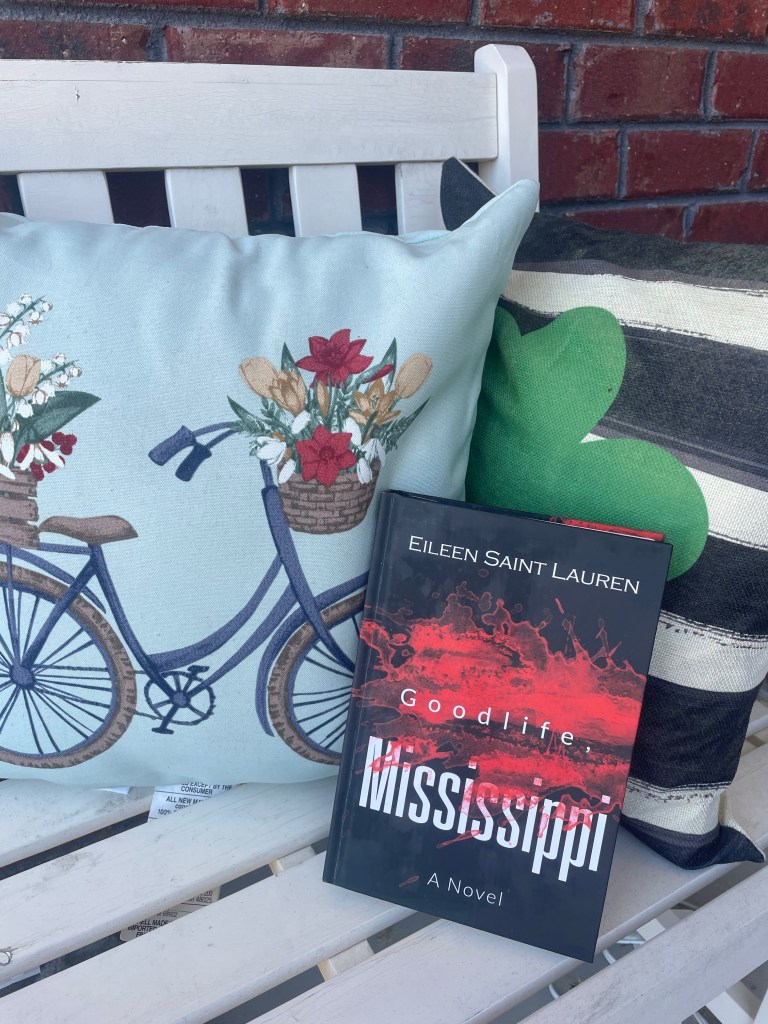
‘Goodlife, Mississippi’ Book Review

​”Goodlife, Mississippi by Eileen Saint Lauren chronicles the formative years (1950–1962) of Mary “Myra” Boone, a young girl of uncertain biracial heritage growing up in the fictional town of Goodlife, Mississippi. Born to a deaf moonshiner father and a mother who chose love over social standing, Myra navigates a life marked by poverty yet enriched with dreams, love, faith, and a cast of eccentric characters. Her deep-seated aspiration to meet Ray Charles Robinson serves as a guiding light through her adversities. The novel intertwines elements of magical realism and the supernatural, painting a vivid portrait of a young woman’s resilience and her journey toward self-discovery amid the complexities of Southern society in the 1950s and ’60s.”

I really loved the character of Myra Boone. She’s a young, innocent, naïve girl growing up in the South during the Jim Crow era. Her innocence is striking as she witnesses all these awful things happening, not fully understanding why they occur or why her family might be targeted. It’s incredibly impactful to see the world through the eyes of a child, as their minds are so simple and pure. I honestly believe children can change the world.

The atmosphere could have played a much bigger part in the story. I don’t think it was bad, but I don’t believe the author utilized it enough. As I mentioned, this story takes place in the South, and by the title, you can tell it’s set in Mississippi. It really reminds me of The Little Friend by Donna Tartt, with its Southern culture. While you can definitely see it, it’s not as strong as in other works. One thing I loved about this book was the dialogue, as it reminded me so much of the people around me.

Again, the writing didn’t amaze me in any way, but it wasn’t bad either. I did mention that the dialogue was really good, and I stand by that. Additionally, this had a fever dream quality; at times, I found myself thinking, “Whoa.” There were some crazy sequences that got a bit confusing, but not enough to hinder my reading experience.

This was definitely more of a character-driven story, showcasing the world at this time through the eyes of a child. Another significant theme I found was imagination, particularly the importance of parents encouraging imagination in children. While I think this is very important, imagination might also lead to negative outcomes; if you get too lost in your head, you might forget or neglect some things in your real life, even if done unintentionally. 

I did find myself slightly bored at times. This is a very quiet book, and it didn’t do a whole lot for me. It would have worked better as a novella but it was a very quick read.If any of this intrigues you, I would recommend picking this book up from your library or downloading it as an e-book or audiobook. If you enjoy it, consider getting a physical copy.

2.75 out of 5.

‘Before We Were Yours’ Book Review

Before We Were Yours by Lisa Wingate is a historical fiction novel inspired by true events, specifically the Tennessee Children’s Home Society scandal. The story follows two timelines:

In 1939, twelve-year-old Rill Foss and her siblings live a happy but impoverished life on a houseboat in the Mississippi River. Their world is shattered when they are kidnapped by the Tennessee Children’s Home Society and forced into an orphanage, where they suffer abuse and separation as they are illegally adopted by wealthy families.

In the present day, Avery Stafford, a successful attorney from a prominent political family, uncovers a hidden connection between her grandmother and the dark history of the orphanage. As she digs deeper, she unravels long-buried family secrets.”


It is really a toss-up with these characters, and they were not the main point of the story, which falls back on the plot. Avery, in particular, started to become insufferable for me. She often put her nose where it didn’t necessarily need to be. Sure, it was because of her love and loyalty to her family, but at the same time, you would think that if family is so important to her, she would share her quest with them. I’m honestly shocked that this character is in her 30s and not 10 years younger, like in her early 20s. 

And, of course, as I predicted in my vlog, this book featured one of my least favorite tropes: can a female character never start the book in a happy relationship? Why are they always unsure about their relationships? This is something I have disliked about recent fiction, where there’s always a partner who isn’t what they seem to be.

Now, let’s go to our second cast of characters, set in Memphis in 1939. I didn’t feel a true connection to the Foss family, but I could definitely empathize with those children. That is the plotline that elicited the most emotion from me. You might have to suspend your disbelief with some of their antics, but I do think their story will be quite memorable.


The atmosphere was really good; it’s gritty and encompasses everything you would expect from a story set in the Great Depression era. This is also a very Southern story, with a lot of Southern culture woven throughout the book. I’m not necessarily going to say it’s something you can really view as a southerner, because this is a well-to-do, politically influential kind of family. Nevertheless, it presents your stereotypical rich Southern atmosphere. 

I even got some vibes reminiscent of the movie Cruella and could easily see some of that cast of actors fitting into this story if it were adapted into a movie. Another piece of media this book reminded me of was some of the works of Pat Conroy. If you are intimidated by his 500 page books, Lisa Wingate would be a good place to start. She was even a winner of one of his awards before!

The writing is very reminiscent of Kristin Hannah,if you are a fan of her books, you should check out Lisa Wingate. The only part of the writing that I had an issue with was the transitions, especially between dream sequences and real life or when moving from the past to the present. I believe the dreams or past events should have been in an italicized font rather than in the same font as the normal prose of the story.

The plot will definitely be what stands out to me the longest. This story is almost reminiscent of Mark Twain or just a classic American tale. It’s so eye-opening regarding the past and how the elite of America have operated behind the scenes. It’s heartbreaking to know what happened to these children and families in the Memphis, Tennessee area.

I want to talk about several prominent themes that you will see on the pages: family and sisterhood, which resonated with me emotionally due to their relatability. Another theme I’ve been encountering lately is, like the song says, “make your own kind of music, even if nobody else sings along.” It emphasizes that you have to live your own life; you can’t live the life others want you to live. Having a hidden identity and keeping secrets is not a way to live, and that must say something about the world we’re living in and the society we inhabit if it keeps coming up in the books I’m reading. Perhaps it’s just a theme I’m drawn to.

One last thing about the plot: I love how Lisa Wingate can take these historical stories and connect them to modern times, because that’s what history is—it’s connected to us and always will be.

The intrigue was definitely the best part of the story. I was making theories all throughout, and even at one point early in the story, I came up with the right theory. However, it felt a bit out there in my head, so I kept coming up with other theories as I read. If you like mysteries, you might enjoy this one because you’re trying to uncover how these two timelines are connected and who these people really are. 

As I mentioned before, with the logic of the book, you are going to have to suspend your disbelief just a little bit, as it’s crazy to think that children were able to do some of these things, even if it was 90 years ago. Overall, I thought this was a good book. It’s not my favorite, and definitely not my favorite by Lisa Wingate, but she’s an author I will keep coming back to. She tells good, unique stories that highlight instances of history that seem to have been forgotten by the masses. I would recommend giving this book a go.

3.5 out of 5 stars.

‘Iron, Fire and Ice’ Book Review

Iron, Fire, and Ice by Ed West is a historical analysis of the real-world events, figures, and conflicts that inspired George R.R. Martin’s A Song of Ice and Fire series and Game of Thrones. The book explores medieval history, particularly the Wars of the Roses, the Hundred Years’ War, and the power struggles of feudal Europe, drawing parallels between historical figures and their fictional counterparts.”

This is a great and accessible starting point for those who are fans of George R.R. Martin’s universe and want to get into historical nonfiction. This book primarily follows Western medieval history, focusing mainly on English and French history. At times, I even forgot that this was supposed to be the real history that inspired Game of Thrones, as it focuses so much on historical details with only little tidbits about the series. 

I did learn a lot, though, and I didn’t realize how much of the show, even little things like “The Rains of Castamere,” the song, are inspired by real European history. I do wish this book had been edited better. I would have preferred it to be told in a more chronological style because we would get to the 1400s, and then the next chapter would go back 200 years to the 1200s. It made me wonder why we didn’t get that information when we were discussing events based in the 1200s. 

I also noticed a few typos, so I think this book needed another round of editing before being published. However, I would recommend this book if you are a fan of the Wars of the Roses or its fantastical counterpart, Game of Thrones. This is a good little book, and you’ll learn a lot!

‘The Women’ Book Review

The Women by Kristin Hannah is a historical fiction novel that follows Frances “Frankie” McGrath, a young nurse from a privileged background who volunteers to serve in the Vietnam War. Amidst the chaos and brutality of the conflict, Frankie matures into a skilled operating room nurse, facing the harrowing realities of war. Upon returning home, she encounters a society unprepared to acknowledge the contributions and sacrifices of female veterans, leading her to struggle with reintegration and seek recognition for the women who served. The novel delves into themes of heroism, gender roles, and the often-overlooked experiences of women in wartime.”

Any and all bad things happened to our main character, Frankie McGrath. It was trauma galore. Let me tell you what she went through as a character. Frankie follows her older brother to Vietnam. She is a nurse, and at first, she’s very meek and scared of the role of a combat nurse and being at war. A traumatic event happens to a friend that awakens something in Frankie, and suddenly she is passionate and determined to get her job done in Vietnam. She realizes that she is making a difference in many people’s lives. Her tour of duty then comes to an end, and she returns to America. She’s angry, and there are so many emotions inside of her. The book then unravels all those emotions and what comes with them. Now, doesn’t that sound like a great book? It does! However, believe it or not, Kristin Hannah did not properly execute this character arc. I am honestly amazed that Hannah was the one to write this character’s story. I felt angry reading this; that middle part of the book when Frankie returns to the United States had me raging after I read it. I truly felt the emotions that Frankie was feeling, but not in a good way, as I was feeling them directed towards her. I am well aware of what war can do to a person—not from firsthand experience, but from reading and hearing other people’s stories and experiences. Frankie’s story makes complete sense of why she felt the way that she felt, but the way it was written was awful. There was a lot of telling us that Frankie felt these feelings, but not showing us. There was no real flow in how her character developed. It was all very sudden. Frankie might be one of my least favorite characters I’ve read about in 2025. She was a Mary Sue. Let’s talk about her character connections. I really could feel the chemistry between her and her romantic interests. I really loved the character of Jamie. Now, this book is called “The Women,” and women play a big part in the story. However, I didn’t feel any connection between her and her so-called best friends. There were also a lot of contradictions in those female friendships. I can appreciate that there was never any competitiveness between women in this book, and I am really happy about that, but I could not feel the connection between Frankie and her friends—only between her and her romantic partners.

Kristin Hannah is great at painting a picture in the reader’s head and dropping the reader into that landscape. I could easily picture the jungles of Vietnam, the beaches along the South China Sea, and the all-American vibes of Coronado and San Diego, as well as the more rural scenes throughout the United States. Great visuals create atmosphere, and this is also the most well-researched book I’ve read that takes place in the 1960s and 70s.

The author’s writing style may not be my favorite, but it’s still great. As I said, she does a fantastic job of creating a vivid setting. This book is nearly 500 pages, and I read it in four days. It was so fast to get through, and the plot moves at such an organic pace. I never felt bogged down, nor did I feel rushed through the story. The pacing was fantastic, and I love that because it’s something I struggled with in books like “The Nightingale.” I can definitely see improvement from her earlier historical works in this one regarding the writing style.

The plot is definitely the best thing about this book. As I mentioned earlier, the character journey is amazing; it just wasn’t executed properly. Again, I talked about how incredibly well-researched this book is. I love the research that Kristin Hannah put into it. She had the idea of writing this book all the way back in 1997, but at the time, she didn’t feel mature or equipped enough to write it. She did the right thing by keeping that idea locked in her head and waiting for the right time to write it out. I honestly respect that so much. This book paints the perfect picture of what America was like at that time and the unraveling of the American dream that was instilled in our minds back in World War II and the 1950s. People were beginning to realize that their government might not really care about them, and things might not be exactly as they seemed. 

We see all different sides of the political spectrum in this book, from conservative parents to radical best friends, patriotism, and whatever the opposite of that is. In many books about this time, you see people protesting, but I don’t think the authors really understood what they were writing. They just wanted to include that because, when people think of this time, they picture individuals with signs in Washington, D.C., and San Francisco. They don’t really realize what these people were trying to say. I love that you see all different kinds of people who are protesting: some who are not well-informed and others who are actually intelligent. 

One of the great things about historical fiction is relating it to the modern day. I think this time in history is one of the most reminiscent of what we are going through right now. There are going to be so many quotes in here about division that you can’t help but relate to the 2020s. I believe this book will be a big eye-opener for a lot of people regarding what the Vietnam War was like. This wasn’t that long ago, and there were so many instances of things I’ve heard about from family members—things they remember from that time. I got to see it on the page, and that was so cool, getting to see scenes written out of stories I had heard from my own family. 

This book showed what a huge impact the Vietnam War had on America and things that I never realized were caused by this war. A huge theme here is remembrance—remembering our veterans, not only male but female as well. This is a story of a woman who is coming to find herself in a time when women aren’t going to be just pretty things sitting around anymore; they’re not going to be objectified. They’re going to be out there in the field, saving lives and changing the world. The plot of this book is extremely powerful. I would still recommend picking up this book, but maybe give it a try at the library first.

3.75 out of 5 stars.

I would like to add a few more thoughts, although I’m not sure if this fits better with writing or plot. The book is really repetitive when we’re in Vietnam. We go through surgeries, then we’re out in the community vaccinating kids, and every time there’s a bigger issue, it’s only Frankie who’s called upon to solve it, adding more emotional burdens to her shoulders. We get the occasional fun scene at the officers’ club, and when she comes home, she has to deal with her family not approving of her actions, which leads to her being upset and having public freakouts. These kinds of situations happen over and over.

There were also some things that were unbelievable to me. For example, in the middle of a war, she can go through a tough shift, and her boyfriend can just fly a helicopter over to cuddle her through it. Maybe that could happen; I don’t know. Another point is that her friends could just pick up and come hang out with her at any moment. It’s not like they had lives of their own; they weren’t in school or had jobs. They could just fly across the country anytime Frankie was in trouble.

As I mentioned before, there are so many contradictions within the friend group and with Frankie’s character development in general.

I did find a lot of the plot points to be predictable, even minor ones, but overall that didn’t hinder my reading experience, and I still found it to be satisfying.

‘The Little Liar’ Book Review

The Little Liar by Mitch Albom is a poignant novel set during the Holocaust, exploring themes of truth, deception, and survival. The story centers on Nico Krispis, an 11-year-old Jewish boy from Salonika, Greece, known for his unwavering honesty. When the Nazis invade, a German officer exploits Nico’s reputation, convincing him to assure his fellow Jews that boarding trains will lead to safety and employment. Unbeknownst to Nico, these trains are destined for Auschwitz, leading to the demise of his community and family. Devastated by his unintended role in their fate, Nico becomes a pathological liar, while his brother Sebastian and friend Fannie survive the death camps and spend years searching for him. Narrated by the personification of Truth, the novel delves into the profound impacts of deceit and the enduring quest for redemption.”

These characters, man, I was scared that I wasn’t going to get a connection to them because we were thrown right into their stories. We are dealing with children during the Second World War and one Nazi. We have Nico, who is so pure that it would tug at my heartstrings. Nico’s brother is Sebastian, and Sebastian is coming of age in a world that is a hellscape. Believe it or not, I think Sebastian is the character that I cared for the most and felt the most for; he really had so much put on his shoulders and had to grow up quickly. Next, we have their friend Fannie. All these characters have layers of guilt that they have to deal with, and we see how everybody handles situations differently. Lastly, among our human characters, we have Udo Graf, who is a high-ranking Nazi. Let me tell you, Udo is a psychopath. However, I found his sections so intriguing, just to see how somebody’s mind can work like that, how someone can be fine sending innocent people to these brutal concentration camps like Auschwitz. These are great, unforgettable characters, and we follow this huge journey of their lives and how they intersect through the decades to come. I almost wish that this book were longer, and we got a little bit more time with these characters.

Next, let’s step into the atmosphere of the story. This is taking place in Salonika, Greece—a completely new take on the World War II setting in historical fiction. I will tell you, I do not know anything about Greece outside of the ancient and classical period. Something that gave me a little laugh was when I was looking at this book on Goodreads. I saw the shelves that people had placed it on, and Greece was one of the main shelves. I am sure this stands out in that collection of books, as all the rest are probably stories based on Greek myths and legends surrounding Mount Olympus. This one is completely new and so vivid. I have no idea how the author was able to make the setting so vivid when we are in this book for only 333 pages; it’s truly remarkable.

May I invite you to a game of pinball? That was the writing style when I was placed into the story. It was so fast-paced, almost choppy at the beginning, as we were jumping all over the place with timelines. I really struggled with that structure. I felt like a pinball being shot around the gaming machine. In all honesty, that’s why I feel like giving this book a 4.75 rather than a full five stars. However, I do think the writing is great. It’s so cleverly written. I was constantly scared that the author would forget about certain characters or certain plot points, but the story overall came full circle by the last few pages. We are incredibly immersed in this story; you feel the anxiety, the tension, the sadness, and the despair of the brutality that the author is putting on the page. Again, that’s so incredible, especially with how fast-paced and short these chapters are. I honestly have no clue how the author did it. It was so clever and extremely fast-paced, and that made me wonder: do I really want fast-paced writing? I always complain about books being too slow, but with this one, I felt like I was being slingshotted around. However, as time progresses, I think I will probably forget about how that writing style made me feel and will just remember the impact that this story had on me.

When I read the description of this book, my jaw literally fell to the floor—a little boy sent his family and everyone he’s ever known to Auschwitz. What do you do once you find out what you did, all because of a lie told to you by someone in power? It’s mind-boggling; it’s so incredible, this life that these characters live and how they handle the consequences of their actions and words. It might be unlike anything I’ve ever read before. 

I really thought this was going to be a four-star read, or at least a high four-star read, but when we got to the last sections of the book, it was such a gut punch to me. In the earlier sections, I didn’t feel an impact from some of these extremely brutal scenes because I was just thrown right into the story, and everything was moving so quickly that I couldn’t grasp what was happening and who these people were. But once we got to those final pages, I felt dead inside, and that’s usually a sign of a five-star read—it’s just that feeling of being unable to do anything. The story is said and done, and it was an experience altogether.

Earlier, I discussed there being human characters, and you might have picked up that I made a special note of those characters being human. This story is told through the personification of truth; again, that’s so clever. The story is all about what truth is and how it impacts all of us. I think it even goes deeper than that; this is a story of humanity and what it means to be human. It really shows how everything in this world is so fragile or fickle—be it nature or other things around us. But there are a few things that all humans experience: love, compassion, longing for belonging, death, tragedy, grief, and most of all, truth. Some of those things we don’t desire, but they are inevitable. We will most likely experience all of those aspects of life that I mentioned. Life is a cycle, and everything will come full circle. Eventually, you just have to give it time. There are consequences for all actions. Every word you say, no matter how little, has an impact on you, those around you, and ultimately, the universe.

4.75 out of 5 stars.

‘Rosewater’ Book Review

Rosewater by Tade Thompson is a unique blend of science fiction, mystery, and Afro-futurism set in a near-future Nigeria. The story follows Kaaro, a cynical and reluctant psychic working for a secret government agency. He lives in Rosewater, a city that has sprung up around a mysterious alien biodome that occasionally heals the sick and grants strange abilities to some people.

I felt no emotions from these characters. I definitely think this is a plot-driven story rather than a character-driven one. The characters did absolutely nothing for me.

 The atmosphere didn’t do a whole lot either. It is interesting to see Nigeria in a science fiction book, as previously, when I’ve read books set in that location, they were in the contemporary literary fiction genre rather than a sci-fi one. It’s kind of cool to see how modern-day Nigeria developed into the near future, as depicted in the story. However, overall, it did not do a lot for me.

 The writing was definitely my least favorite part. There are three timelines that we are following, and I had a really difficult time trying to distinguish between them. They all feature our main character going on different missions. I think this could have been improved by changing the tense throughout the different timelines, with the present being in first person and the past in third person. 

Another thing that I despised about this book was the overly sexual tone. Books can be sexual; it is completely normal and a part of being human. However, when every woman is described by her breasts or the curve of her buttocks, it becomes inappropriate and uncomfortable. Sexual themes were brought up constantly, and women were objectified in the story.

I can definitely admit when I’m the problem. I purchased this book back when it was first published in 2018, and it took me this long to read it. I think I could have enjoyed it more back then than I did now, as I am more aware of what I like in my reading. This month, I’ve discovered that I not only don’t like mysteries, but I also don’t enjoy mysteries within a science fiction setting. I don’t like stories about people going on quests as detectives or government agents; it’s just not for me. 

However, I do have to give credit where credit is due: by the last quarter of the book, the sci-fi elements become super interesting. This is unlike any other first contact story I’ve read before; it offers a real biological take on an alien invasion. As an alien lover, I’ve never thought of an invasion happening like this, but it makes a lot of sense. 

I don’t see myself continuing the series, as I felt nothing toward the characters and I hated the writing and tones of the book. If, for some reason, anything here intrigues you, I recommend picking this book up from your library, and if you like it, then consider purchasing your own copy.

1.85 out of 5 stars.

‘Fever’ Book Review

Fever by Deon Meyer is a gripping post-apocalyptic thriller set in a world ravaged by a deadly virus that has wiped out most of humanity. The story is narrated by Nico Storm, a teenage boy, as he recounts his journey with his father, Willem, who is determined to rebuild civilization from the ashes.”

The characters were fine. I liked them. I found them to be two-dimensional, though. They all had their roles and places in the story; there could have been a little more depth to them. Obviously, Nico is our most developed character, as this book is a fictional memoir of Nico’s life. This is a fictional character, giving his story something that is kind of new for me. It’s like a book within a book. Something that is unique about the story, though, is that we are seeing someone come of age in a sci-fi, post-apocalyptic setting. I think you could even relate that to the real world of somebody who is growing up in a hard situation, but this one is in a world ravaged by plague. I never really thought about what happened to kids in this post-apocalyptic subgenre, but this book really touches on that.

The atmosphere was something new to the post-apocalyptic subgenre, as this story takes place in South Africa. Those elements were really cool. When I think of dystopian settings, I usually think of America or a world that is so unrecognizable. I like to see the spin of the story set in a different country. However, by the end, I had a lot more questions about this world, and even though this book is over 500 pages, I wanted a little bit more.

I actually did fairly enjoy the writing style, even if it’s not my typical taste. There was a lot of wisdom and intelligence on these pages. I highlighted and tabbed many of the quotes so I could save them to think about later. There was a lot of telling rather than showing, and that did kind of bother me, but I have to remind myself that this is a memoir—someone looking back at their life rather than being in the moment with that person. Also, around the chapters in the middle part of the book, the transitions were fantastic, moving from the history project to Nico’s narrative. I keep mentioning that this is a fictional memoir, but that had a huge impact on my reading experience. I never felt too worried about our characters since I knew that they lived, as we have them looking back and telling the story. I never felt anxious or on the edge of my seat.

There is always going to be one part that is a little bit tricky, and with “Fever,” it is the plot, which feels somewhat surface-level. This brings nothing new to post-apocalyptic pandemic novels; it’s your typical story of a plague with only a select group of people alive, trying to survive in a world full of raiders and humans acting like monsters. However, there are some pretty good themes here, the main one being community. What makes a community? We see these people build a community after this tragic plague took over the world. It almost reminds me of the dawn of time when civilization was forming. I wrote in my notes that the story almost feels ancient. Yes, the author brings up Rome quite a bit, and even books like “Sapiens” by Yuval Noah Harari. It just feels ancient in exploring what makes a community, what makes a civilization, and what makes a human, human. 

Another big theme is the resilience of humans and how we will work ourselves out of these bad situations because, at our core, we are just trying to survive in this world. I really thought I knew where this book was going to go, but it became unpredictable towards the end, and I really don’t know how I feel about the ending. I don’t think it was bad, but I just needed more development with it, and again, this book is already over 500 pages. Did we waste some of those pages? I’m not sure. This is a fine book. I think if you haven’t read a lot of post-apocalyptic books, it could be a good place to start, but for someone who really enjoys a good plague novel, it didn’t bring anything new to the table for me. I’d recommend checking this book out from your library.

3.25 out of 5 stars.

‘Leviathan Wakes’ Book Review

Leviathan Wakes by James S.A. Corey is the first book in The Expanse series, blending space opera with noir detective fiction. Set in a future where humanity has colonized the Solar System, the story follows two main characters: James Holden, the idealistic executive officer of the ice hauler Canterbury, and Detective Joe Miller, a grizzled investigator on Ceres Station.”

This is not a character-driven story for half the book; that’s such an odd statement that I’ve never really had to write for a review. The chapters with Holden as the main character are plot-driven, while our chapters with Miller are character-driven. Let me explain: with James Holden, when we are introduced to his plotline, we are introduced to his whole crew all at once. For me, that is extremely overwhelming to be introduced to a handful of characters within a few pages of each other. It’s especially bad when the majority, if not all, of those characters do not develop throughout the course of a nearly 500-page book. Miller is like a lone wolf, so you’re really in his head a lot, and I think the depiction of mental health and PTSD was done fantastically in this book, as it’s something that you see a lack of in science fiction and fantasy genres, even though these characters are going through really messed-up and war-like situations. I do want to say you can definitely tell that this book was written by men, as all the female characters are there for the sake of the males having some sort of romance. You could still have that Phoebe plot without the romance and there was no chemistry between Holden on his love interest. That guy was falling for every woman. I hate to have to write that, but I couldn’t help but pick up on that throughout the book, and I just know some men are going to be offended by that comment. Sorry, not sorry.

The universe said this was sudden, which was super cool. This isn’t some make-believe galaxy; this is the galaxy that we are living in right now as humans. The author does take into account science and how gravity, or the lack thereof, impacts people’s bodies. Of course, that’s going to lead to all sorts of things like xenophobia and racism, even though we are in outer space and not on Earth.

I have no real complaints about the writing. It didn’t impact my reading experience one way or another. There were some cringey lines every now and then, but I do have to remember that this book was published 14 years ago, and some of those lines might have passed back then.

I do like the idea of the plot, how this is genre-bending, as this is a mystery noir story set in a sci-fi environment; it is definitely something unique. There’s one problem, though: I was confused throughout, especially in the second half of the book. We would get a lot of science and physics talk at once, and a lot of that went right over my head. I also spoke about the characters, and for half the book, we didn’t have a whole lot of character development, if any at all. If I do not connect with the characters as a reader, I’m not going to care about what is happening in the plot, and by the last chapters of the book, all of it felt kind of pointless to me. I can admit there was a lot of logic for the science, but with other aspects, I think there was a lack. I didn’t really care where the story went, and as you can tell, I will not be continuing the series. This year for my TBR, I am making a list of the highest-rated books on my TBR, and this is the highest-rated science fiction book according to Goodreads that I own. Now I’m kind of scared of this challenge that I’ve set up for myself. This book didn’t do a whole lot for me. I wouldn’t really recommend it, but as always, if this sounds intriguing to you, pick it up, but maybe try from the library first.

2.25 out of 5 stars.

‘The Covenant of Water’ Book Review

“The Covenant of Water by Abraham Verghese is an epic multi-generational saga set in Kerala, India, spanning from the early 20th century to the 1970s. The novel explores themes of family, love, loss, and resilience against the backdrop of India’s social and political transformations.”

This was a book where I didn’t hate the characters, but I didn’t love them either. For the majority of the story, I did not feel an emotional connection to the characters. However, there were times when Philipose and Elsie kind of ground my gears. I think they were supposed to be unlikable, people of their time, but it just wasn’t written correctly. However, I did love the characters of Big Ammachi and Baby Mol; some of their scenes were just so wholesome, and you could tell that Big Ammachi was so filled with love. Later in the book, it talks about how she was practically love itself. However, if we have a book that is 700 pages and I don’t feel a connection to the characters, that is definitely going to impact my reading experience.

With the atmosphere, I did learn a lot about India during the 20th century. There were instances where we had paragraphs just about the history, taking us away from the stories of the characters. This is important for world-building, but it was done in a somewhat clunky way. I can appreciate that; I did learn about this country and even about the St. Thomas Christians, which are a group of Christians in India. I was ignorant and never really thought about there being large groups of that religion in an Asian country. I loved getting to learn about the culture of that group. I would highly recommend this book to Christians because it is a great story of God and what it is like to be a Christian in a non-first world country.

The writing itself was beautiful and thought-provoking. I was underlining and tabbing so many quotes that made me think, or quotes that were just so beautifully written that I wanted to remember and make note of them. I do have to mention the clunkiness of the world-building. We have a few characters in the medical field, and there were a lot of academic and scientific discussions that went right over my head. Those kinds of scenes could have been condensed. We also have to take into account that the author is a doctor himself, and it shows on the page.

The plot was fantastic and exactly the kind of book that I’m drawn to; my favorite author even did a blurb on the cover of the book. This is a big epic historical novel spanning the majority of the 20th century in India, focusing on a part of India that we don’t really see a lot in media. This might even be one of the first Indian books I’ve ever read. I love that during this time, a lot of the unknown is becoming known as the world advances due to breakthroughs in industry and technology, with the world overall being opened up by wars and worldwide travel. 

I do want to talk about what I think the main theme of the book is, and that is: we are all human. You might think that is quite obvious and wonder where I’m going with this, but we are all equal and trying to survive in this world. It doesn’t matter your caste, your race, your religion, or your health; no one is better than anyone else. As humans, we need to realize that and take care of one another. We need to be compassionate and empathetic. That’s not just the role of a doctor but the role of every single human being on this planet. To me, that is what the main theme of the story is: compassion and getting through life.

My jaw did drop at times, and I felt emotional, especially in chapter 62. But overall, I just had a little bit of intrigue. This book went places that I didn’t think it would go, but I was never on the edge of my seat, wondering what was going to happen. I will admit the logic in this book is fantastic. Every word on the page had meaning to the story, and the author did a great job of orchestrating this narrative. I did enjoy this book, and I think it’s going to be one that I reflect on for the rest of the year, as it was the first book that I completed in 2025. It was a five-star prediction for me, but I am ultimately giving it a four-star rating. I would still highly recommend picking up this book.