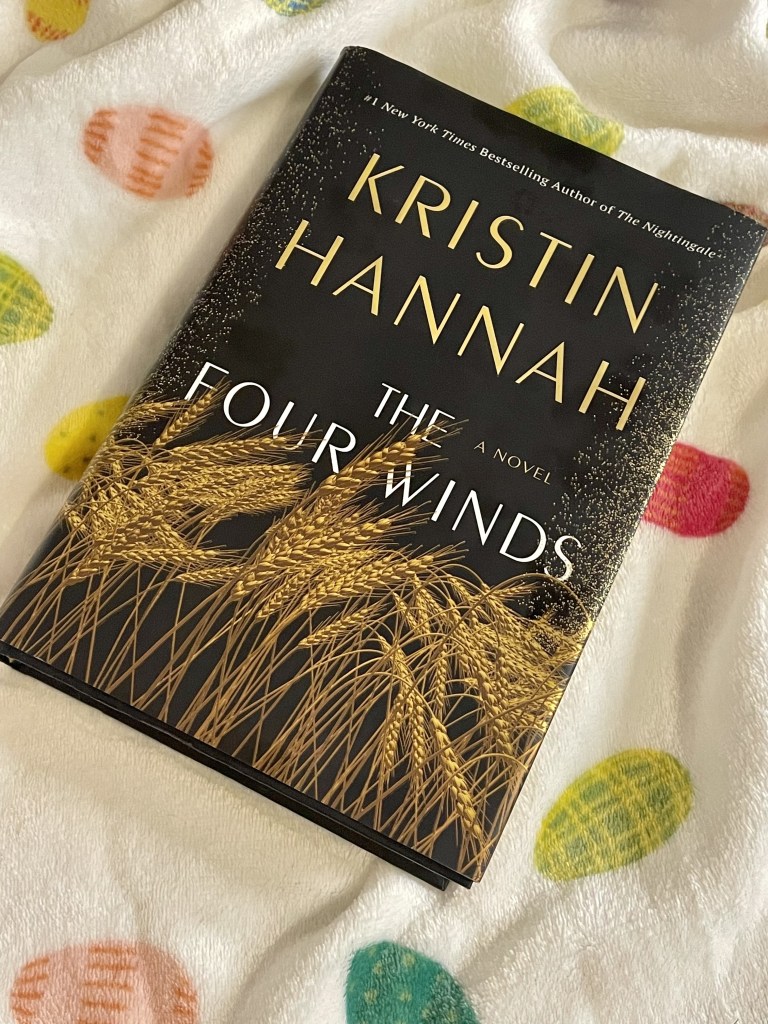
‘The Four Winds’ Book Review

“In this uncertain and dangerous time, Elsa Martinelli—like so many of her neighbors—must make an agonizing choice: fight for the land she loves or go west, to California, in search of a better life. The Four Winds is an indelible portrait of America and the American Dream, as seen through the eyes of one indomitable woman whose courage and sacrifice will come to define a generation.”

Elsa is the strongest character that I have read in a while. Her character development and journey were fantastically done. In the earlier parts of the book, she was so relatable. I am honestly stunned and left with not a lot of words as I sit here and think of the journey we went on with her character. However, there was one character who ruined the whole book for me: Loreda. When she was first introduced in the story, she was fine; I had no strong feelings towards her. As the book progressed, she only displayed negative traits. Sure, she was courageous and determined, but the bad outweighed the good here. I felt angry reading from her perspective and seeing her make things even harder for herself. In Hannah’s previous works, they left me with a gut punch. ‘The Nightingale’ was the first ever book to make me cry and also an all-time favorite book. This one, while the journeys of the characters did make me feel slightly emotional, was nothing like her previous works.

At first, I did not notice how great the atmosphere of ‘The Four Winds’ was, not until my friend pointed it out to me. The atmosphere of this book is literally hell. The scenes of the Dust Bowl left me feeling anxious and claustrophobic. When we got to the Great Depression, it left me with a feeling of despair.

The writing is what I don’t have a lot to say about. Its style or prose was just average. I had no feeling towards that aspect whatsoever.

There were so many themes presented in this novel, and they are another reason that I loved it. There is the theme of motherhood and the instincts that come along with that role. I even think this book is relevant in comparison to the modern-day border crisis. The way that so many people dehumanize immigrants, it’s awful, and this book really made me realize that even more. The main theme here is dreams: the American dream and all its variations. We see that dream in the sense of Hollywood and New York City, wanting a life like the stars. Other characters dream of basic things like love and family, things we need in life. Even more, like the Martinellis, they dream of having a better life in America than they did in Sicily, for their son and grandchildren to have the opportunities that they didn’t, like going to school. This is such a thought-provoking and reflective book. It would be a great choice for a book club so that the readers can discuss the themes.

This one, the journeys of the characters did make me feel slightly emotional but nothing like her previous works did.  At first, I did not notice how great the atmosphere of ‘The Four Winds’ was, not until my friend pointed it out to me.  Its style or prose was just average.  It would be a great choice for a book club so that the readers can discuss the themes. I loved this book but it will not be an all time favorite for me like the other works of this author.

3.85 out of 5 stars. 

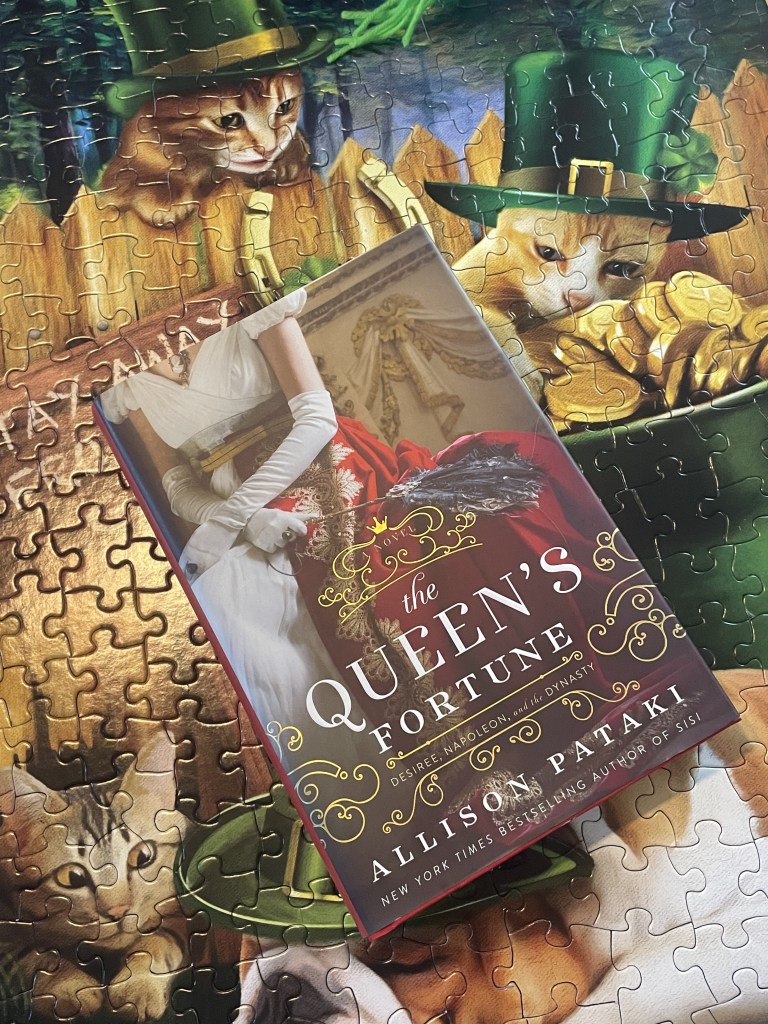
‘The Queen’s Fortune’ Review

“From the lavish estates of the French Riviera to the raucous streets of Paris and Stockholm, Desiree finds herself at the epicenter of the rise and fall of an empire, navigating a constellation of political giants and dangerous, shifting alliances. Emerging from an impressionable girl into a fierce young woman, she discovers that to survive in this world she must learn to rely upon her instincts and her heart.”

I really loved the character work presented in the novel. Desiree comes from the merchant class in post-revolution France. She soon becomes the lover of Napoleon, who falls out of love with her. She then becomes a confidant of his new empress. Eventually, Desiree ends up marrying Napoleon’s rival and becoming queen of Sweden. What a life, and to think I had never heard of her before I picked up this book. My favorite part was probably reading about the dynamics of her relationship with Josephine. Another thing I found really interesting was seeing Napoleon through the eyes of someone close to him, rather than from his own perspective. In that sense, the book reminded me of ‘Booth’ by Karen Joy Fowler.

The atmosphere was great, and the world-building was amazing, especially if you don’t know a lot about this time period, which I didn’t. I never felt lost or confused because the author put so much research into this book and its setting. Also, the early chapters reminded me of ‘The Count of Monte Cristo,’ and we see Dumas mentioned, which I thought was pretty cool.

The writing was the downside for me. This is such a long and slow-paced story. We follow Desiree for the majority of her life, but it just felt too slow for me. I think part of this was my personal problem because I had a lot of interruptions and had to put this book down for extended periods. However, I believe that if I had been able to read it continuously, I probably would have enjoyed the writing more.

The plot was pretty good. I think this was very much a character-heavy novel, which I do prefer. It was so informative, and I learned so much about a European era that I didn’t know much about before. I had no idea that the current modern-day Swedish royal family is descended from an installment of Napoleon. There is so much to be learned from the plot of the story.

I found it really interesting to see Napoleon through the eyes of someone close to him, rather than from his own perspective. In that sense, the book reminded me of ‘Booth’ by Karen Joy Fowler. I never felt lost or confused because the author put so much research into this book and its setting. However, the writing was the downside for me. Overall, there is so much to be learned from the plot of the story. This was a great book but not a new favorite.

3.7 out of 5 stars.

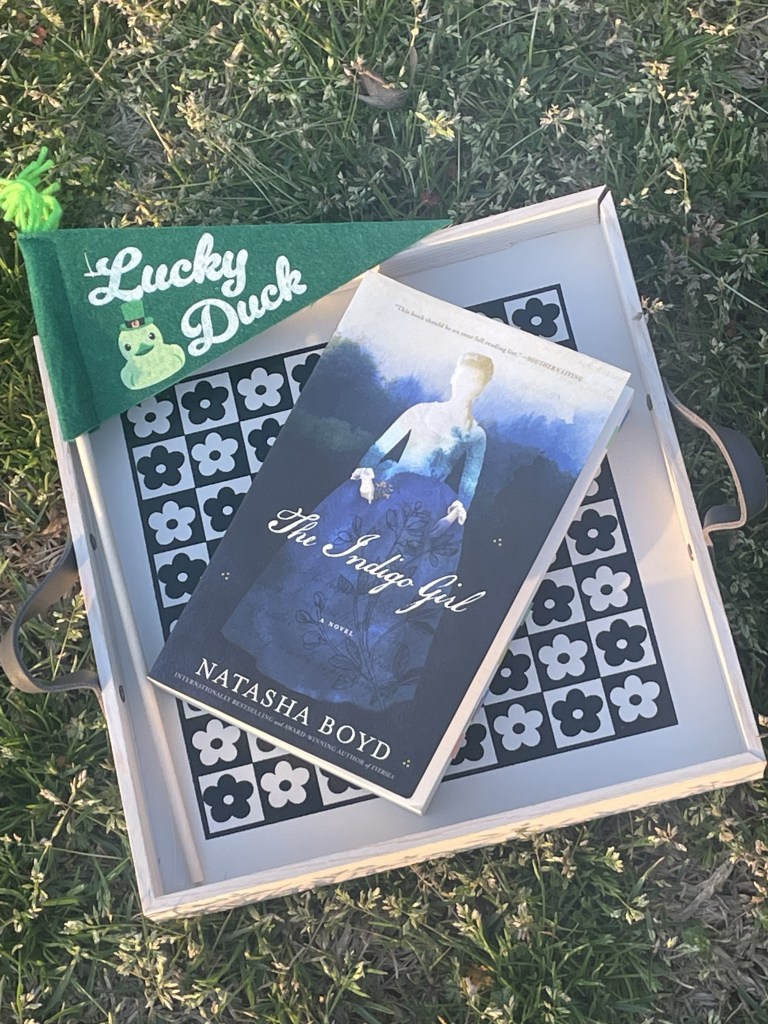
‘The Indigo Girl’ Book Review

Based on historical documents, including Eliza’s letters, this is a historical fiction account of how a teenage girl produced indigo dye, which became one of the largest exports out of South Carolina, an export that laid the foundation for the incredible wealth of several Southern families who still live on today. Although largely overlooked by historians, the accomplishments of Eliza Lucas influenced the course of US history. When she passed away in 1793, President George Washington served as a pallbearer at her funeral.

The characters, heroes and villains alike, were all one-dimensional; flat. For the first seventy-five percent of the book, I had no issue with Eliza, but by the last quarter, I did not like her. She’s another example of a Mary Sue and whines like no other when things don’t go her way. Flat characters.

There are real historical letters immersed throughout the book, and the author had the dialogue and overall personality of Eliza spot on, transitioning from historical records to a fictional novel.

The atmosphere came right off the page. The author did a great job of depicting the area of coastal South Carolina and making it easy for the reader to picture the locales of the scenes.

The writing itself was fine, but bits and pieces of the dialogue did get repeated quite a bit, even within a page of each other. Also, I wonder how many times the author used the word ‘blue’ or some variation in the book. We get it, the book is about indigo!! This book does read young, and I think it would be great for young adults to read.

As an idea, the plot sounds pretty good. On the page, it just wasn’t executed properly. I was not gripped or intrigued by what would happen next, and that ultimately led me to skim-read the last quarters of the book. This story sounds unbelievable, but it’s a real story. However, some of the plot points were unnecessary and would have caused an uproar if genders had been reversed. However, as historical fiction, I do believe this was a well-researched story.

The characters, heroes and villains alike, were all one-dimensional; flat. The author did a great job of depicting the area of coastal South Carolina and making it easy for the reader to picture the locales of the scenes. The writing itself was fine, but bits and pieces of the dialogue did get repeated quite a bit, even within a page of each other. However, as historical fiction, I do believe this was a well-researched story. Overall, this book didn’t do a lot for me, and I really wouldn’t recommend it

3 out of 5 stars.

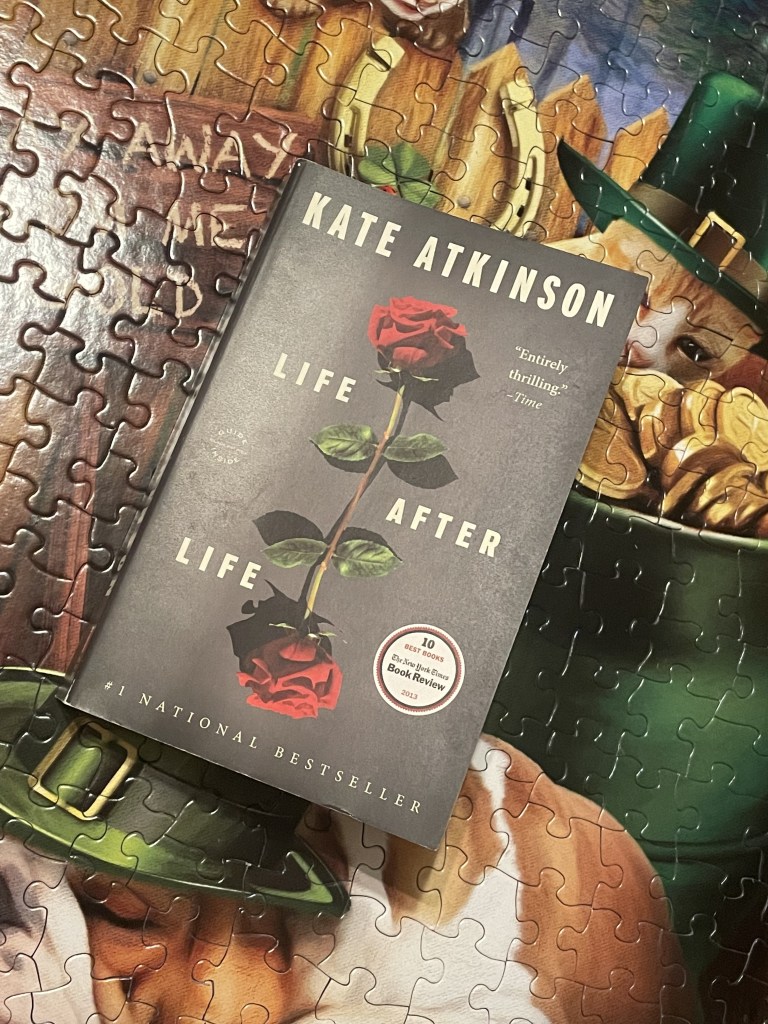
 On a cold and snowy night in 1910, Ursula Todd is born to an English banker and his wife. She dies before she can draw her first breath. On that same cold and snowy night, Ursula Todd is born, lets out a lusty wail, and embarks upon a life that will be, to say the least, unusual. For as she grows, she also dies, repeatedly, in a variety of ways, while the young century marches on towards its second cataclysmic world war.

I did love the characters. They were very reminiscent of the cast of ‘Betty’ by Tiffany McDaniel. I relate it to that book because of the dynamics of the Todd family in this book. However, with the ebb and flow of the story, I had a hard time forming that true connection that would make these characters deserving of a five-star rating rather than a four-star.

My favorite part of ‘Life After Life’ was the atmosphere and setting of the story. The reader is taken through the first half of twentieth-century England. The writer did a great job of showing the terrors of war in such a unique way that I have not seen in any other World War II book.

This is another book where I struggled with the writing. As mentioned before, the flow and setup of the story were very hard to follow. It could have been edited better to make it more accessible and easier for the reader. However, I did love the prose itself and tabbed several different quotes. The story was gripping and medium-paced, with the second half definitely being better than the first. I managed to get through it in one day

The plot was so confusing. I still do not have a firm grip on what was truly real and what was not. This whole story is based on time being a construct, and there was no real closure on what actually happened here. I have so many more questions after finishing this book, but funnily enough, I am not hating that. I usually hate not knowing everything about what I have read, but I am somehow intrigued. Besides that main plot point, I loved a review of this book that said Atkinson puts history on a human scale. That is so true.

 I did love the characters. However, with the ebb and flow of the story, I had a hard time getting that true connection that would make these characters get a five star rating rather than a four star.  My favorite part of ‘Life After Life’, was the atmosphere and setting of the story. The writer did a great job at showing the terrors of war and did it in such a unique way that I have not seen in any other World War II book.  This is another book where I struggled with the writing. The second half was definitely better than the first and I got through it in one day. The plot was so confusing. Besides that main plot point, I loved a review of this book that said Atkinson puts history on a human scale. After finishing this book, I am somehow loving it. It is not a new favorite but I would still highly recommend it.

3.5 out of 5 stars.

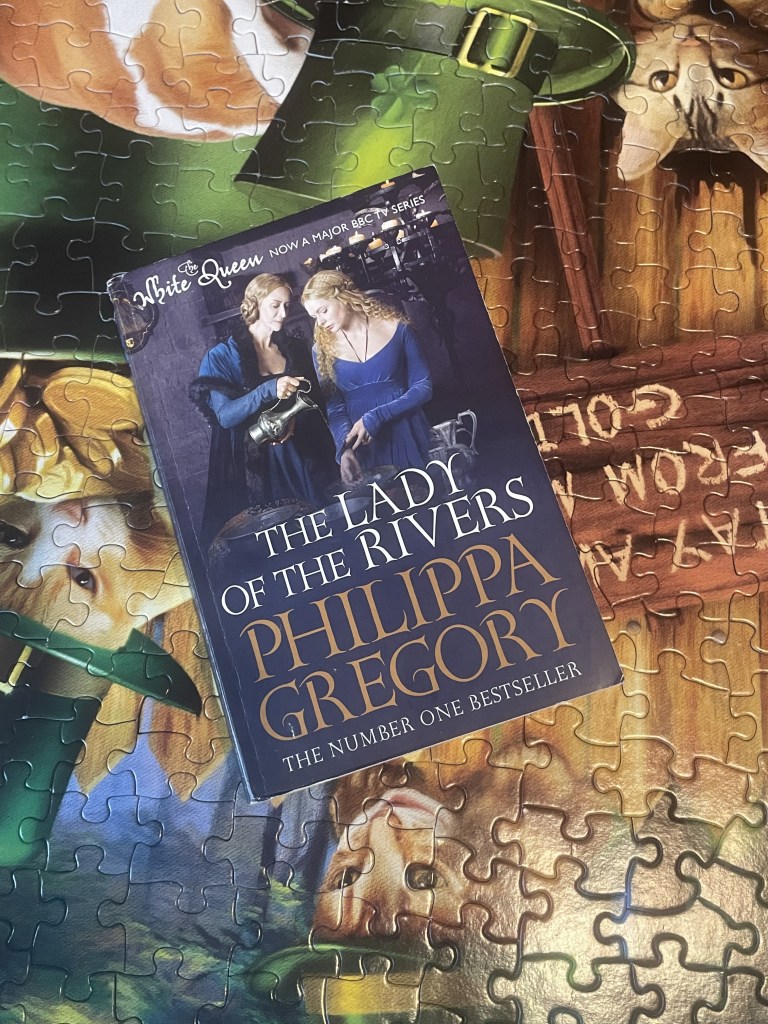
‘The Lady of the Rivers’ Review

 “Philippa Gregory brings to life the story of Jacquetta, Duchess of Bedford, a woman of passion and of legend who navigated a treacherous path through the battle lines in the War of the Roses to bring her family unimaginable power.”

The character development was my favorite aspect of this story. We witness Jacquetta’s evolution from a young and innocent girl in a noble family to the wife of a much older man who objectifies her due to her supposed ancestor – a girl who only seeks love but cannot find it. Eventually, she becomes a lover and a woman in her own right, playing a prominent role in English politics. The development of her character is fantastic. Additionally, I thoroughly enjoyed the dynamics among all the nobility throughout the book. Gregory did a great job showcasing each character.

The atmosphere was fairytale-esque and witchy, another part of the novel that I highly enjoyed. While this is historical fiction, it almost felt like a fantasy novel. Many people may not like the book for these elements, finding them too outlandish. However, later in life, Jacquetta was indeed accused of bewitching Edward IV. I believe there must have been some basis for that, even if it was innocent, like the magic depicted in this novel. The story was atmospheric in the best way!

The writing is where I struggled. The words themselves were fine; I had no complaints with that part. My issue comes with the pacing and repetitive nature of the writing. The first two-thirds of the book were medium-paced, and I had no major issues. However, the last third of the book was slow, and I wanted the story to end already. Many plot points were repeated. Yes, these events are historical, but I wish that some had been glossed over. The way the story was told was fine, but it became lengthy and repetitive.

The plot was great. The Lady of the Rivers is a woman who has yet to have an actual historical biography written about her. This account is fiction, but I still enjoyed learning about her. She was around many influential people of her time and was a major player herself. The story showed what it was like to be a woman in Medieval Europe and the trials that came with it.

The character work was my favorite part of this story. The story was atmospheric in the best way! However, I struggled with the writing. The story effectively depicted the challenges faced by women in Medieval Europe. Overall, it was a great book, but it didn’t become a new favorite.

4 out of 5 stars.

‘Annapolis’ Book Review

Annapolis by William Martin is a good fit for those who are interested in historical fiction that explores the proud traditions and romanticized ideals of the United States Navy, with a focus on the Stafford and Parrish families’ contributions to the nation’s military history.

The characters were placed for the sake of having characters and showcasing historical events. That isn’t to say that I didn’t like them, but they were not that well-developed, and once we hit the American Civil War, I had a hard time keeping up with who was who. There is also a lot of white saviorism in this book, and I know many people don’t like to read that, so I did want to make note of it in my review.

As you can tell by the title, the majority of the story takes place in Annapolis and the surrounding shores of the Chesapeake. The writing of the setting was spot-on, based on my own experiences in the area. It was so vivid and touched on all the senses.

The writing was fine. I liked how we had the two timelines and that the ‘historical’ settings were a part of a book that one of the characters was writing. However, it was episodic, and I think that is why I had a hard time connecting with the characters. There were a lot of loose ends between time periods that had me questioning. It was an interesting premise and take on a typical historical fiction novel.

The plot is the part that I am most excited to write about. As stated with the characters, I think the author really wanted to show the history of the navy as well as this country. The story was episodic, going from one war to the next. This book was very informative, and I learned a lot about some more forgotten bits of American history like fighting with Barbary pirates, the founding of the Navy, the War of 1812, and the Spanish-American War. However, WWI and Korea still remain forgotten. I learned a ton though, and that is my goal from reading.

The characters seemed to be placed primarily to serve as vehicles for showcasing historical events, but the vivid atmosphere evoked by the writing truly engaged the senses. The premise offered an intriguing take on the typical historical fiction novel. Despite some flaws, I found the book informative and fulfilling my goal of learning from reading. Overall, I would recommend it as a good read.

3.25 out of 5 stars.

‘Kindred’ Reader’s Guide Answers

  1. Both Kevin and Dana know that they can’t change history: “We’re in the middle of history. We surely can’t change it.” (page100); and “It’s over . . . There’s nothing you can do to change any of it now.” (page 264). What, then, are the purposes of Dana’ s travels back to the antebellum South? Why must you, the reader, experience this journey with Dana? – I think this book was probably really eye-opening at the time (1979) in showing the brutality of slavery, and how naive the modern population is, and that we shouldn’t forget our history and where our nation came from.
  2. How would the story have been different with a third person narrator? – I do not think the story would have been different with a third-person narrator. Personally, I prefer third person, but I believe the same points would still have been conveyed.
  3. Many of the characters within Kindred resist classification. In what ways does Dana explode the slave stereotypes? In what ways does she transcend them? – Dana transcends these roles by teaching and educating the other slaves. I believe it’s the magic of her ability to time travel, while the others cannot, that ultimately leaves a sense of wonder and raises questions about her.
  4. Despite Dana’s conscious effort to refuse the ‘mammy’ role in the Weylin household, she finds herself caught within it: “I felt like Sarah, cautioning.” (page 156), and others see her as the mammy: “You sound just like Sarah” (page 159). How, if at all, does Dana reconcile this behavior? How would you reconcile it? – I do not think Dana reconciles her conscious efforts with her behavior. I never really noticed this behavior to begin with. I don’t think I would reconcile them. I would just continue to live my life not caring what others thought.
  5. I do think that in the 21st century, we still have conditioned responses to slavery because of what people have been taught in school for so long. Many people don’t really care for history; they just acknowledge that ‘yes, this is bad,’ but they don’t truly realize the brutality of it.
  6. How do you think Butler confronts us with issues of difference in Kindred? How does she challenge us to consider boundaries of black/white, master/slave, husband/wife, past/present? What other differences does she convolute? Do you think such dichotomies are flexible? Artificial? Useful? – Butler challenges us to consider the boundaries between the people in the story by showing the complex relationships between all of the characters. As for other differences, I think it really shows the differences in time periods and how far we have come as a country, but also how there are still a lot of the same stigmas.
  7. Compare Tom Weylin and Rufus Weylin. Is Rufus an improvement or simply an alteration of his father? Where, if any, is there evidence of Dana’s influence on the young Rufus in his adult character? – I don’t think there really can be an improvement between Rufus and his father. Both were awful, and both did terrible things. I do think you can see hints of Dana’s influence on Rufus, mainly in regards to his children, but I won’t go into too much detail, as I don’t want to spoil the story.
  8. Of the slaves’ attitude toward Rufus, Dana observes “Strangely, they seemed to like him, hold him in contempt, and fear him at the same time.” (page 229) How is it they can feel these contradictory emotions? How would you feel toward Rufus if you were in their situation? – I couldn’t feel these contradictory emotions. I don’t think any of the slave characters seemed to like Rufus. I think they all thought he was a bit of a pest and annoying, and I would feel just like them. I would hate him too if I were in their situation.
  9. Compare Dana’s ‘professional’ life (i.e. her work as temporary help) in the present with her life as a slave. – Dana’s professional life in the present, with her riding, allows her to do something she wants to do. She gets to choose her job, so obviously it is way better than her life as a slave.
  10. When Dana and Kevin return from the past together, she thinks to herself: “I felt as though I were losing my place here in my own time. Rufus’s time was a sharper, stronger reality.” (page 191) Why would the twentieth century seem less vivid to Dana than the past? – I think the 20th century will seem less vivid to Dana than the 19th century because it was so brutal in the past, and people were just trying to survive. In the 20th century, they had the pleasure of doing what they wanted. They had freedom.
  11. Dana loses her left arm as she emerges—for the last time in the novel—from the past. Why is this significant? – From what the author has said, this is significant because everybody came away from slavery broken. Even today you can still see the impact it had on society . In how it divided people.
  12. Kevin is stranded in the past five years, while Dana is there for almost one. Is there a reason why Butler felt Kevin needed to stay in the past so much longer? How have their experiences affected their relationship to each other and to the world around them? – I saw Butler felt the need to have Kevin stay in the past so much longer than Dana, so he could truly understand the experience that she was going through because for a white man it was easier tremendously easier than to be a black woman in the 19th century, I think it definitely affected their relationship to each other, because of how different the mentality and morals were of the past.
  13. A common trend in the time-travels of science fiction assumes that one should not tamper with the past, lest s/he disrupt the present. Butler’s characters obviously ignore this theory and continue to invade each other’s lives. How does this influence the movement of the narrative? How does this convolute the idea of ’cause and effect’? – This influences the movement of the narrative by characters, not having to be scared or constantly having to have the same train of thought to me. It did not convolute the idea of cause-and-effect at all.
  14. Dana finds herself caught in the middle of the relationship between Rufus and Alice? Why does Rufus use Dana to get to Alice? Does Alice use Dana? – Rufus uses Dana to get to Alice because he sees them as the same woman he doesn’t see them as their own person so he thinks that Dana thinks like Alice does I would say Alice does use Dana as well because she knows that Dana have some kind of holdover Rufus, because of her abilities to travel through time.
  15. The needs and well-being of other residents of the plantation create a web of obligation that is difficult to navigate. Choose a specific incident; and determine who holds power over whom and assess how it affects that situation. – I think Dana holds a lot of obligation because she ultimately knows what will happen in history to all of these people maybe not individually but as a whole.
  16. Dana states: “It was that destructive single-minded love of his. He loved me. Not the way he loved Alice, thank God. He didn’t seem to want to sleep with me. But he wanted me around—someone to talk to, someone who would listen to him and care about what he said, care about it.” (page 180) How does the relationship between Dana and Rufus develop? How does it change? What are the different levels of love portrayed in Kindred?The relationship between Dana and Rufus develops of her, taking care of him after all his near death experiences, and that they hold each others lives in their hands in a sense, but like any relationship, you can grow tired of the other person just from constant neglect of the relationship and I think you can really see that here all different levels of lover portrayed in Kindred, romantic family. There are so many complex relationships in the story.
  17. Discuss the ways in which the title encapsulates the relationships within the novel. Is it ironic? Literal? Metaphorical? What emphasis do we place on our own kinship? How does it compare with that of the novel? – I think the title is ironic, literal and metaphorical. You can take it in any way you want; literature is art and it’s meant to be interpreted by the reader. I’m not sure how it compares with that of the novel; it’s something that I would definitely have to think about.
  18. Do you believe that Dana and Kevin’s story actually happened to them, or that they simply got caught up in the nostalgia of moving old papers and books? – I do believe that Dana and Kevin story actually happen because it is us too far out to get caught up in nostalgia, examining old papers and books.
     
  19. Butler opens the novel with the conclusion of Dana’s time travels. The final pages of the book, however, make up an epilogue demonstrating a, once again, linearly progressive movement of time. How does the epilogue serve to disrupt the rhythm of the narrative? – I do not think the epilogue serves to disrupt the rhythm of the narrative. I thought it fit in with the story perfectly as the characters were getting closure on the events that they went through.
  20. After returning from his years in the nineteenth-century, Kevin had attained “a slight accent” (page 190). Is this `slight’ alteration symbolic of greater changes to come? How do you imagine Kevin and Dana’s relationship will progress following their re-emergence into life in 1976? – I do think this alteration is symbolic of greater chances change is to come I think that being in the past for so long definitely did change Kevin’s mentality how I imagined Kevin and Dana‘s relationship of progress following reentry to life in 1976 I can see them staying as a couple because they went through this incredible traumatic journey together, but also how the mentalities were impacted as I keep saying I don’t know if it would be good for them to stay together or not.

SPOILERS – ‘People We Meet on Vacation’ Readers Guide Questions

Alex and Poppy became unlikely friends in college. Alex went on to become a teacher, and Poppy, a travel writer. Each summer, they take a trip together, until two summers ago when an event took place that caused the friends to go their separate ways. In the present, Poppy calls Alex and makes plans to take one final trip to save their friendship.

  1. When they first meet, Alex and Poppy are immediately put off by each other. Have you ever made a friend after a bad first impression?

I cannot recall a specific instance of someone initially giving me bad vibes and then that person becoming a friend. However, there have been occasions where I found someone annoying at first, only to later become friends with them. So, I would answer this question with a yes.

2. What’s something that you do on vacation that you’re unlikely to do in your daily life? Is there a certain comfort to anonymity?

Believe it or not, I tend to have a hard time picking up and reading a book while on vacation. There are just so many other things to do and look at that I cannot make myself focus on a book. I would say that there is a comfort in anonymity. I generally like to be left alone, and people tend not to interact with strangers. At the same time, I just live my life like I would anywhere. Location does not matter.

3. Have you ever met a goal and found that your reaction was not quite what you expected?

Definitely, you tend to think that there will be a big celebration for completion, but it usually tends to be more of a relief off your shoulders.

4. Poppy is going through professional burnout. Have you ever experienced that kind of fatigue? How did you get through it?

To be honest, I did not pick up on Poppy going through that burnout at all in this book. Towards the end, she randomly said she just wanted to quit her job, and I was like, okay… It is only human to experience this kind of fatigue, and I definitely do every so often. I usually just push through it and keep doing what I do every day. Another thing I recommend is watching a content creator who does the same thing as you, and that often encourages motivation.

5. Which vacation of Alex and Poppy’s would you most want to take? Which would you least want to take?

For the most part, definitely Tuscany. That trip did not go well for the characters, but it is in my top three places I want to go because of all the history. The next question of where I would least like to go is hard to answer. There is adventure in each and every place, but I guess that I will go with Nashville. I have been several times, and it’s not too far from me, and the culture is relatively the same as where I live.

6. Having grown up in a small town, Poppy struggles to break free of her reputation – or at least struggles to believe she can do so. When have you felt misunderstood, and how did you get past it?

I felt most misunderstood in my late teenage years—high school and in the years directly after that. Sometimes you just have to take a step back, work on yourself, and then surround yourself with the right people.

8. Why do you think it takes so long for Alex and Poppy to admit their feelings for each other?

I honestly have no clue. It’s unrealistic that it would take nearly a decade for them to do so. I guess maybe just the wrong place and wrong time, but in all honesty, once again, it’s unrealistic.

9. Rachel has a lot to say about contentment versus purpose. In your own life, do you prize one above the other? Are these ideas mutually exclusive, or can you have both?

In my own life, I never think about this. In my opinion, I think this is subjective. I would like to think that you can have both rather than them being mutually exclusive.

10. Do you think that Poppy and Alex are going to make it?

I did not feel a romantic connection between these characters whatsoever. No, I do not think they will make it as a couple and will resort to being friends again, or maybe just acquaintances.

‘Torch’ Book Review

“Work hard. Do good. Be incredible!” is the advice Teresa Rae Wood shares with the listeners of her local radio show, Modern Pioneers , and the advice she strives to live by every day. She has fled a bad marriage and rebuilta life with her children, Claire and Joshua, and their caring stepfather, Bruce. Their love for each other binds them as a family through the daily struggles of making ends meet. But when they received unexpected news that Teresa, only 38, is dying of cancer, their lives all begin to unravel and drift apart. Strayed’s intimate portraits of these fully human characters in a time of crisis show the varying truths of grief, forgiveness, and the beautiful terrors of learning how to keep living.

These characters are the most authentic I’ve read in a long time. Teresa and Joshua were the ones I connected with the most. Teresa is a mother who falls ill, and I’ve never read from a character who receives a terminal diagnosis. Joshua, her teenage son, deeply affected me because I saw how his mother’s diagnosis, and ultimately her death, impacted his life, and what loss can do to a person. I didn’t really connect with the character of Claire, which is a shock as she’s the character I’m closest in age with. I didn’t like her, but when you go through such a traumatic event, you’re often not a likable person. Ultimately, I just wasn’t drawn to her chapters. Bruce is a character who grew on me throughout the novel. I think he’s a good person, but loss can change us as individuals and transform us. Great character work!

The atmosphere is what blew me away, I wasn’t expecting it to be so powerful. This book is set in a small town in Minnesota, and the author masterfully brought that town to life, along with the Mississippi River, making those settings almost characters in their own right. I love reading about the changing of seasons, and I think the author did a fantastic job portraying this.

While the first chapter initially enamored me with Cheryl Strayed’s choice of language, it eventually felt as though she was using an excess of words, as if she had a certain word count to reach for the book to be published. The story began to drag on and became quite tedious, turning what was once an enjoyable reading experience into something of a chore, especially with chapters that spanned over 20 pages. The overall story was hard to follow, as the way time jumps were all over the place, taking me out of the story as I had to figure out if we were in the past or present.

The author’s portrayal of themes such as loss and grief was commendably done. These are universal experiences that all humans must endure at some point in their lives. While these experiences can be painful, they also hold the transformative power to shape us, often for the better. Not only do they bring us closer together, but they also allow us to grow as individuals. The authenticity and humanity within the story were palpable, truly underscoring the author’s skill in encapsulating such complex emotions and experiences.

These characters are the most authentic I’ve read in a long time. Great character work! The atmosphere is what blew me away, I wasn’t expecting it to be so powerful. I love reading about the changing of seasons, and I think the author did a fantastic job portraying this. While the first chapter initially enamored me with Cheryl Strayed’s choice of language, it eventually felt as though she was using an excess of words, as if she had a certain word count to reach for the book to be published. The overall story was hard to follow, as the way time jumps were all over the place, taking me out of the story as I had to figure out if we were in the past or present. The author’s portrayal of themes such as loss and grief was commendably done. The authenticity and humanity within the story were palpable, truly underscoring the author’s skill in encapsulating such complex emotions and experiences. This was a good and I would still recommend it even if it did not live up to my five star expectation.

3.5 out of 5 stars.

January Book Haul

In 2024, I am allowing myself to buy as many books as I read the month before. In January, that number is eleven. However, you will see more than eleven books included. Why is that? I did receive one gift, aka I did not buy that book, and all my Book of the Month subscription books will only count as one. Let’s get into the haul!

Jezebel by Megan Barnard

 When Jezebel learns she can’t be a king like her father simply because she’s a girl, she vows never to become someone’s decorative wife, nameless and lost to history. At fifteen she’s married off, despite her protests, to Prince Ahab of Israel. There, she does what she must to gain power and remake the dry and distant kingdom in the image of her beloved, prosperous seaside homeland of Tyre, beginning by building temples to the gods she grew up worshipping. As her initiatives usher in an era of prosperity for Israel, her new subjects love her, and her name rings through the land.

I picked up ‘Jezebel’ at Barnes and Noble. It caught my attention after reading ‘The Red Tent,’ a book I loved in 2023. I wanted to add more biblical retellings to my TBR list!

The Prospectors by Ariel Djanikian

 Bringing the Klondike and turn-of-the-century California to vivid life, Ariel Djanikian weaves an ambitious narrative of claiming the American Dream and its rippling effects across generations. Sweeping and awe-inspiring, The Prospectors is an unforgettable story of family loyalties that interrogates the often-overlooked hostilities and inequities born during the Gold Rush era.

 I’ll be honest; the cover drew me in when I saw the sun reflecting on the gold at Barnes and Noble. Upon opening the book, I discovered it’s a family saga with two timelines, and of course, I was sold. Funny thing is, I had no idea this was on my ‘want to read’ list on Goodreads! I guess I know my taste well.

Prophet Song by Paul Lynch

  Ireland is falling apart. The country is in the grip of a government turning towards tyranny and when her husband disappears, Eilish finds herself caught within the nightmare logic of a society that is quickly unravelling.

  This is the book I set out to buy on my Barnes and Noble trip. I aim to read as many Booker Prize-nominated books as possible. The bonus here is that it’s a dystopian novel with an Irish setting!

Flight of Icarus by Caitlin Schneiderhan

Recording costs money. Money Eddie doesn’t have. But he’s willing to do whatever it takes, even if that means relying on his dad. Al Munson has just stumbled back into Eddie’s life with another dubious scheme up his sleeve, and yet Eddie knows this is his only option to make enough dough in enough time. It’s a risk, but if it pays off he will finally have a one-way ticket out of Hawkins. 

This one caught me by surprise. I had no idea this book existed until it popped up on Amazon one day. Having read all the other Stranger Things books and generally enjoyed them, I’ll be continuing the series with this one. My expectations aren’t high, as it seems like this book may be more of a fan service for Joseph Quinn fans. However, I hope I’m wrong and end up enjoying it!

Elvis and Me by Priscilla Beaulieu Presley

 Decades after his death, millions of fans continue to worship Elvis the legend. But very few knew him as Elvis the man. Here in her own words, Priscilla Presley tells the story of their love, revealing the details of their first meeting, their marriage, their affairs, their divorce, and the unbreakable bond that has remained long after his tragic death.

In late December, I watched the movie ‘Priscilla,’ which is based on this book. It was an alright film, but I believe the book will offer much more insight into Priscilla’s life!

The Bullet Swallower by Elizabeth Gonzalez James

 A dazzling magical realism western in the vein of Cormac McCarthy meets Gabriel García Márquez,The Bullet Swallower follows a Mexican bandido as he sets off for Texas to save his family, only to encounter a mysterious figure who has come, finally, to collect a cosmic debt generations in the making.

 We’ve reached the Book of the Month books. This one was my January pick. I’m a fan of a good western and family saga. Plus, being compared to Gabriel García Márquez – need I say more?

Mercury by Amy Jo Burns

 The Joseph brothers become Marley’s whole world before she can blink. Soon, she is young wife to one, The One Who Got Away to another, and adopted mother to them all. As their own mother fades away and their roofing business crumbles under the weight of their unwieldy father’s inflated ego, Marley steps in to shepherd these unruly men. Years later, an eerie discovery in the church attic causes old wounds to resurface and suddenly the family’s survival hangs in the balance. With Marley as their light, the Joseph brothers must decide whether they can save the family they’ve always known—or whether together they can build something stronger in its place.

 I noticed that ‘Mercury’ is set in the 1990s. I love books from that time period; they always evoke a sense of nostalgia for me. Being a nostalgia chaser, I couldn’t say no to this ‘historical’ novel.

The End of October by Lawerence Wright

  At an internment camp in Indonesia, forty-seven people are pronounced dead with acute hemorrhagic fever. When epidemiologist Henry Parsons travels there on behalf of the World Health Organization to investigate, what he finds will have staggering repercussions. Halfway across the globe, the deputy director of U.S. Homeland Security scrambles to mount a response to the rapidly spreading pandemic leapfrogging around the world, which she believes may be the result of an act of biowarfare. And a rogue experimenter in man-made diseases is preparing his own terrifying solution.

  In January, I focused on reading science fiction so I did want to buy more of those as my stack has dwindled. One of my favorite sci-fi tropes is pandemic fiction. And then I lived that in real life… that only makes it more fun (?) to compare how a pandemic is on paper versus in person.

Cataclysm by Lydia Kang

After five years of conflict, the planets Eiram and E’ronoh are on the cusp of real peace. But when news breaks of a disaster at the treaty signing on Jedha, violence reignites on the beleaguered worlds. Together, the royal heirs of both planets—Phan-tu Zenn and Xiri A’lbaran—working alongside the Jedi, have uncovered evidence that the conflict is being orchestrated by outside forces, and all signs point to the mysterious Path of the Open Hand, whom the Jedi also suspect of causing the disaster on Jedha.

As mentioned earlier, I delved into a lot of sci-fi in January, and one of those books happened to be ‘Convergence,’ the prequel to this one. I’m determined to do a better job at getting through series instead of letting the plot fade and the book sit there for years. Here’s to doing better in 2024!

City of Dreams by Beverly Swerling

 In what will be the greatest city in the New World, the fortunes of these two families are inextricably entwined by blood and fire in an unforgettable American saga of pride and ambition, love and hate, and the becoming of the dream that is New York City.

 It’s pretty obvious that I love big chunky historical novels. This is the first book of a series, and I couldn’t be more thrilled to go down that rabbit hole. I found it at a used bookstore called Books and Moore in Calabash, North Carolina.

The Physical Book of Deliverance Dane by Katherine Howe

 A spellbinding, beautifully written novel that moves between contemporary times and one of the most fascinating and disturbing periods in American history – the Salem witch trials.

 It’s kind of crazy how I found this one. The night before my trip to Calabash, I was scrolling through Goodreads and came across this book with dual timelines and about witches. I added it to my ‘want to read’ list and had no idea I would find it the next day. It’s so rare to discover a book you just heard about at the used bookstore the next day!

Fortunes of War: The Balkan Trilogy by Olivia Manning

The Balkan Trilogy by Olivia Manning

The Balkan Trilogy is the story of a marriage and of a war, a vast, teeming, and complex masterpiece in which Olivia Manning brings the uncertainty and adventure of civilian existence under political and military siege to vibrant life. Manning’s focus is not the battlefield but the café and kitchen, the bedroom and street, the fabric of the everyday world that has been irrevocably changed by war, yet remains unchanged.

Mister Hockey by Lia Riley

 For fans of Icebreaker—sparks fly between a hockey player with a dirty mouth and an awkward bookworm in this spicy hockey romance. 

 A hockey book set in the NHL and not at the collegiate level? Oh my! Yeah, I had to grab it off the shelf at Target. It’s short, so it will be perfect for adding to my reading list of romance books for February, and it was on sale!

The Employee by Olga Ravn

 Shortlisted for the International Booker Prize, The Employees reshuffles a sci-fi voyage into a riotously original existential nightmare. Aboard the interstellar Six Thousand Ship, the human and humanoid crew members complain about their daily tasks in a series of staff reports and memos. When the ship takes on a number of strange objects from the planet New Discovery, the crew becomes deeply attached to them, even as tensions boil toward mutiny, especially among the humanoids. In chilling, crackling, and exhilarating prose, The Employees probes into what makes us human, while delivering a hilariously stinging critique of life governed by the logic of productivity.

 Lastly, we have the book that was gifted to me by Ben. Thank you! This is our only piece of translated fiction on the list, and it is coming to us from Denmark. I have seen several reviews for this book on YouTube and cannot wait to give it a try. I plan on reading it this week!