‘In the Beginning was the Sea’ Book Review

“”In the Beginning Was the Sea” by Tomás González is a haunting and evocative novel set in the turbulent 1970s of Colombia. It tells the story of J. and Elena, a young urban couple who abandon their comfortable city life in Medellín to pursue an idealistic dream of living off the land on a remote Caribbean island. They purchase a rundown farm with plans to create a self-sustaining paradise, but soon find themselves confronted by the harsh realities of rural life, isolation, and the unforgiving natural environment.

As their utopian vision unravels, tensions rise, and their relationship deteriorates under the strain. The novel explores themes of disillusionment, the clash between idealism and reality, and the destructive consequences of human ambition. González’s lyrical prose vividly captures the lush yet perilous landscape, drawing readers into a deeply atmospheric and morally complex tale. “In the Beginning Was the Sea” is a profound meditation on human nature, the fragility of dreams, and the inexorable force of nature.”

The characters are an interesting piece of this novel. We can understand why things don’t go as planned for them as they leave the city to live off the land. A lot of their feelings are left up to interpretation for the reader to understand. We can make assumptions about why they feel this way: Elena leaving behind everything she ever knew makes her miserable, and then J., having to be around a miserable person, finds his life becoming a mess. Again, we can only assume all of this.

If you were a fan of the atmosphere in ‘Mustique Island,’ then you will be a fan of this Colombian island. The atmosphere was lush, and the imagery along with its metaphors hit the spot! There was also an ominous and mysterious feeling in the first quarter of the novel that made the story gripping.

The writing was atmospheric, which I loved. It was filled with imagery and metaphors, making it fast-paced and easy to devour.

The plot is a hidden gem in my eyes. We have our straightforward plot: two city people leave the city to live off the land on a tropical island, and things don’t go as planned. However, the hidden theme is about leaving capitalism and modern society behind and whether you can truly do it. It’s about leaving this society behind and living the way humans were intended to. It’s a lot to think about. Again, these were just my observations, and it could simply be about picking apart the impact such a move can have on a relationship. I was gripped throughout the story, and the plot moved in a logical manner.

The characters are an interesting piece of this novel.We can make assumptions about why they feel this way: Elena leaving behind everything she ever knew makes her miserable, and then J., having to be around a miserable person, finds his life becoming a mess. If you were a fan of the atmosphere in ‘Mustique Island,’ then you will be a fan of this Colombian island.There was also an ominous and mysterious feeling in the first quarter of the novel that made the story gripping.The writing was atmospheric, which I loved. It was filled with imagery and metaphors, making it fast-paced and easy to devour. The plot is a hidden gem in my eyes. I was gripped throughout the story, and the plot moved in a logical manner. This was a good book and I would recommend picking it up if you are interested to do so.

3.25 out of 5 stars.

‘Our Missing Hearts’ Book Review

“”Our Missing Hearts” by Celeste Ng is a compelling dystopian novel set in a near-future America where cultural and political repression is the norm. The story revolves around twelve-year-old Bird Gardner, who lives with his father after his mother, a Chinese American poet named Margaret, has disappeared under mysterious circumstances. In a society where children of dissidents are relocated, and anti-Asian sentiment is rampant, Bird embarks on a quest to find his mother, guided by a cryptic letter and fragments of her poetry.”

I did not have strong feelings towards the characters of ‘Our Missing Hearts.’ The author did not hit the nail on the head with the development of these characters. A lot of their development did not add up or was plainly hypocritical in a way that was not meant to be. Many of the plot points surrounding characters such as twelve-year-old Bird were unbelievable. Yes, this is a dystopian piece of fiction, but that just adds to the question of why some of these things were allowed to happen in a world so bad and dangerous. Poorly written character arcs.

The atmosphere of the novel felt like a true classic dystopian book in the vein of Bradbury and Orwell. The world was probably my favorite part of the story. At first, I thought this was set after some big cataclysmic event, but I would describe it more as 2020 on steroids. (If you were there, you will understand.) The author did a great job with the world-building, explaining why things were the way they were in this world that was almost like ours.

The most average part of the book was the writing. You can definitely see that Ng was trying to make this poetic, but it was overall just fine for me. I highlighted about three quotes or paragraphs that I thought were good enough to hang onto.

Now, this plot is extremely fascinating but overall fell flat for me. “Flat” is the word that I would use to describe my reading experience for Our Missing Hearts. It was predictable and, as I stated before, the journey of Bird was pretty much unbelievable. I do think this plot is a good comparison to our world today and how many people view conflicts or protests happening around the world. This book could have had a much greater emotional impact and been more gripping, but sadly, it fell flat.

I did not have strong feelings towards the characters of ‘Our Missing Hearts.’ Poorly written character arcs. The atmosphere of the novel felt like a true classic dystopian book in the vein of Bradbury and Orwell. The author did a great job with the world-building, explaining why things were the way they were in this world that was almost like ours. The most average part of the book was the writing. I highlighted about three quotes or paragraphs that I thought were good enough to hang onto. Now, this plot is extremely fascinating but overall fell flat for me.This book could have had a much greater emotional impact and been more gripping, but sadly, it fell flat. I wish that this story would have had the character work that was involved in ‘Little Fires Everywhere’ by this same author and maybe, just maybe, it would have made the story for me. This was an average read.

3 out of 5 stars.

‘People Person’ Book Review

“She’s thirty, and her life isn’t really going anywhere. An aspiring lifestyle influencer with a wayward boyfriend, Dimple’s life has shrunk to the size of a phone screen. And despite a small but loyal following, she’s never felt more alone in her life. That is, until a dramatic event brings her half-siblings—Nikisha, Danny, Lizzie, and Prynce—crashing back into her life. And when they’re all forced to reconnect with Cyril Pennington, the absent father they never really knew, things get even more complicated.”

You can find something relatable in each of the Pennington siblings. That is about the extent it went for me. They were pretty two-dimensional. They had these traits — too nice, rude, or sensitive. Yes, it does make sense for them to have a bad trait, but there was just not enough building into these characters. A lot of times with Dimple, her actions did not add up with who she was as a person. The characters are aware of who they are as people, but it was not an enjoyable reading experience with them.

The atmosphere of South London was a new experience for me, with a few public locations that I have become aware of from other books. I did enjoy exploring this new area and seeing how the atmosphere impacted the upbringing of our characters, the Penningtons.

I really struggled with the writing when I first sat down to read the ebook. I added in the audiobook to read along with at 13%. The writing just did not grip me, and it was taking me a long time to get through without the help of a narrator. My one positive about the writing, though, is that the dialogue was quite comedic in a dark sense of humor way.

The plot did not go how I expected at all. Yes, I knew the characters would somehow have to get together to build their relationships, but the author took it in a whole different route than one usually would. It was funny. Again, I don’t know why I was not fully gripped or intrigued. The plot could have been better if the characters were better.

You can find something relatable in each of the Pennington siblings. The characters are aware of who they are as people, but it was not an enjoyable reading experience with them. I did enjoy exploring this new area and seeing how the atmosphere impacted the upbringing of our characters, the Penningtons. I really struggled with the writing when I first sat down to read the ebook. My one positive about the writing, though, is that the dialogue was quite comedic in a dark sense of humor way. The plot did not go how I expected at all. The plot could have been better if the characters were better. This book did nothing for me; I didn’t like it, but I did not hate it either.

2 out of 5 stars.

‘Normal People’ Book Review

“”Normal People” by Sally Rooney follows the intricate relationship between Connell and Marianne as they navigate through adolescence into adulthood. Connell is a popular athlete while Marianne is an aloof and intelligent loner. Despite their differences, they form a deep connection that persists through various stages of their lives. Set in Ireland, the novel explores themes of love, class, power dynamics, and the complexities of human relationships. Rooney’s insightful prose delves into the intricacies of emotional intimacy, making “Normal People” a compelling and deeply affecting read.”

The characters are the highlight of the novel, which one would hope for when a word like “people” is used in the title. Marianne started out as my favorite; she was not a perfect character, and the flaws of the characters do seem to be a main part of the novel. Marianne was what I thought of myself or wished that I was in high school. Connell had some red flags for me, but nothing too serious. Throughout the course of the book, my thoughts on characters would take a 180-degree turn, seeing how someone can change at different stages in their life. That being said, the characters did develop in this story. I loved exploring the dynamics of the relationship of our two main characters but also how they interacted with other people in their lives like parents, siblings, lovers, or friends.

It was a shock that the atmosphere did not play a huge part in the novel. I say this as most Irish authors or books that I have read really take advantage of that setting. I cannot say that it completely did nothing for me as there were some paragraphs that really hit the nail on the head with descriptive writing on the atmosphere in which the scene was taking place.

The prose itself was great. I have seen some people having an issue with the lack of quotation marks, but with this book itself, that did not bother me. The story did move at a fast pace even if there were long chapters and paragraphs. I usually hate those things, but the fast pace made it a better reading experience. However, I do think this could have been condensed a lot, even though the paperback copy is less than 300 pages in length.

This was obviously a character-driven book. The plot was a quiet one as we were mainly exploring the relationship of Connell and Marianne. After the first quarter of the book, the plot did start to go into circles of repetitiveness. Again, this would not have happened if the story had been condensed. I will say, ‘Normal People’, did do something that no book has done to me before. I was reading a chapter and expecting to turn the page to the next chapter. The next page was the acknowledgements. That had me shocked. Take that as you will.

The characters are the highlight of the novel, which one would hope for when a word like “people” is used in the title. I loved exploring the dynamics of the relationship between our two main characters and also how they interacted with other people in their lives like parents, siblings, lovers, or friends. It was a shock that the atmosphere did not play a huge part in the novel. I cannot say that it completely did nothing for me as there were some paragraphs that really hit the nail on the head with descriptive writing on the atmosphere in which the scene was taking place. The prose itself was great. However, I do think this could have been condensed a lot, even though the paperback copy is less than 300 pages in length. This was obviously a character-driven book. After the first quarter of the book, the plot did start to go into circles of repetitiveness. This was a great book and I would recommend it to others, but it is not an all-time favorite.

4 out of 5 stars.

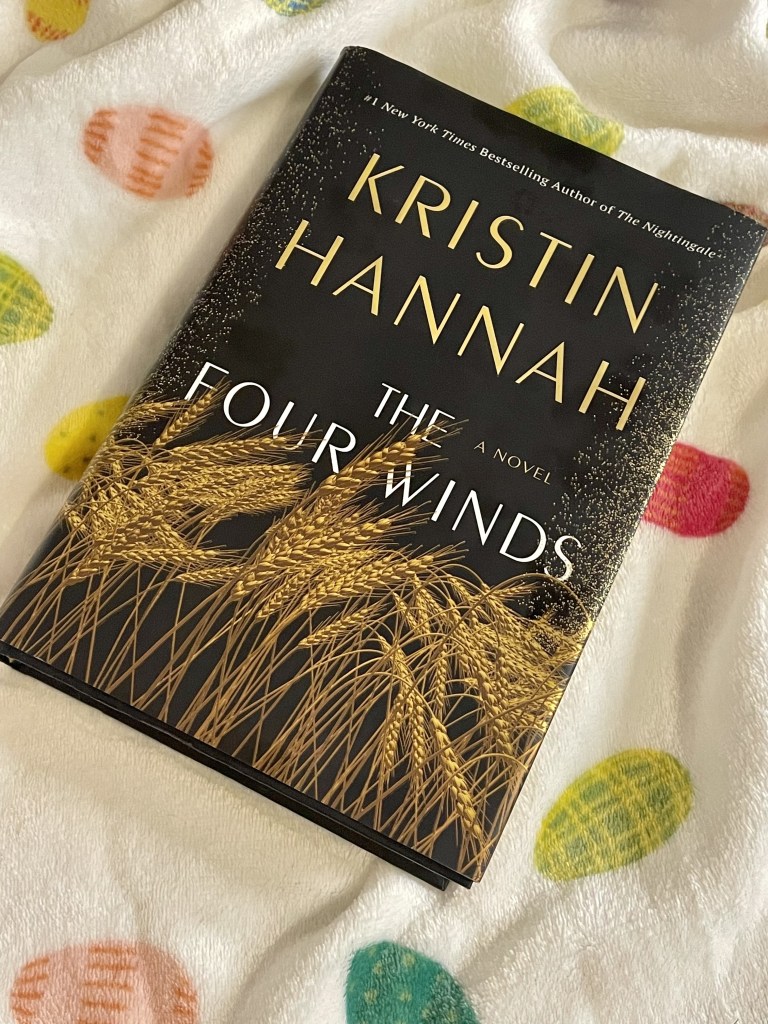
‘The Four Winds’ Book Review

“In this uncertain and dangerous time, Elsa Martinelli—like so many of her neighbors—must make an agonizing choice: fight for the land she loves or go west, to California, in search of a better life. The Four Winds is an indelible portrait of America and the American Dream, as seen through the eyes of one indomitable woman whose courage and sacrifice will come to define a generation.”

Elsa is the strongest character that I have read in a while. Her character development and journey were fantastically done. In the earlier parts of the book, she was so relatable. I am honestly stunned and left with not a lot of words as I sit here and think of the journey we went on with her character. However, there was one character who ruined the whole book for me: Loreda. When she was first introduced in the story, she was fine; I had no strong feelings towards her. As the book progressed, she only displayed negative traits. Sure, she was courageous and determined, but the bad outweighed the good here. I felt angry reading from her perspective and seeing her make things even harder for herself. In Hannah’s previous works, they left me with a gut punch. ‘The Nightingale’ was the first ever book to make me cry and also an all-time favorite book. This one, while the journeys of the characters did make me feel slightly emotional, was nothing like her previous works.

At first, I did not notice how great the atmosphere of ‘The Four Winds’ was, not until my friend pointed it out to me. The atmosphere of this book is literally hell. The scenes of the Dust Bowl left me feeling anxious and claustrophobic. When we got to the Great Depression, it left me with a feeling of despair.

The writing is what I don’t have a lot to say about. Its style or prose was just average. I had no feeling towards that aspect whatsoever.

There were so many themes presented in this novel, and they are another reason that I loved it. There is the theme of motherhood and the instincts that come along with that role. I even think this book is relevant in comparison to the modern-day border crisis. The way that so many people dehumanize immigrants, it’s awful, and this book really made me realize that even more. The main theme here is dreams: the American dream and all its variations. We see that dream in the sense of Hollywood and New York City, wanting a life like the stars. Other characters dream of basic things like love and family, things we need in life. Even more, like the Martinellis, they dream of having a better life in America than they did in Sicily, for their son and grandchildren to have the opportunities that they didn’t, like going to school. This is such a thought-provoking and reflective book. It would be a great choice for a book club so that the readers can discuss the themes.

This one, the journeys of the characters did make me feel slightly emotional but nothing like her previous works did.  At first, I did not notice how great the atmosphere of ‘The Four Winds’ was, not until my friend pointed it out to me.  Its style or prose was just average.  It would be a great choice for a book club so that the readers can discuss the themes. I loved this book but it will not be an all time favorite for me like the other works of this author.

3.85 out of 5 stars. 

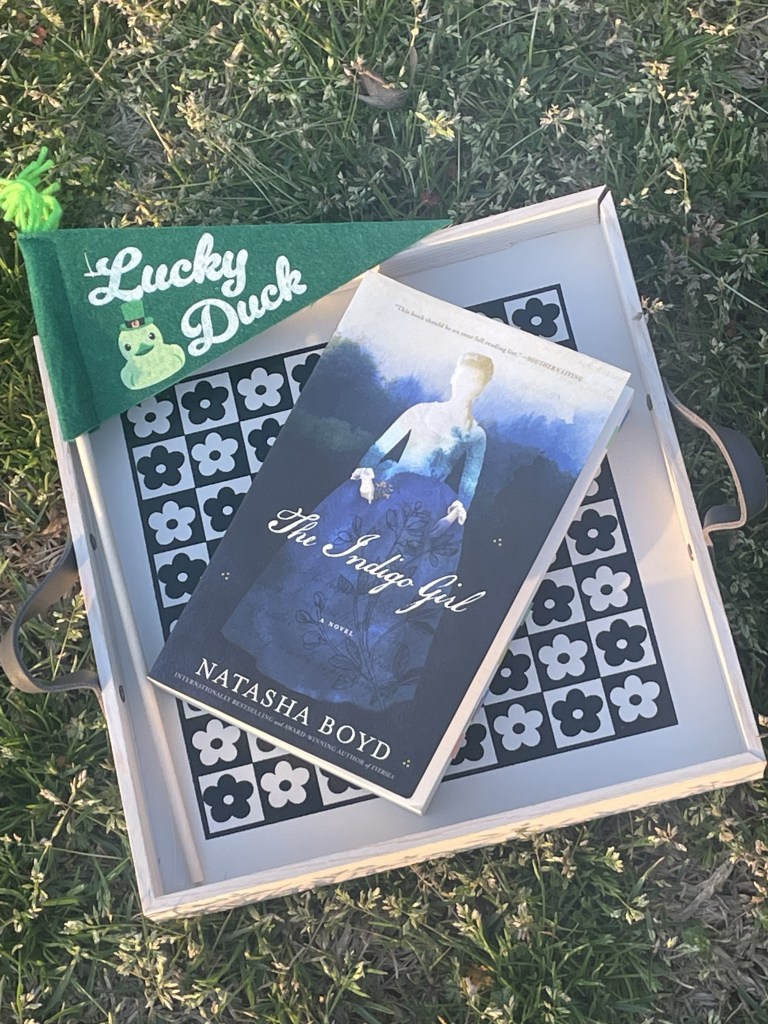
‘The Indigo Girl’ Book Review

Based on historical documents, including Eliza’s letters, this is a historical fiction account of how a teenage girl produced indigo dye, which became one of the largest exports out of South Carolina, an export that laid the foundation for the incredible wealth of several Southern families who still live on today. Although largely overlooked by historians, the accomplishments of Eliza Lucas influenced the course of US history. When she passed away in 1793, President George Washington served as a pallbearer at her funeral.

The characters, heroes and villains alike, were all one-dimensional; flat. For the first seventy-five percent of the book, I had no issue with Eliza, but by the last quarter, I did not like her. She’s another example of a Mary Sue and whines like no other when things don’t go her way. Flat characters.

There are real historical letters immersed throughout the book, and the author had the dialogue and overall personality of Eliza spot on, transitioning from historical records to a fictional novel.

The atmosphere came right off the page. The author did a great job of depicting the area of coastal South Carolina and making it easy for the reader to picture the locales of the scenes.

The writing itself was fine, but bits and pieces of the dialogue did get repeated quite a bit, even within a page of each other. Also, I wonder how many times the author used the word ‘blue’ or some variation in the book. We get it, the book is about indigo!! This book does read young, and I think it would be great for young adults to read.

As an idea, the plot sounds pretty good. On the page, it just wasn’t executed properly. I was not gripped or intrigued by what would happen next, and that ultimately led me to skim-read the last quarters of the book. This story sounds unbelievable, but it’s a real story. However, some of the plot points were unnecessary and would have caused an uproar if genders had been reversed. However, as historical fiction, I do believe this was a well-researched story.

The characters, heroes and villains alike, were all one-dimensional; flat. The author did a great job of depicting the area of coastal South Carolina and making it easy for the reader to picture the locales of the scenes. The writing itself was fine, but bits and pieces of the dialogue did get repeated quite a bit, even within a page of each other. However, as historical fiction, I do believe this was a well-researched story. Overall, this book didn’t do a lot for me, and I really wouldn’t recommend it

3 out of 5 stars.

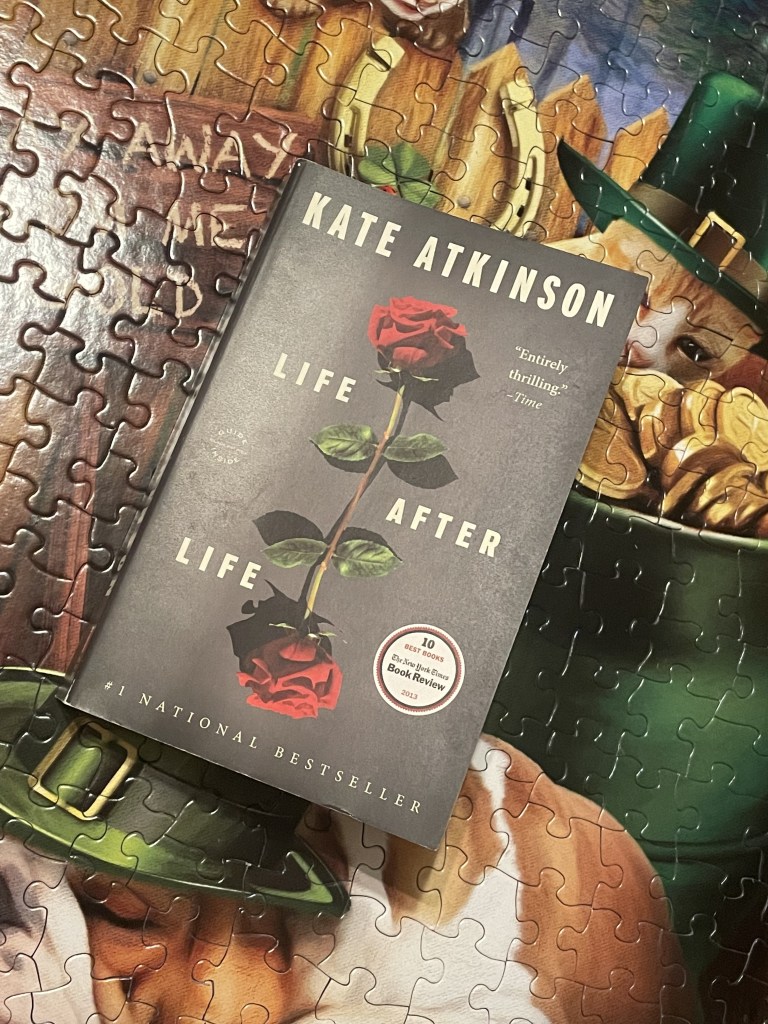
 On a cold and snowy night in 1910, Ursula Todd is born to an English banker and his wife. She dies before she can draw her first breath. On that same cold and snowy night, Ursula Todd is born, lets out a lusty wail, and embarks upon a life that will be, to say the least, unusual. For as she grows, she also dies, repeatedly, in a variety of ways, while the young century marches on towards its second cataclysmic world war.

I did love the characters. They were very reminiscent of the cast of ‘Betty’ by Tiffany McDaniel. I relate it to that book because of the dynamics of the Todd family in this book. However, with the ebb and flow of the story, I had a hard time forming that true connection that would make these characters deserving of a five-star rating rather than a four-star.

My favorite part of ‘Life After Life’ was the atmosphere and setting of the story. The reader is taken through the first half of twentieth-century England. The writer did a great job of showing the terrors of war in such a unique way that I have not seen in any other World War II book.

This is another book where I struggled with the writing. As mentioned before, the flow and setup of the story were very hard to follow. It could have been edited better to make it more accessible and easier for the reader. However, I did love the prose itself and tabbed several different quotes. The story was gripping and medium-paced, with the second half definitely being better than the first. I managed to get through it in one day

The plot was so confusing. I still do not have a firm grip on what was truly real and what was not. This whole story is based on time being a construct, and there was no real closure on what actually happened here. I have so many more questions after finishing this book, but funnily enough, I am not hating that. I usually hate not knowing everything about what I have read, but I am somehow intrigued. Besides that main plot point, I loved a review of this book that said Atkinson puts history on a human scale. That is so true.

 I did love the characters. However, with the ebb and flow of the story, I had a hard time getting that true connection that would make these characters get a five star rating rather than a four star.  My favorite part of ‘Life After Life’, was the atmosphere and setting of the story. The writer did a great job at showing the terrors of war and did it in such a unique way that I have not seen in any other World War II book.  This is another book where I struggled with the writing. The second half was definitely better than the first and I got through it in one day. The plot was so confusing. Besides that main plot point, I loved a review of this book that said Atkinson puts history on a human scale. After finishing this book, I am somehow loving it. It is not a new favorite but I would still highly recommend it.

3.5 out of 5 stars.

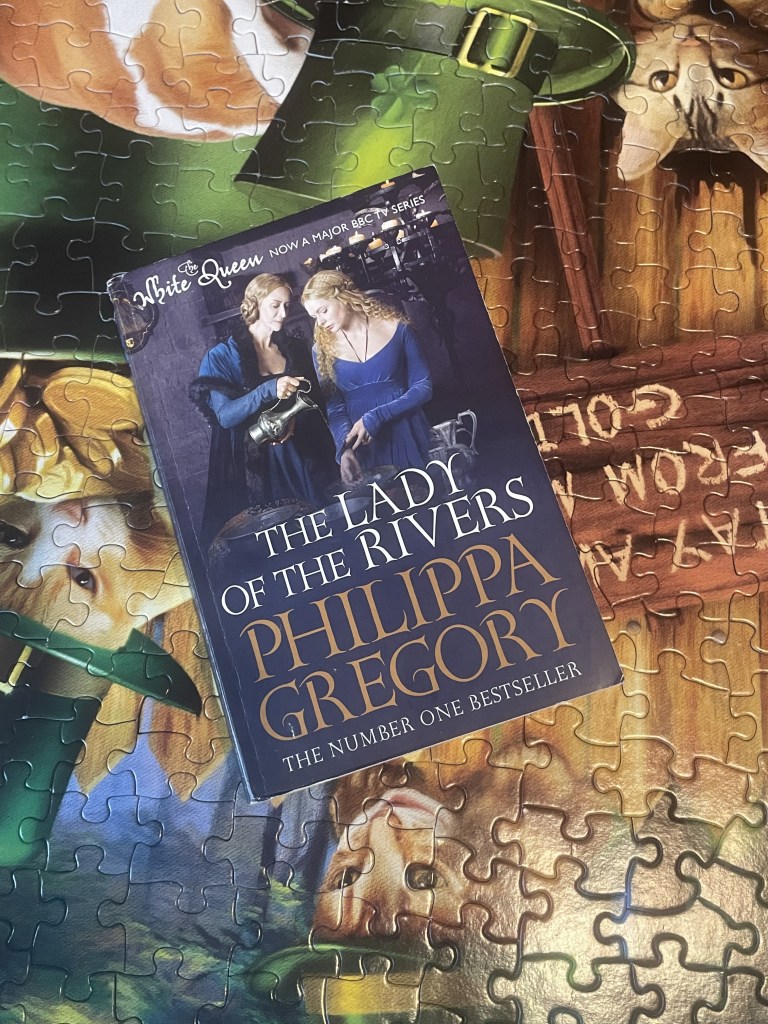
‘The Lady of the Rivers’ Review

 “Philippa Gregory brings to life the story of Jacquetta, Duchess of Bedford, a woman of passion and of legend who navigated a treacherous path through the battle lines in the War of the Roses to bring her family unimaginable power.”

The character development was my favorite aspect of this story. We witness Jacquetta’s evolution from a young and innocent girl in a noble family to the wife of a much older man who objectifies her due to her supposed ancestor – a girl who only seeks love but cannot find it. Eventually, she becomes a lover and a woman in her own right, playing a prominent role in English politics. The development of her character is fantastic. Additionally, I thoroughly enjoyed the dynamics among all the nobility throughout the book. Gregory did a great job showcasing each character.

The atmosphere was fairytale-esque and witchy, another part of the novel that I highly enjoyed. While this is historical fiction, it almost felt like a fantasy novel. Many people may not like the book for these elements, finding them too outlandish. However, later in life, Jacquetta was indeed accused of bewitching Edward IV. I believe there must have been some basis for that, even if it was innocent, like the magic depicted in this novel. The story was atmospheric in the best way!

The writing is where I struggled. The words themselves were fine; I had no complaints with that part. My issue comes with the pacing and repetitive nature of the writing. The first two-thirds of the book were medium-paced, and I had no major issues. However, the last third of the book was slow, and I wanted the story to end already. Many plot points were repeated. Yes, these events are historical, but I wish that some had been glossed over. The way the story was told was fine, but it became lengthy and repetitive.

The plot was great. The Lady of the Rivers is a woman who has yet to have an actual historical biography written about her. This account is fiction, but I still enjoyed learning about her. She was around many influential people of her time and was a major player herself. The story showed what it was like to be a woman in Medieval Europe and the trials that came with it.

The character work was my favorite part of this story. The story was atmospheric in the best way! However, I struggled with the writing. The story effectively depicted the challenges faced by women in Medieval Europe. Overall, it was a great book, but it didn’t become a new favorite.

4 out of 5 stars.

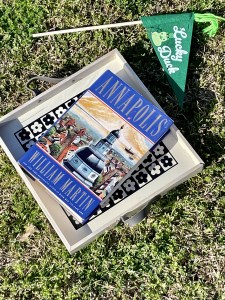
‘Annapolis’ Book Review

Annapolis by William Martin is a good fit for those who are interested in historical fiction that explores the proud traditions and romanticized ideals of the United States Navy, with a focus on the Stafford and Parrish families’ contributions to the nation’s military history.

The characters were placed for the sake of having characters and showcasing historical events. That isn’t to say that I didn’t like them, but they were not that well-developed, and once we hit the American Civil War, I had a hard time keeping up with who was who. There is also a lot of white saviorism in this book, and I know many people don’t like to read that, so I did want to make note of it in my review.

As you can tell by the title, the majority of the story takes place in Annapolis and the surrounding shores of the Chesapeake. The writing of the setting was spot-on, based on my own experiences in the area. It was so vivid and touched on all the senses.

The writing was fine. I liked how we had the two timelines and that the ‘historical’ settings were a part of a book that one of the characters was writing. However, it was episodic, and I think that is why I had a hard time connecting with the characters. There were a lot of loose ends between time periods that had me questioning. It was an interesting premise and take on a typical historical fiction novel.

The plot is the part that I am most excited to write about. As stated with the characters, I think the author really wanted to show the history of the navy as well as this country. The story was episodic, going from one war to the next. This book was very informative, and I learned a lot about some more forgotten bits of American history like fighting with Barbary pirates, the founding of the Navy, the War of 1812, and the Spanish-American War. However, WWI and Korea still remain forgotten. I learned a ton though, and that is my goal from reading.

The characters seemed to be placed primarily to serve as vehicles for showcasing historical events, but the vivid atmosphere evoked by the writing truly engaged the senses. The premise offered an intriguing take on the typical historical fiction novel. Despite some flaws, I found the book informative and fulfilling my goal of learning from reading. Overall, I would recommend it as a good read.

3.25 out of 5 stars.

‘Kindred’ Reader’s Guide Answers

  1. Both Kevin and Dana know that they can’t change history: “We’re in the middle of history. We surely can’t change it.” (page100); and “It’s over . . . There’s nothing you can do to change any of it now.” (page 264). What, then, are the purposes of Dana’ s travels back to the antebellum South? Why must you, the reader, experience this journey with Dana? – I think this book was probably really eye-opening at the time (1979) in showing the brutality of slavery, and how naive the modern population is, and that we shouldn’t forget our history and where our nation came from.
  2. How would the story have been different with a third person narrator? – I do not think the story would have been different with a third-person narrator. Personally, I prefer third person, but I believe the same points would still have been conveyed.
  3. Many of the characters within Kindred resist classification. In what ways does Dana explode the slave stereotypes? In what ways does she transcend them? – Dana transcends these roles by teaching and educating the other slaves. I believe it’s the magic of her ability to time travel, while the others cannot, that ultimately leaves a sense of wonder and raises questions about her.
  4. Despite Dana’s conscious effort to refuse the ‘mammy’ role in the Weylin household, she finds herself caught within it: “I felt like Sarah, cautioning.” (page 156), and others see her as the mammy: “You sound just like Sarah” (page 159). How, if at all, does Dana reconcile this behavior? How would you reconcile it? – I do not think Dana reconciles her conscious efforts with her behavior. I never really noticed this behavior to begin with. I don’t think I would reconcile them. I would just continue to live my life not caring what others thought.
  5. I do think that in the 21st century, we still have conditioned responses to slavery because of what people have been taught in school for so long. Many people don’t really care for history; they just acknowledge that ‘yes, this is bad,’ but they don’t truly realize the brutality of it.
  6. How do you think Butler confronts us with issues of difference in Kindred? How does she challenge us to consider boundaries of black/white, master/slave, husband/wife, past/present? What other differences does she convolute? Do you think such dichotomies are flexible? Artificial? Useful? – Butler challenges us to consider the boundaries between the people in the story by showing the complex relationships between all of the characters. As for other differences, I think it really shows the differences in time periods and how far we have come as a country, but also how there are still a lot of the same stigmas.
  7. Compare Tom Weylin and Rufus Weylin. Is Rufus an improvement or simply an alteration of his father? Where, if any, is there evidence of Dana’s influence on the young Rufus in his adult character? – I don’t think there really can be an improvement between Rufus and his father. Both were awful, and both did terrible things. I do think you can see hints of Dana’s influence on Rufus, mainly in regards to his children, but I won’t go into too much detail, as I don’t want to spoil the story.
  8. Of the slaves’ attitude toward Rufus, Dana observes “Strangely, they seemed to like him, hold him in contempt, and fear him at the same time.” (page 229) How is it they can feel these contradictory emotions? How would you feel toward Rufus if you were in their situation? – I couldn’t feel these contradictory emotions. I don’t think any of the slave characters seemed to like Rufus. I think they all thought he was a bit of a pest and annoying, and I would feel just like them. I would hate him too if I were in their situation.
  9. Compare Dana’s ‘professional’ life (i.e. her work as temporary help) in the present with her life as a slave. – Dana’s professional life in the present, with her riding, allows her to do something she wants to do. She gets to choose her job, so obviously it is way better than her life as a slave.
  10. When Dana and Kevin return from the past together, she thinks to herself: “I felt as though I were losing my place here in my own time. Rufus’s time was a sharper, stronger reality.” (page 191) Why would the twentieth century seem less vivid to Dana than the past? – I think the 20th century will seem less vivid to Dana than the 19th century because it was so brutal in the past, and people were just trying to survive. In the 20th century, they had the pleasure of doing what they wanted. They had freedom.
  11. Dana loses her left arm as she emerges—for the last time in the novel—from the past. Why is this significant? – From what the author has said, this is significant because everybody came away from slavery broken. Even today you can still see the impact it had on society . In how it divided people.
  12. Kevin is stranded in the past five years, while Dana is there for almost one. Is there a reason why Butler felt Kevin needed to stay in the past so much longer? How have their experiences affected their relationship to each other and to the world around them? – I saw Butler felt the need to have Kevin stay in the past so much longer than Dana, so he could truly understand the experience that she was going through because for a white man it was easier tremendously easier than to be a black woman in the 19th century, I think it definitely affected their relationship to each other, because of how different the mentality and morals were of the past.
  13. A common trend in the time-travels of science fiction assumes that one should not tamper with the past, lest s/he disrupt the present. Butler’s characters obviously ignore this theory and continue to invade each other’s lives. How does this influence the movement of the narrative? How does this convolute the idea of ’cause and effect’? – This influences the movement of the narrative by characters, not having to be scared or constantly having to have the same train of thought to me. It did not convolute the idea of cause-and-effect at all.
  14. Dana finds herself caught in the middle of the relationship between Rufus and Alice? Why does Rufus use Dana to get to Alice? Does Alice use Dana? – Rufus uses Dana to get to Alice because he sees them as the same woman he doesn’t see them as their own person so he thinks that Dana thinks like Alice does I would say Alice does use Dana as well because she knows that Dana have some kind of holdover Rufus, because of her abilities to travel through time.
  15. The needs and well-being of other residents of the plantation create a web of obligation that is difficult to navigate. Choose a specific incident; and determine who holds power over whom and assess how it affects that situation. – I think Dana holds a lot of obligation because she ultimately knows what will happen in history to all of these people maybe not individually but as a whole.
  16. Dana states: “It was that destructive single-minded love of his. He loved me. Not the way he loved Alice, thank God. He didn’t seem to want to sleep with me. But he wanted me around—someone to talk to, someone who would listen to him and care about what he said, care about it.” (page 180) How does the relationship between Dana and Rufus develop? How does it change? What are the different levels of love portrayed in Kindred?The relationship between Dana and Rufus develops of her, taking care of him after all his near death experiences, and that they hold each others lives in their hands in a sense, but like any relationship, you can grow tired of the other person just from constant neglect of the relationship and I think you can really see that here all different levels of lover portrayed in Kindred, romantic family. There are so many complex relationships in the story.
  17. Discuss the ways in which the title encapsulates the relationships within the novel. Is it ironic? Literal? Metaphorical? What emphasis do we place on our own kinship? How does it compare with that of the novel? – I think the title is ironic, literal and metaphorical. You can take it in any way you want; literature is art and it’s meant to be interpreted by the reader. I’m not sure how it compares with that of the novel; it’s something that I would definitely have to think about.
  18. Do you believe that Dana and Kevin’s story actually happened to them, or that they simply got caught up in the nostalgia of moving old papers and books? – I do believe that Dana and Kevin story actually happen because it is us too far out to get caught up in nostalgia, examining old papers and books.
     
  19. Butler opens the novel with the conclusion of Dana’s time travels. The final pages of the book, however, make up an epilogue demonstrating a, once again, linearly progressive movement of time. How does the epilogue serve to disrupt the rhythm of the narrative? – I do not think the epilogue serves to disrupt the rhythm of the narrative. I thought it fit in with the story perfectly as the characters were getting closure on the events that they went through.
  20. After returning from his years in the nineteenth-century, Kevin had attained “a slight accent” (page 190). Is this `slight’ alteration symbolic of greater changes to come? How do you imagine Kevin and Dana’s relationship will progress following their re-emergence into life in 1976? – I do think this alteration is symbolic of greater chances change is to come I think that being in the past for so long definitely did change Kevin’s mentality how I imagined Kevin and Dana‘s relationship of progress following reentry to life in 1976 I can see them staying as a couple because they went through this incredible traumatic journey together, but also how the mentalities were impacted as I keep saying I don’t know if it would be good for them to stay together or not.