‘The Only Plane in the Sky’ Review

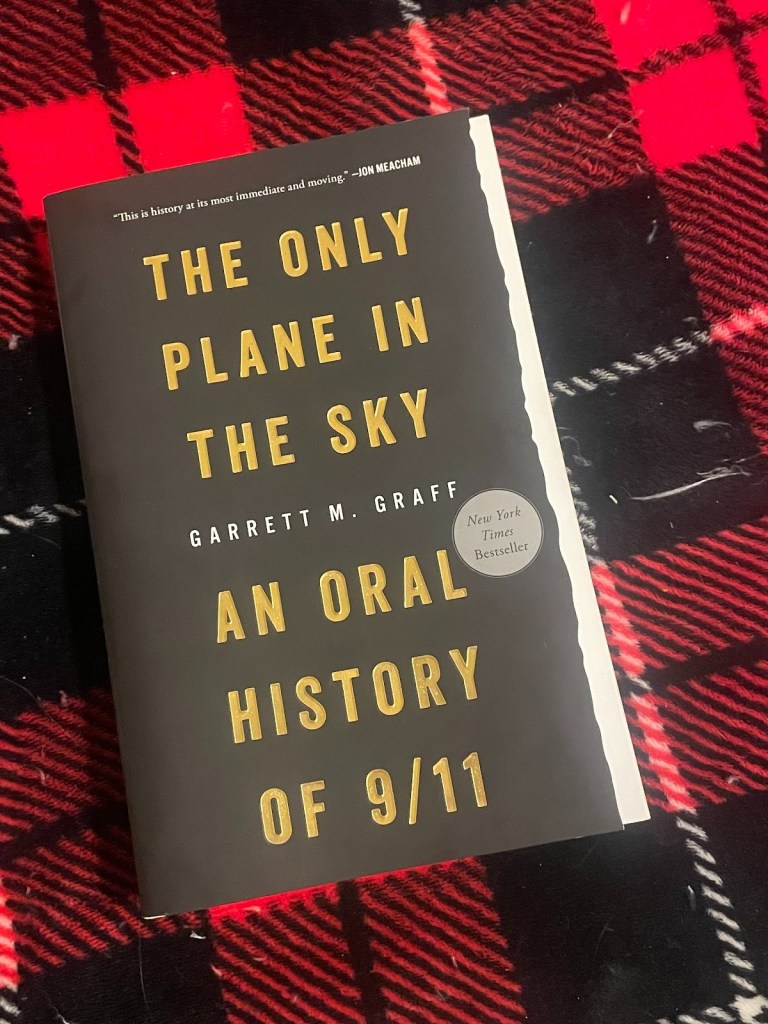
“At once a powerful tribute to the courage of everyday Americans and an essential addition to the literature of 9/11, The Only Plane in the Sky weaves together the unforgettable personal experiences of the men and women who found themselves caught at the center of an unprecedented human drama. The result is a unique, profound, and searing exploration of humanity on a day that changed the course of history, and all of our lives.” Description from Good Reads.

If you know nothing about 9/11 other than the basic facts, this book is going to knock your socks off and possibly be the best nonfiction you have read in a long time. I am someone who is incredibly fascinated by that day and the impact it has had on all of our lives. There is even a chapter that is about the youth on September 11th. There was still so much information that I did not know or had never thought about before. Examples of that would be how little I knew of what happened at the Pentagon and that the people on the ground at what would become known as Ground Zero had very little idea of what was happening around them. How big of an event it was. They did not have the privilege to be watching events unfold on television like so many around the world did. 

I have to warn you that this is so much to take in. It is dense and draining as you are filled with emotions and information. I am not saying that as a fault of the book. There were chapters where I could not let a breath out until the chapter was through. Some of this was straight up horror that I hope we never see the likes of again.

 We, the readers, are hearing from nearly five hundred people and what their experiences were that day. I love that this touched on so many different kinds of people: from the vice president all the way down to parents in the midwest worried about the future for their children. This is a day that touched all of us and had a massive impact on our world. I always talk about how nonfiction is a humanizer. This is humanizing this traumatic event in history. Showing the real everyday people that were true heroes. I cannot imagine how long it took the author to put this book together. 

There were times reading this that I wanted to get onto the next, I almost felt selfish saying this, I was just curious what was going with other ‘plot lines’. As I said before this is a lot to take in. I almost wish the sequencing was done in another manner but I do not have an exact suggestion on how I would do it.

 Writing was the only place where I had real issues. At the start, I was very confused and overwhelmed, it is like boom boom boom, getting all these names and what they went through. I was having a hard time keeping straight on who was who, what their role was, who they were related to, what city we were in. I was confused, overwhelmed by the numbers of people, overwhelmed with information. I was constantly having to turn back a page to see what was going on. I wish it was a more gradual lead into the book. It did get better the more time I spent with the book. I read this on my Kindle and wonder if it would have been different if I read this in another format. This is a great book, one of the best that I have read this year. I recommend it.

4.5 out of 5 stars.

‘Invisible Child’ Review

Invisible Child follows eight dramatic years in the life of Dasani Coates, a child with an imagination as soaring as the skyscrapers near her Brooklyn homeless shelter. Born at the turn of a new century, Dasani is named for the bottled water that comes to symbolize Brooklyn’s gentrification and the shared aspirations of a divided city. As Dasani grows up, moving with her tight-knit family from shelter to shelter, this story goes back to trace the passage of Dasani’s ancestors from slavery to the Great Migration north. By the time Dasani comes of age, New York City’s homeless crisis is exploding as the chasm deepens between rich and poor.” – Description provided by Goodreads.

This is a book that is very unique compared to the rest of the books that I read. A lot of times when I read books that critique the system; it is either a memoir or historical fiction and usually those are in a rural southern setting. In ‘Invisible Child’, we see Dasani, who is a young girl coming of age in poverty, in Brooklyn. I felt so connected to her. I honestly felt every emotion. Sometimes I was proud, sometimes I was in despair. As I said before, this is essentially a coming-of-age story, but being non-fiction and being a piece of journalism as we have the journalist, Andrea Elliott looking on at Dasani’s life, writing her story. 

I could not help but feel so frustrated as I got to the closing of the book. This is one of those books where it feels like you need to take a shower. You need to stare at a wall after you read it. Sometimes you want to blame the kid in the situation but you know you can’t because they’re only a product of their circumstances and that makes you look at the parents, but then you realize the parents are products of generational trauma, and if we look at that what causes that generational trauma, it’s the systematic racism in this country. the people in the situation were set up to fail.  After reading this I was very at a loss of hope not knowing how we solve this issue. How do we take away this pain? The pain that millions of Americans are experiencing. In the afterword of the book Andrea Elliott states, “Almost nothing counts more than the person who shows up,” and I think that that speaks volumes. Being there for one another to try and help others in our community rather than judging them is the way to go. To hopefully get our country going in a better direction. People need to care for each other. 

I know that some people are probably thinking it’s not just Black people who are impoverished in our country and that is true and that is touched on in this book. We see people from all walks of life that are experiencing poverty, but in this case, this book is focusing on Dasani. If we look back to the Jim Crow era and further back to the founding of this country of how Black people were viewed it all adds into why Black and Brown people are more likely to be put in these situations. Again, I want to say, it is important to help and care for everyone in your community and be there for all of them. Try to understand them and I hope if you read this book it can enlighten you on what it is like to be in this situation.

  I will be bringing up the afterword of the book again. As this is where Andrea Elliott speaks on the process of putting this book together. When she started this whole project, this was just supposed to be articles for the New York Times, but it really spilled into becoming a story, becoming a book of its own. There were so many obstacles of how the systems work in New York City and in this country for how she could get this kind of story out there, but she was able to do just that. There are also a little over 100 pages of notes and an index and I really loved just getting that clarification of how a story like this can be formed.

  At times I did question the structure of the book as it did get confusing with flashbacks and the present day, and how in every chapter that varied how it was structured. The writing is where I struggled there were some great paragraphs, but the length and the pacing is definitely questionable. We are following Dasani for eight years of her life. That’s, I know minuscule on the big scale of things, but also for a book that’s a large plat of time. It started out very fast paced short chapters easy to get through but after a while, we were seeing the same stuff over and over again. That is how life works. We do go in circles at certain instances in our life, but to read that does get a bit tedious. Especially when the chapters are starting to get longer in length. We would get longer chapters and just be going through the same thing over and over again. The pacing would then pick up again as Dasani goes off to boarding school, in a whole new setting or seeing new experiences. It was an up-and-down journey much like life, I guess. 

 This is definitely an important read. It was so timely with everything that is happening with SNAP and the New York City mayoral election. I personally read this book at the perfect time. It’s so interesting how I do not plan to read these books in any kind of order. Each month I go in with a different plan. I am talking about how it all connects, like reading ‘Misbehaving at the Crossroads’, ‘The Reformatory’, The Warmth of Other Suns’, it all added up to this book and to think that this book might be another stepping stone to reading another great book is really fun to think about.

4.25 out of 5 stars.

‘Kidnap’ Book Review

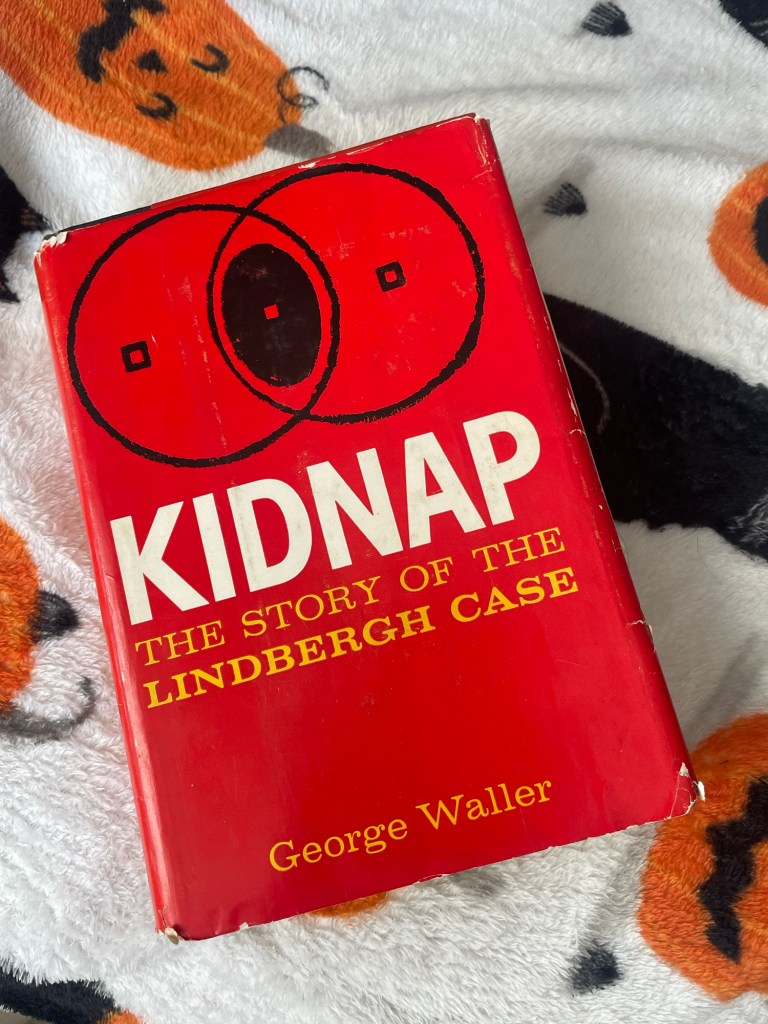
First and foremost, true crime is not a genre that I gravitate towards. This book was a gift and I am willing to give any genre a go! ‘Kidnap’ started out strong. The writing style begins as narrative nonfiction really immersing you into the story. The sections of the crime and investigation were fascinating and intriguing. Theories were constantly changing. 

Once the investigators think they have caught the suspect we then go into the longest part of the book, the trial. I am someone that courtroom scenes typically go over my head. That stayed true here. The writing style suddenly changed for this section. The pacing was no longer fast but slow. It went from a narrative style to tedious dialogue. These chapters in this section would go on for thirty pages, again, it was tedious and confusing. I would get lost in the dialogue. That being said, I dreaded picking up the book at this stage. The majority of the book I was dreading. 

I do think this case was what laid the stones on how kidnapping and missing persons cases are now handled in the modern age. At this later date, it is so easy to see where things went wrong. It seems as though a lot was learned from the handling of the case of the Linbergh baby to help children and families in the present and future. I do not strongly recommend this book but this isn’t typically my kind of story. 

2.5 out of 5 stars.

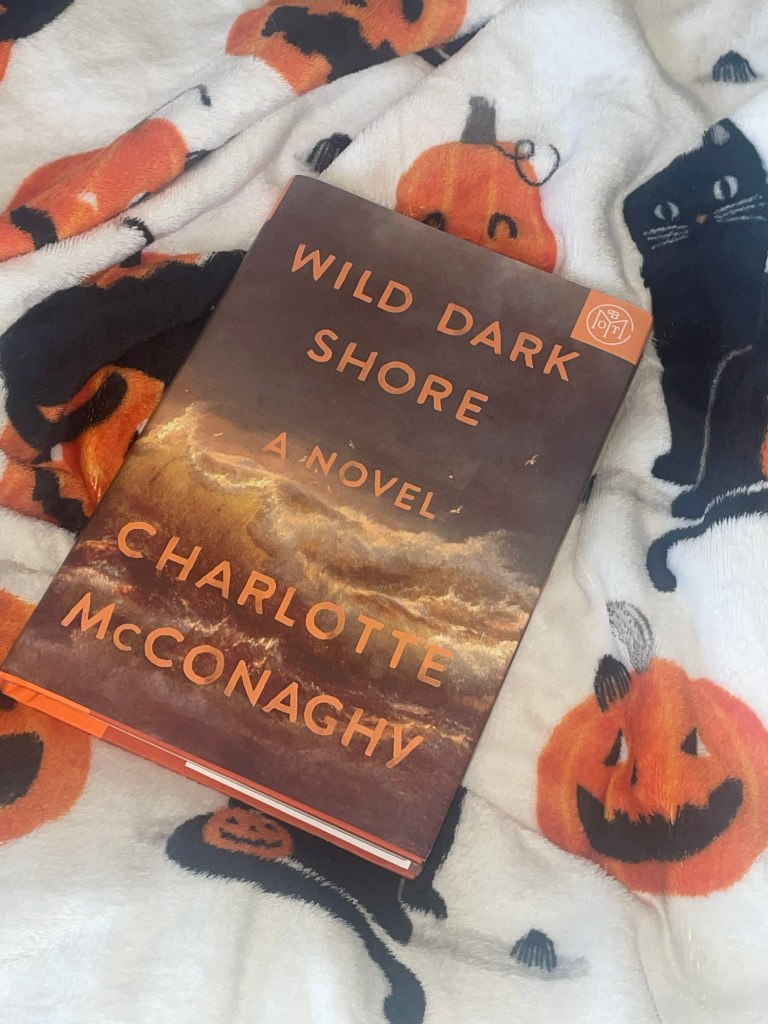
‘Wild Dark Shore’ Review

This is a story where the side characters, the children, stand out more to me than the adult leads. We do get the points of views of all but it is obvious who our main characters are. Rowan, she is our star, the woman who washes ashore to a remote island. I did not understand why she did some of the things she did knowing the situation that she was in. It did not make sense to me. Also, the romance was unnecessary. I did not feel any chemistry and it was jolted upon. For a good chunk of the book we are going through cycles with the character arcs and I even believe after the events of the book the same thing will be happening. I did like the aspect of not knowing who was in the right and how that changed day in and day out or quarter to quarter while trying to unravel the mystery of the book. 

The atmosphere was my favorite part. Shearwater Island becomes a character itself rather than just the setting. I was so vividly immersed onto this Antarctic island in a world being ravaged by climate change, rising sea levels. All your senses are invoked, even your emotions are by how stunning the wildlife and scenery are that will come to your mind while reading. It’s such an ancient, eternal feeling. The island, the story, could be thousands of years ago when in reality it is in the near future.

Now let’s get to where it is confusing, the writing. I do vibe or gel well with McConaghy’s writing style itself. The words are so blunt and matter of fact but at the same time can read as lush as she builds this world around you. I do want to recommend reading this on ebook or having a dictionary nearby as some of these words are quite hefty and pretentious. There was a lack of consistency in the pacing. Rowan’s chapters could be up to thirty pages, while the others might only get one to five. It really dampened how I usually read a book. This book is short in page number but it took me a while to get through. Moving along with the pacing, the stakes would get really high and my adrenaline would be pumping and then we would wait another quarter for something to happen again. It was uneven. 

I always love when a thriller is more than just that. More than a basic plot but going into themes and ideas as well. This is a looking glass, at what could possibly be to come with the rising sea levels that we are seeing in our world. The mystery was good as you never knew who to trust. Tides are constantly changing. This is a story of grief, and how everyone’s experience with it is a different journey even if it all stems back to one event. Grief can fully take over a person. At the same time we see the lengths that love will go. Everyone’s experience is different. The feelings and emotions are different. Love can fully take over a life. Love and grief are so intertwined. 

 There are some smaller themes like where we are born and raised can shape our beliefs, our view on the world. How home is so much more than something physical. As I wrote before, this is a piece of climate fiction. This is a survival story. Surviving the battle with grief, with love, physically surviving climate change. ‘Wild Dark Shore’ has a lot going for it in these regards. I was on the edge of my seat for this one. Even if the author reused themes from ‘Migrations’, a woman with a shady past, man who also might not be as he seems, a climate ravaged world. It is similar. I thought this book was just alright as it did lack consistency.

3.75 out of 5 stars.

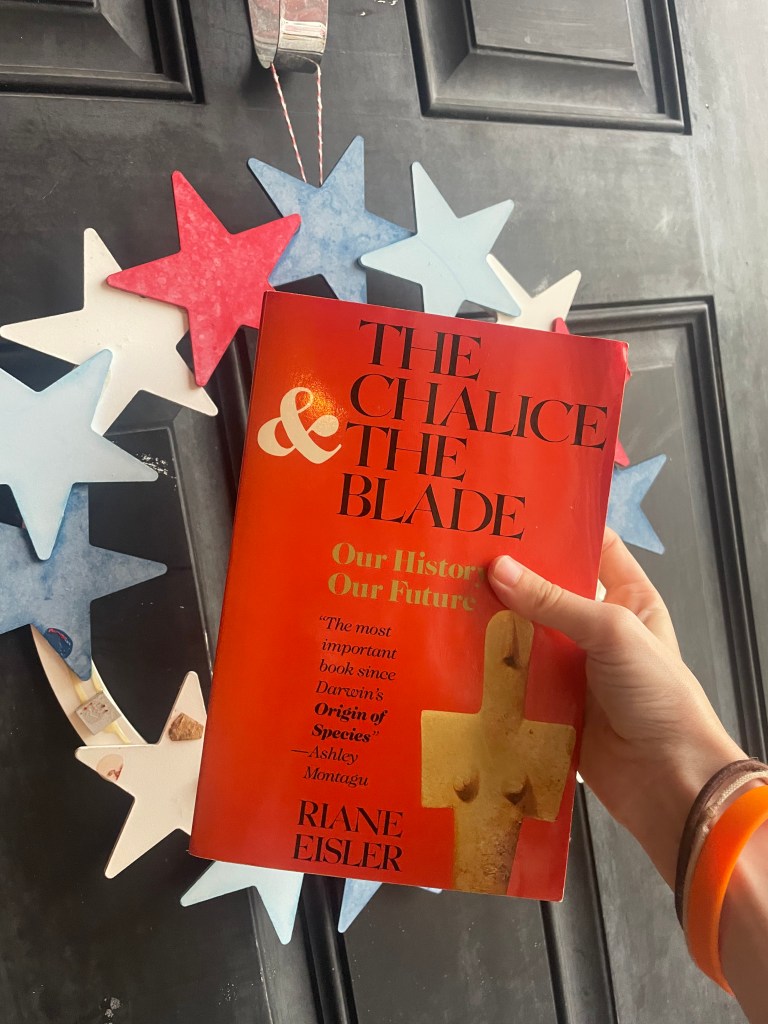
‘The Chalice and the Blade’ Review

“The Chalice and the Blade: Our History, Our Future by Riane Eisler offers a sweeping re-interpretation of human cultural evolution by contrasting two fundamental social models: the equitable, nurturing partnership societies symbolized by the chalice, and the authoritarian, violent dominator societies represented by the blade  . Drawing from archaeology, anthropology, history, religion, and social sciences, Eisler proposes that early human societies—especially in Neolithic Europe—were organized around life-affirming, gender-egalitarian values (gylany), before being overtaken by patriarchal structures featuring hierarchy, violence, and oppression  . Rather than presenting utopia, the book argues that partnership-based social systems are deeply rooted in our past and offer viable pathways for building more peaceful, sustainable futures. It concludes with two divergent visions for society’s trajectory: one continuing on a dominator course, the other reclaiming partnership values for healing and transformation.”

This book was like a lightbulb moment for me. It confirmed and deepened my beliefs about society, where we came from, and how religion developed in the Paleolithic and Neolithic times. Archaeological evidence seems to suggest that these early societies were egalitarian, where everyone was treated equally, with no one group dominating others .It isn’t to show that egalitarian societies are perfect. They don’t have as much war and bloodshed but they still have their issues. There is no perfect societal structure but this system has seemed to prove more beneficial throughout history.In Europe’s first civilization, the Minoans on Crete, we see a lot of evidence pointing in that direction, and I became really fascinated by Crete after reading this book. 

To take it back a few thousand years, men from the outskirts of society banded together through violence. They were the ones who worshipped gods of lightning bolts and hammers, raiding these egalitarian societies. The world chose to respond to violence with violence, and it has been that way ever since. We now live in a society where there has to be a dominator, someone at the top. This book dives into how that happened and discusses various instances in history of how this has been enforced and how it continues today. I also learned how history has cycles. At one point women might come close to being equals with men and then have a fall. A historical example would be Elizabethan England, a queen on the throne and men being able to show more femininity in the likes of Shakespeare. After that time we see the Puritans and witch trials. I cannot help but see it where we are now. During the sixties we saw a societal revolution mainly stemming from the Vietnam War. Now, women’s rights are being taken in the form of body autonomy and abusers having no real punishment. 

Originally published in 1987, I was concerned because so much has happened since the late 1980s. Luckily, I was reading this on my Kindle, which included an epilogue written by the author in April 2017, and she was still addressing the same societal issues I had been thinking about. After reading this book, I found it refreshing to see the same concerns echoed. This book showed the evolution of religion and how society has viewed the role of women. 

Why am I not giving it a five-star rating? It starts with a 26-page introduction that basically explains what every chapter will cover, which was a lot of information to absorb. Some of it went right over my head, making it challenging to take in, especially since I wasn’t familiar with much of this material before reading. The book does become easier to read as it progresses, but I will admit some parts still went over my head. I would highly recommend having a dictionary on hand or reading it on Kindle, as there are terms I wasn’t familiar with. Fortunately, on Kindle, I could hold down a word to see its definition, which was very beneficial for me.

A lot of this has me questioning who writes history, what makes it into the history books, and what is taught in the classroom. I wonder why certain aspects are not discussed or are not confirmed, even if they seem believable to me. That raises a whole other can of worms I will be pondering for a while. Overall, this book was so thought-provoking and eye-opening, and yes, I would highly recommend that you pick it up!

4 out of 5 stars.

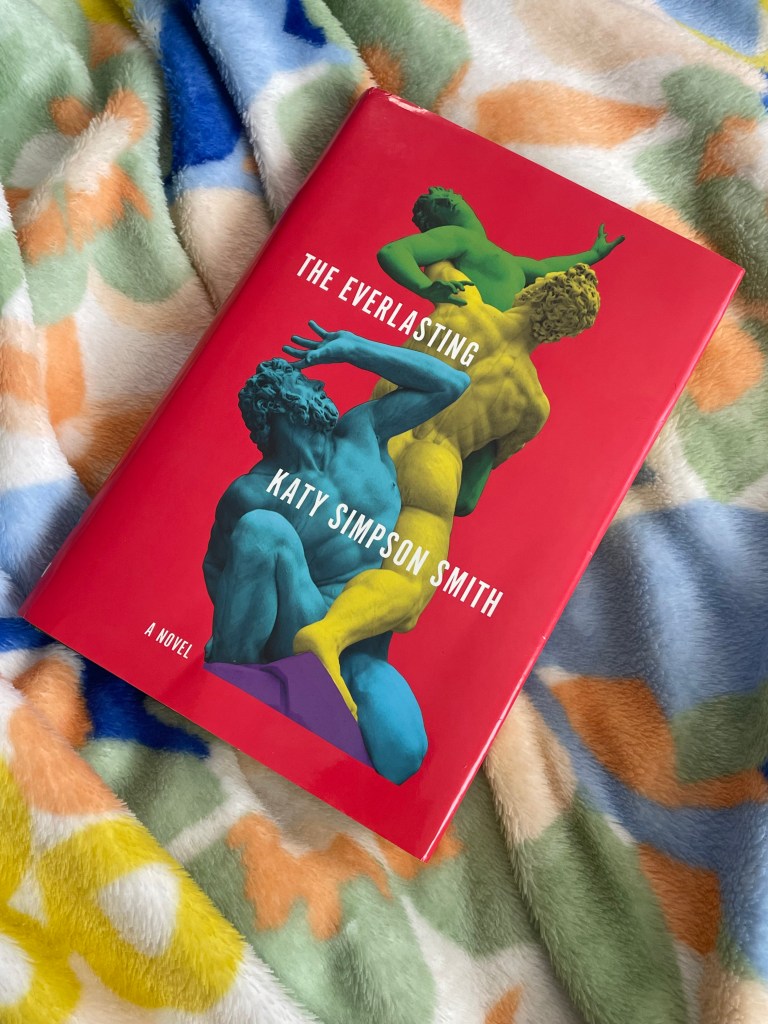
‘The Everlasting’ Reread Book Review

The Everlasting by Katy Simpson Smith is a sweeping, multi-century exploration of love, faith, and moral struggle, set against the rich backdrop of Rome. The novel follows four distinct protagonists—Prisca, a 12-year-old early Christian martyr; Felix, a medieval monk tending crypts; Giulia de’ Medici, a pregnant princess of Moorish heritage; and Tom, a contemporary American biologist—each grappling with desires, duty, and sacrifice in their own time. Interwoven with their stories is an omnipresent, time-traveling Satan who offers ironic commentary, binding these narratives across two millennia. Poetic and ambitious, the book poses timeless questions about goodness, forgiveness, and what it means to love in a world marked by impermanence and history.”

Original review:

This is going to be a complicated but loving book review. As always, we will start first with the characters. This was really a mixed bag of characters, but I wouldn’t say I felt extremely connected to any of them. The child, Christian martyr, Prisca, was definitely my favorite character. I love seeing the world through the eyes of a child, especially in an adult book rather than a book that is geared towards children. I also liked the atmosphere that her story presented as we are seeing the early days of Christianity. The Medici princess, Giulia, believe it or not, was my least favorite character. I just didn’t like her. She seemed to think she was better than everyone, and I didn’t think the character work was there for her. The two male characters, the one in the ninth century and the modern-day character, were fine, no strong feelings.

I loved the atmosphere in the story. I always talk about how there is so much history on the Italian peninsula, and that is amplified in this book, showing it off spanning thousands of years. The author did it in such a unique way, selecting random times rather than doing a huge book following all the time (I would love both, but I do really like how the author did it). In this one, again, the second-century plot was my favorite. That one is so unique and one that I’ve never read before in literature.

The writing is where this gets complicated. The dialogue was lazy. The prose was dense and overbearing, but there were moments I had to take a picture of a page because it was so good, and I had to share it. Overall, though, the writing made me feel exhausted, and I almost fell asleep reading this book at times. I definitely think this would be better as an audiobook, and when I do reread this book, I will do it as an audiobook.

The plot was by far my favorite part. Our main theme in the story is love and how it comes in all different forms and how it’s different for every person, but that was not my favorite theme in the story. My favorite theme was history and how everything is connected. If you are a history lover, you have to pick up this book. I loved this book, but it is not a new favorite.

 ⅘ Stars. April 14-20, 2024

Review on reread in 2025:

This time around, I listened to the audiobook version of the book while also reading the physical copy. I annotated the book this time. The audiobook features a multi-cast narration, with different narrators for each point of view. This made the characters feel much more personable. I understood them a whole lot better—why they were the way they were, why they felt the way they did, and why they acted as they did. Each character is going through their own set of struggles, and one of the main themes here is love in all its different forms. 

With each character, except for one who I’m really confused about, we see various expressions of love. First, we have Tom in 2015, who is having issues with his marriage but also shows the love of a father for his child. Then we have Giulia, the Medici princess, who is trying to find love for herself. Felix is the character I’m confused about; I can’t quite unravel what display of love he’s showing. It could be a combination of all these or something that I’m just not picking up on altogether. We also have Prisca, who demonstrates a love for God. 

I did enjoy Felix a lot this time. I don’t know if he’s my favorite character, but Prisca was my favorite character the first time around, and I still find her story to be so moving. We also need to talk about the omnipresent character of Satan. Something I didn’t know when I got the physical copy is that in the audiobook, Satan is narrated as a woman, which has made me think about so many things. Satan is depicted as a bitter ex, with God being the ex-partner of Satan. This has made me reflect a lot on the plot of the book, and I feel like there’s some kind of feminist undertone to the story, though I’m not exactly sure what that is yet. 

With the character of Satan, I realized how ever-present Satan is; while you have to build your relationship with God, Satan is always there off to the side, wanting to lure you off the cliff.

I absolutely loved the setting of Rome. We traverse 2,000 years of history, exploring all the different eras of the city. With the character of Satan, we also see glimpses of present and future events. If you’re someone who loves not just Roman history but history in general, then this is a book for you. 

This leads me to the writing. The writing is beautiful. While it might not be my absolute favorite style, I can see how it could be a bit much at times for some people. I definitely recommend the audiobook to get a better understanding of the writing style and to be more immersed in the story. The writing is so thought-provoking, with beautiful instances of reflection on things I had never considered before regarding history. I had to get the highlighter out for this one!

The first time I read the book, I was really focused on the historical theme of the story. While I acknowledged other themes like love and loneliness, I was primarily drawn to the history. The title, ” The Everlasting,” reflects the frequent discussion of everlasting love—love that only God can provide—and how, as humans, we are constantly looking towards everything He created, looking for love when it ultimately comes from him. However, this theme of love also delves into the emotions that accompany it: the pain, the lust, and, as I mentioned with Satan, the lurking presence of love. To experience that pure love, you must build a relationship and nurture it.

As for loneliness, it wasn’t something I picked up on during my first reading, but I now see that all these characters are struggling with it. Loneliness and love often go hand-in-hand; you can feel lonely because you haven’t found love, lost love, or tried to find love but couldn’t. 

Another thing I noticed is that ghosts are frequently mentioned, at least once in every point of view. This has me questioning whether there are ghosts of other characters lurking in the perspectives of others. Additionally, learning more about the character of Satan this time around, especially with Satan taking a personified form in the chapters, has really blown my mind. 

The intrigue was strong, and I actually didn’t remember much from my first reading; I just recalled the very basics. I don’t think there was a logical conclusion to the story—for Prisca’s story, perhaps, but for everyone else, it feels very open-ended and leaves me wanting more resolution. However, I do think this is an epic story, and lately, I’ve been questioning how a book that’s only about 300 pages can be epic. This book has confirmed for me that it is indeed possible. I loved this book even more than when I read it the first time, which speaks to the power of rereading and switching formats. Yes, I would definitely recommend that you pick it up!

4.25 out of 5 stars
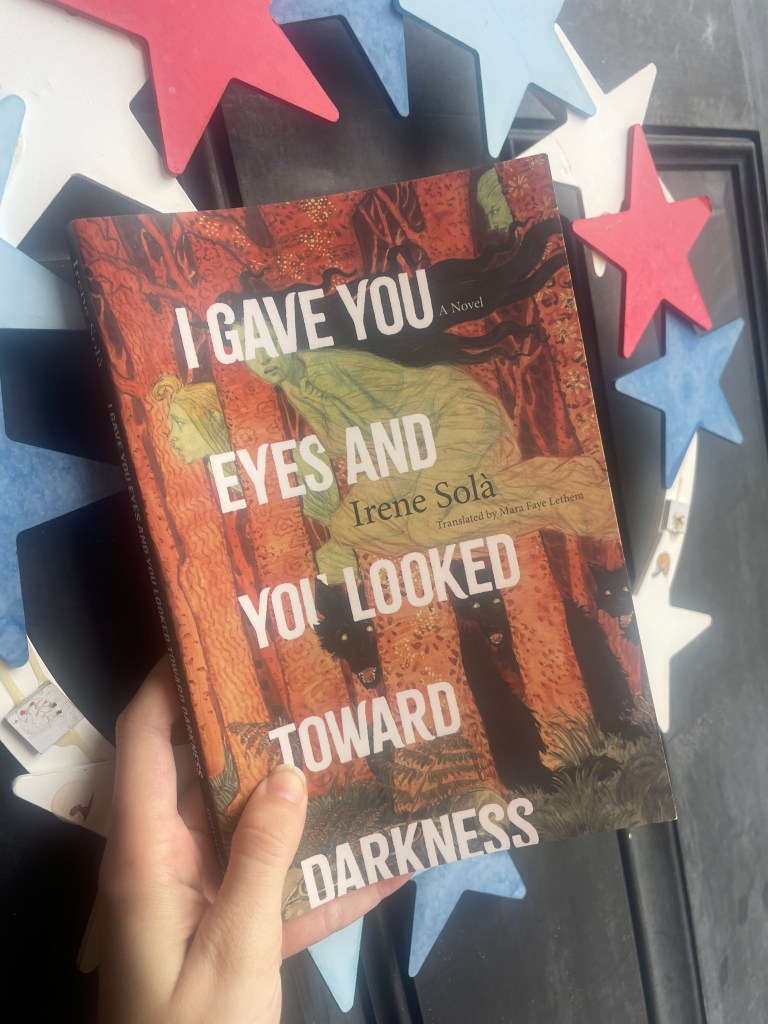
‘I Gave You Eyes and You Look Toward Darkness’ Review

I Gave You Eyes and You Looked Toward Darkness by Irene Solà is a haunting, polyphonic novel set within a single day in a remote Catalonian farmhouse called Mas Clavell, where a dying matriarch named Bernadeta lies surrounded by the spectral voices of her female ancestors . Spanning centuries, the narrative weaves together folklore, witchcraft, devil’s bargains, wars, and curses linked to a pact struck by Joana, an ancestor who traded her soul for a husband—only to discover he was physically imperfect, dooming her descendants to bear birth defects the-tls.com+5kirkusreviews.com+5ft.com+5. Through surreal time shifts and vivid, earthy storytelling, the novel explores the resilience, suffering, and defiant humor of women who have survived brutal histories, as ghosts and living voices echo the landscape’s darker legacies goodreads.com+3ft.com+3theguardian.com+3.”

I really enjoyed these characters, with Joana being my favorite. They are campy and quirky, but not in a cringe-worthy way; they almost remind me of the witches in “Hocus Pocus.” However, I want to remind you that this is a horror novel. While these women might be comedic and the story may have humorous moments, at any moment, things could snap and become creepy. It was fun to see how different bits of history, as well as the present, are reacted to by different generations. 

We see these characters through all stages of life, and as I mentioned, they can be comedic or creepy, but they also have their flaws. They are all still people. These flaws can be mental or physical; they aren’t perfect characters. In fact, I would say they are quite imperfect, which makes them all the more enjoyable to read about because I never really knew what these women would do next.

The atmosphere was definitely my favorite part. This story feels so ancient; it seems like it could have been told around a fire pit hundreds of years ago, yet it could also be told in 2024 when it was published in English. It has that fairytale, folktale vibe, and I love that because there’s always something to be learned from that kind of story.

The writing is definitely unique. It’s somewhat confusing, and I found myself puzzled while reading at times. In some instances, this style is definitely an acquired taste. Normally, I’m not someone who enjoys descriptive, long, stream-of-consciousness writing; that’s typically not for me. However, when the book is less than 200 pages, I can manage it without issue. 

Something I did notice about the writing, which might be attributed to translation, is that there were a lot of big words I wasn’t familiar with, which caused some confusion for me as well. However, I loved the allegories and metaphors used, especially at the start of a chapter where a house is used to describe the human body and how our souls and lives are contained within that body, with the body being the house for our soul. I know that sounds confusing as I worded it now, but it’s truly incredible to think about.

There are a lot of themes in this book that are prevalent, such as motherhood, religion, and the powerful influence of religion itself. You really have to be careful about how you approach and handle these themes, as you could end up cursing your legacy and everyone who comes after you. However, I think the main theme here is that everything in life has blurred lines. Reality is a blurred line. Before I read the book, I didn’t check the back cover, but this sentence on it describes the story perfectly: “A novel in which the line between the dead and the living, past and present, story and history are blurred. In it, Irene Sola draws on oral tradition as well as art, literature, and fairytales to tell a completely new kind of story.” This description captures the essence of the book perfectly. Irene Sola hit the nail on the head with that.

If that was the kind of book she aimed to write, then it’s a perfect description. We would not be here in the present if it weren’t for history, and history wouldn’t be history if it weren’t for the present. This book felt like a fever dream, and while it can be a lot to take in at the moment, as I’ve done with her other work, the more I think about it, the more I realize how impactful and thought-provoking the author’s work can be.

Now, would I recommend this book? Yes, I would. I’d like to do some comparisons: if you like this book, then you might enjoy works by authors like Mona Awad or Otesha Moshfegh, as they often explore themes of “weird girl” literature. This book made me realize that if bodily fluids and bodily functions are a part of the narrative, it’s probably going to be a “weird girl” book. For other books that remind me of “Northwoods” by Daniel Mason, which explores how a plot of land holds so much history and influences the ambiance around it, I also think of the iconic classic “One Hundred Years of Solitude.” The village in that novel reminds me so much of the house in this book, with all the little mystical things happening to the family. 

Yes, I really did enjoy this book from one of my favorite authors.

3.75 out of 5 stars

‘Every Rising Sun’ Book Review

Every Rising Sun by Jamila Ahmed is a richly imagined, feminist reimagining of One Thousand and One Nights set against the real historical backdrop of 12th-century Persia. It centers on Shaherazade—recast not just as a storyteller staving off death, but as a clever, morally driven woman confronting betrayal, wielding her narratives to influence a powerful, unruly ruler and ultimately challenge empire-sized conflicts like the Third Crusade and Oghuz invasions. Balancing sweeping historical intrigue with the magic of folklore, the novel offers both interior depth and grand political vision as Shaherazade fights for redemption, agency, and the power of her own story .”

Before we dive into the nitty-gritty of this book review, I want to state that I’ve never read “One Thousand and One Nights,” and this book is a retelling of that story. Now, let’s talk about the characters. I liked the ideas behind these characters, but I don’t think the proper work was done on their arcs. Shaherazade is our main character and the POV we follow throughout the book. It makes a lot of sense for a woman who grew up at the court of the Malik to be observant and gain power throughout the story. However, we don’t actually see that development taking place.

The whole middle of the book lags, with not a whole lot happening when the proper character work could have been done. Yes, this is about a massive journey from Persia to Palestine, covering miles and miles of land. Once we get to the last quarter of the book, there’s a sudden shift, and Shaherazade emerges as this powerful woman. While I think that transition is understandable, we, as readers, don’t see that growth unfold in the text; we have to fill in those gaps ourselves. I don’t believe that’s how books should be written. Again, I like the idea, but I just don’t think it was properly executed.

I did like the atmosphere, and I would say that was my favorite part of the book. Some of the world-building, especially in Baghdad, was very vivid and somewhat reminiscent of when we visited Essos in “Game of Thrones.” I was really intrigued by the settings, and it made me want to research all the names and groups of people that I was hearing about. However, that was also one of my problems with getting immersed in the story. I found it challenging to engage because I didn’t have a background in all these different cultures and terms. This could just be my ignorance, but I feel like a book really needs to immerse you in its world and build that world for you so you can understand it. Unfortunately, that wasn’t done here. 

On the positive side, the book did inspire me to research these cultures and this time period in the medieval Islamic world.

Let’s talk about the writing style, as it relates to my earlier point about being immersed in the story. I found myself really having to focus to grasp what I was reading in the main storyline. Shaherazade is portrayed as a storyteller, which makes sense since she tells stories that are woven into the narrative of “Every Rising Sun.” However, while trying to understand this world we’ve been thrown into, I found myself facing a fictional story within the story. I had to rearrange everything in my mind, questioning what is fiction in this world, what is real, and what important information I was supposed to take in. It was just very overwhelming for me to read.

Again, maybe if I had a better understanding of the Islamic world during medieval times, this book would have been easier for me to navigate. But I do think that the writing style could have been improved to avoid making me feel like I was being thrown from one story to the next and back again.

As I mentioned in the earlier paragraphs about the character work, this book starts out very fast-paced. It took me a little while to read because I was trying to adjust to the story, the culture, and the world-building. A lot was happening, and there was plenty of political and court intrigue, which I really enjoy in my historical fiction. However, once we reached the actual journey, it felt long, boring, and repetitive. The story was told over and over, with little scenes depicting the struggles of being on the road, such as dealing with plague, battles, and the inner turmoil between harems of women. You would think all of that would be intriguing, but the way it was written made it feel dull.

Then we get to the end, where things start to pick up again, but everything feels so sudden that it lacks the necessary buildup. All that time spent in the middle of the book felt like a waste. I felt like I wasted my time reading all of that when there could have been proper character work taking place. I do think this book lacks some logic; it makes sense how an observant girl could become powerful and how someone who immerses herself in stories and learns about the world around her could emerge as a strong woman. Yet, we don’t actually see this development; we’re just told that it happened.

This book didn’t do much for me, but I do think it could be a good historical fiction choice for those who enjoy young adult fantasy set in a desert, Middle Eastern-inspired world. If you like those themes, you might appreciate this one, but overall, I wouldn’t recommend this book.

2.42 out of 5 stars.

‘A Little Life’ Book Review

A Little Life by Hanya Yanagihara is an emotional and harrowing novel that follows four college friends—Jude, Willem, JB, and Malcolm—as they navigate life in New York City. At the heart of the story is Jude, a brilliant but deeply traumatized man with a mysterious and painful past. As the years pass, the novel delves into themes of friendship, love, suffering, and the long shadows of abuse. With its unflinching portrayal of trauma and resilience, A Little Life is a devastating and profoundly moving exploration of what it means to survive.

As always, let’s start with the characters first and foremost. I really enjoyed two of these characters: Harold, who is Jude’s somewhat mentor, and Willem, who is one of the four friends. I would absolutely have devoured this book if it had only been about Willem; I loved his story. One of the things I think this book teaches is that empathy needs to be directed towards everyone, not just a select group of people. To make the world a better place, you have to show compassion and empathy to everybody around you. That was something great about this book. Even if I didn’t necessarily love all of these characters, I could see a little bit of myself in their relatability.

Now, what did I not like about the characters? The side characters were very interchangeable, and I didn’t think they had a significant role in the story. I’m thinking of characters like Richard, Kit, Lucian, and so many more that I can’t even remember the names of because they were so underdeveloped. I don’t understand the purpose of having them in the story. Additionally, two of the college friends, JB and Malcolm, just kind of got pushed to the side. It almost seemed pointless to have these long chapters dedicated to them at the start of the book if we’re not going to follow their whole story in the same manner.

My biggest gripe, though, was that I was not immersed in the shoes of these characters. We have Jude, who is presented as being so brilliant, but I don’t understand why they felt this way. I guess it was the mystery surrounding him. Every bad thing that could happen to a person happens to Jude, which typically would make me feel despair, evoke emotions, or frustrate me to the point of anger with the book. In this case, I felt neither of those because I was never immersed in the story. Sure, I can admit that what he went through was disgusting, terrible, and just plain awful, and I did feel uncomfortable reading those scenes—if you don’t, there’s probably something wrong with you—but I never felt like I was truly put into the shoes of these characters, even if this book does a great job at depicting the dynamics between people.


Regarding the atmosphere, the vibe and tone are very pretentious. I think if you are a fan of ‘The Secret History’ or maybe ‘The Goldfinch’, then you’ll like the tone of ‘A Little Life’. But let’s talk about where and when the book is actually set. This book feels very New York City; it gets that vibe across perfectly. Now, on the back of the book, it says this is a 21st-century story. I don’t know when in the 21st century this book takes place. It feels rather timeless, as it does mention emails and phones, but we don’t have any pop culture references. Since this is in New York City, we never get, for instance, a 9/11 reference, so I’m not sure when this is entirely taking place, and that’s something we’re going to discuss a little more when we get into the writing. I don’t understand emphasizing the 21st-century setting in the synopsis if the book isn’t going to utilize that aspect.

As I mentioned earlier, the writing did lack clarity for me, particularly in terms of when the story is taking place. Mainly, as we moved from chapter to chapter, it would take me a moment to adjust and figure out whose POV we were reading from and why that particular story was being told in the format it was. However, when you step back and look at some of the passages in this book, it is beautifully written. I wouldn’t classify it as lyrical prose or anything like that; it’s more descriptive. I compared this to the works of Donna Tartt, as it has a very similar writing style—very beautiful writing—but it did get confusing at times.

The plot was good. This is definitely a character-driven story, but I loved the themes of relationships and how they shape us as individuals. This book really made me realize that we are the way we are because of the people around us. Our relationships with those people—not just romantic relationships, but also platonic and familial relationships—shape us into the humans we become. It’s honestly mind-blowing to think about. This book did such a great job at portraying all the different kinds of relationships we experience in our lives and how a friendship can spawn many other kinds of bonds with various people.

The book shows what it’s like for someone who has been through abuse and trauma to love someone else, and what it’s like to love someone who has endured such awful experiences. There has been a lot of discourse about this book in recent years. When I first got into reading as an adult, this book was very popular back in the 2010s, but in the 2020s, the tides have somewhat started to turn. There has been discussion about how it represents the LGBT community; some instances, especially in the last quarter of the book, made me feel uncomfortable regarding that depiction. However, as I am not part of the community, I can’t say for certain how well it was represented.

There’s also disability representation, and we have several characters who are people of color. Our main character’s race or ethnicity is never stated, which adds to the mystery surrounding him. There’s been discourse about how abuse is portrayed in this book. Allegedly, the author did not research sexual trauma and just went with the flow of things, which to me seems quite surprising—writing something without doing any research on it. But again, this is all just hearsay I’ve seen online. 

I wanted to note these claims about representation and the depiction of abuse because they could influence someone’s decision to read this book. I don’t think this is a bad book, but I also didn’t love it, nor did I hate it. I didn’t feel a strong emotional connection to it. This is one of the highest-rated literary fiction books on my TBR according to Goodreads and has been nominated for numerous awards. Therefore, if you do want to pick it up, maybe consider borrowing it from your library first before purchasing a copy.

2.75 out of 5 stars.

‘Remarkably Bright Creatures’ Review

“Remarkably Bright Creatures by Shelby Van Pelt is a heartwarming novel about unlikely connections and healing from loss. It follows Tova Sullivan, a lonely widow who works the night shift at an aquarium in a small Washington town, where she befriends Marcellus, a remarkably intelligent giant Pacific octopus. Still grieving her son’s mysterious disappearance decades earlier, Tova finds her life unexpectedly intertwined with Cameron, a young man searching for his identity. Narrated in part by the witty and observant Marcellus, the story explores themes of grief, friendship, and the surprising ways lives can intersect and transform.”

I would definitely say the characters are the best part of *Remarkably Bright Creatures*. I loved Marcellus as soon as we were introduced to him, and I honestly wished we had more of him as a character. All these characters feel extremely real; they could be you or people in your life. They are living real lives without the spectacular instances you usually see in books, but it also shows how remarkably beautiful our lives are because of some very simple things and highlights the importance of the relationships we have. If you’re a fan of the found family trope, oh my gosh, you need to pick up this book because it is the perfect example of that trope. My only issue with the characters was with Cameron; honestly, I think he should’ve been aged down a little. He was very immature for being in his 30s, and some of his plotlines seemed pointless. I didn’t really like how his character arc was handled, but we do have to remember this is a debut book from the author.

I really liked the setting of *Remarkably Bright Creatures*. The town of Sowell Bay is painted so well; it’s another trope for those who are fans of small towns, and I do think you will enjoy this setting. Again, we’re seeing just normal people in normal settings like an aquarium, a grocery store, and a paddle shop. There was one weird instance, though—I could be wrong on this—but early in the book, with Cameron’s plotline, I was pretty sure it mentioned that we were in Merced, California, and later it’s constantly referred to as Modesto. I was picturing the Bay Area, but no, we’re in Central California. Again, maybe this is just something I missed or it could be a typo.

The writing was good; there weren’t any real standout moments for me, but I do think the story was conveyed well. Again, I really loved Marcellus’s chapters and just how clever they were. The only time I really struggled was with Tova’s chapters. I don’t know if it was just my headspace at the time, but during her chapters, my mind would wander off a lot. Everything wrapped up nicely at the end.However, I have no complaints about the writing whatsoever. It was good.

Now, this is not a plot-heavy book, as I stated in the first paragraph of the review. This is a character-driven story, but don’t go in thinking it’s going to be boring or that not much is happening. While not a lot is happening, I love focusing on the relationships between these characters and how you can be of different ages—you could be 30 or you could be 70—but still have the same struggles in life. Life, with all its emotions and experiences, isn’t one linear thing; it’s different for everybody. At the end of the day, we are all human—or maybe one of us in this book is an octopus! 

It was such a beautiful story of finding yourself, and that can happen at any age. Don’t think that just because you’re in your 20s and you haven’t found yourself yet that you’re a failure; you have your whole life to do so. Don’t beat yourself up. This is a story for misfits, animals and humans alike, about how you might feel like you don’t fit, but one day you are going to find that group of people you just click with. 

Another thing I loved was how animals can bring people together, even if they don’t necessarily mean to, just by being themselves. Maybe we need to be more like that as humans. Now, let’s talk a little bit about the intrigue. I did predict a lot of what would happen in this book, but I’m not upset about it because the author sprinkled in little instances early on in the story—Easter eggs—that didn’t really click into place until later, when I thought, “Oh my gosh, how did I miss that? I should have known this plot was going to unfold the way it did!” 

Even if I did predict it, the Easter egg work was fantastic. I do wish I had felt a little more emotional pull towards the story and its characters. Again, this could just be a me problem; the week I read this book was one of the craziest weeks of my life, filled with so many outside emotions, and maybe I wasn’t fully engaging with my reading. 

However, I really enjoyed this book, and it’s probably the one I found closest to the works of one of my favorite authors, Fredrik Backman. So definitely, if you like his books, give this one a go. I think it will be a great summer read. Also, the paperback came out recently. This was the highest rated contemporary fiction book on my TBR according to Goodreads. I loved this book and would recommend that you pick it up!

4 out of 5 stars