‘Goodlife, Mississippi’ Book Review

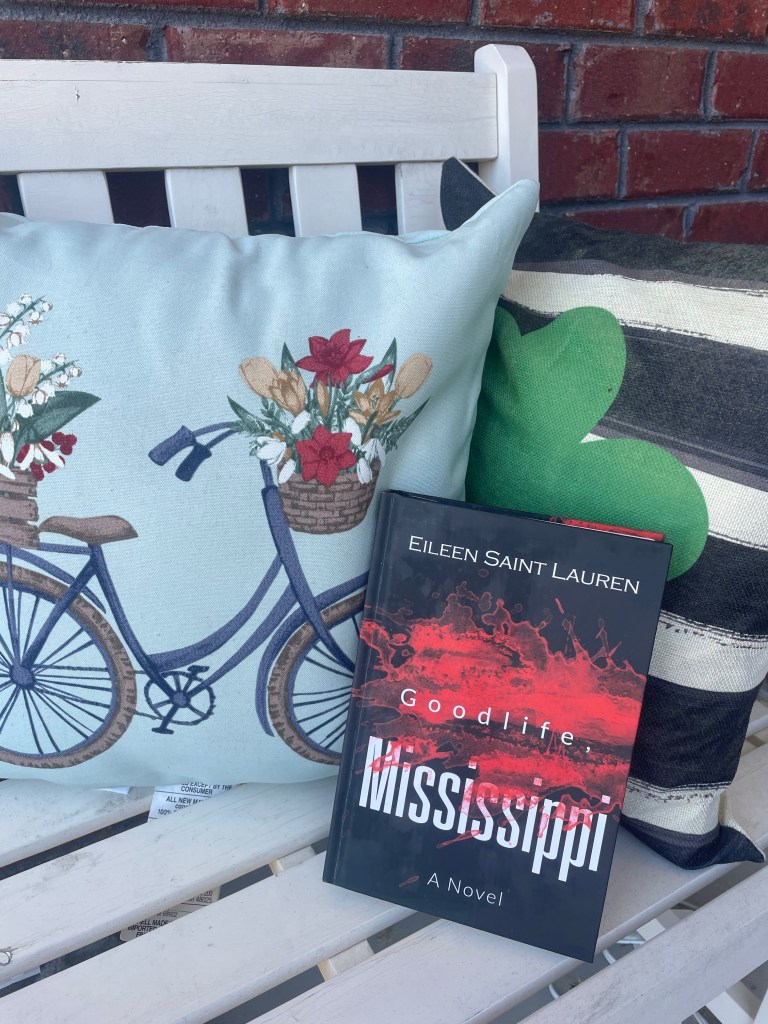
​”Goodlife, Mississippi by Eileen Saint Lauren chronicles the formative years (1950–1962) of Mary “Myra” Boone, a young girl of uncertain biracial heritage growing up in the fictional town of Goodlife, Mississippi. Born to a deaf moonshiner father and a mother who chose love over social standing, Myra navigates a life marked by poverty yet enriched with dreams, love, faith, and a cast of eccentric characters. Her deep-seated aspiration to meet Ray Charles Robinson serves as a guiding light through her adversities. The novel intertwines elements of magical realism and the supernatural, painting a vivid portrait of a young woman’s resilience and her journey toward self-discovery amid the complexities of Southern society in the 1950s and ’60s.”

I really loved the character of Myra Boone. She’s a young, innocent, naïve girl growing up in the South during the Jim Crow era. Her innocence is striking as she witnesses all these awful things happening, not fully understanding why they occur or why her family might be targeted. It’s incredibly impactful to see the world through the eyes of a child, as their minds are so simple and pure. I honestly believe children can change the world.

The atmosphere could have played a much bigger part in the story. I don’t think it was bad, but I don’t believe the author utilized it enough. As I mentioned, this story takes place in the South, and by the title, you can tell it’s set in Mississippi. It really reminds me of The Little Friend by Donna Tartt, with its Southern culture. While you can definitely see it, it’s not as strong as in other works. One thing I loved about this book was the dialogue, as it reminded me so much of the people around me.

Again, the writing didn’t amaze me in any way, but it wasn’t bad either. I did mention that the dialogue was really good, and I stand by that. Additionally, this had a fever dream quality; at times, I found myself thinking, “Whoa.” There were some crazy sequences that got a bit confusing, but not enough to hinder my reading experience.

This was definitely more of a character-driven story, showcasing the world at this time through the eyes of a child. Another significant theme I found was imagination, particularly the importance of parents encouraging imagination in children. While I think this is very important, imagination might also lead to negative outcomes; if you get too lost in your head, you might forget or neglect some things in your real life, even if done unintentionally. 

I did find myself slightly bored at times. This is a very quiet book, and it didn’t do a whole lot for me. It would have worked better as a novella but it was a very quick read.If any of this intrigues you, I would recommend picking this book up from your library or downloading it as an e-book or audiobook. If you enjoy it, consider getting a physical copy.

2.75 out of 5.

‘Before We Were Yours’ Book Review

Before We Were Yours by Lisa Wingate is a historical fiction novel inspired by true events, specifically the Tennessee Children’s Home Society scandal. The story follows two timelines:

In 1939, twelve-year-old Rill Foss and her siblings live a happy but impoverished life on a houseboat in the Mississippi River. Their world is shattered when they are kidnapped by the Tennessee Children’s Home Society and forced into an orphanage, where they suffer abuse and separation as they are illegally adopted by wealthy families.

In the present day, Avery Stafford, a successful attorney from a prominent political family, uncovers a hidden connection between her grandmother and the dark history of the orphanage. As she digs deeper, she unravels long-buried family secrets.”


It is really a toss-up with these characters, and they were not the main point of the story, which falls back on the plot. Avery, in particular, started to become insufferable for me. She often put her nose where it didn’t necessarily need to be. Sure, it was because of her love and loyalty to her family, but at the same time, you would think that if family is so important to her, she would share her quest with them. I’m honestly shocked that this character is in her 30s and not 10 years younger, like in her early 20s. 

And, of course, as I predicted in my vlog, this book featured one of my least favorite tropes: can a female character never start the book in a happy relationship? Why are they always unsure about their relationships? This is something I have disliked about recent fiction, where there’s always a partner who isn’t what they seem to be.

Now, let’s go to our second cast of characters, set in Memphis in 1939. I didn’t feel a true connection to the Foss family, but I could definitely empathize with those children. That is the plotline that elicited the most emotion from me. You might have to suspend your disbelief with some of their antics, but I do think their story will be quite memorable.


The atmosphere was really good; it’s gritty and encompasses everything you would expect from a story set in the Great Depression era. This is also a very Southern story, with a lot of Southern culture woven throughout the book. I’m not necessarily going to say it’s something you can really view as a southerner, because this is a well-to-do, politically influential kind of family. Nevertheless, it presents your stereotypical rich Southern atmosphere. 

I even got some vibes reminiscent of the movie Cruella and could easily see some of that cast of actors fitting into this story if it were adapted into a movie. Another piece of media this book reminded me of was some of the works of Pat Conroy. If you are intimidated by his 500 page books, Lisa Wingate would be a good place to start. She was even a winner of one of his awards before!

The writing is very reminiscent of Kristin Hannah,if you are a fan of her books, you should check out Lisa Wingate. The only part of the writing that I had an issue with was the transitions, especially between dream sequences and real life or when moving from the past to the present. I believe the dreams or past events should have been in an italicized font rather than in the same font as the normal prose of the story.

The plot will definitely be what stands out to me the longest. This story is almost reminiscent of Mark Twain or just a classic American tale. It’s so eye-opening regarding the past and how the elite of America have operated behind the scenes. It’s heartbreaking to know what happened to these children and families in the Memphis, Tennessee area.

I want to talk about several prominent themes that you will see on the pages: family and sisterhood, which resonated with me emotionally due to their relatability. Another theme I’ve been encountering lately is, like the song says, “make your own kind of music, even if nobody else sings along.” It emphasizes that you have to live your own life; you can’t live the life others want you to live. Having a hidden identity and keeping secrets is not a way to live, and that must say something about the world we’re living in and the society we inhabit if it keeps coming up in the books I’m reading. Perhaps it’s just a theme I’m drawn to.

One last thing about the plot: I love how Lisa Wingate can take these historical stories and connect them to modern times, because that’s what history is—it’s connected to us and always will be.

The intrigue was definitely the best part of the story. I was making theories all throughout, and even at one point early in the story, I came up with the right theory. However, it felt a bit out there in my head, so I kept coming up with other theories as I read. If you like mysteries, you might enjoy this one because you’re trying to uncover how these two timelines are connected and who these people really are. 

As I mentioned before, with the logic of the book, you are going to have to suspend your disbelief just a little bit, as it’s crazy to think that children were able to do some of these things, even if it was 90 years ago. Overall, I thought this was a good book. It’s not my favorite, and definitely not my favorite by Lisa Wingate, but she’s an author I will keep coming back to. She tells good, unique stories that highlight instances of history that seem to have been forgotten by the masses. I would recommend giving this book a go.

3.5 out of 5 stars.

‘Rosewater’ Book Review

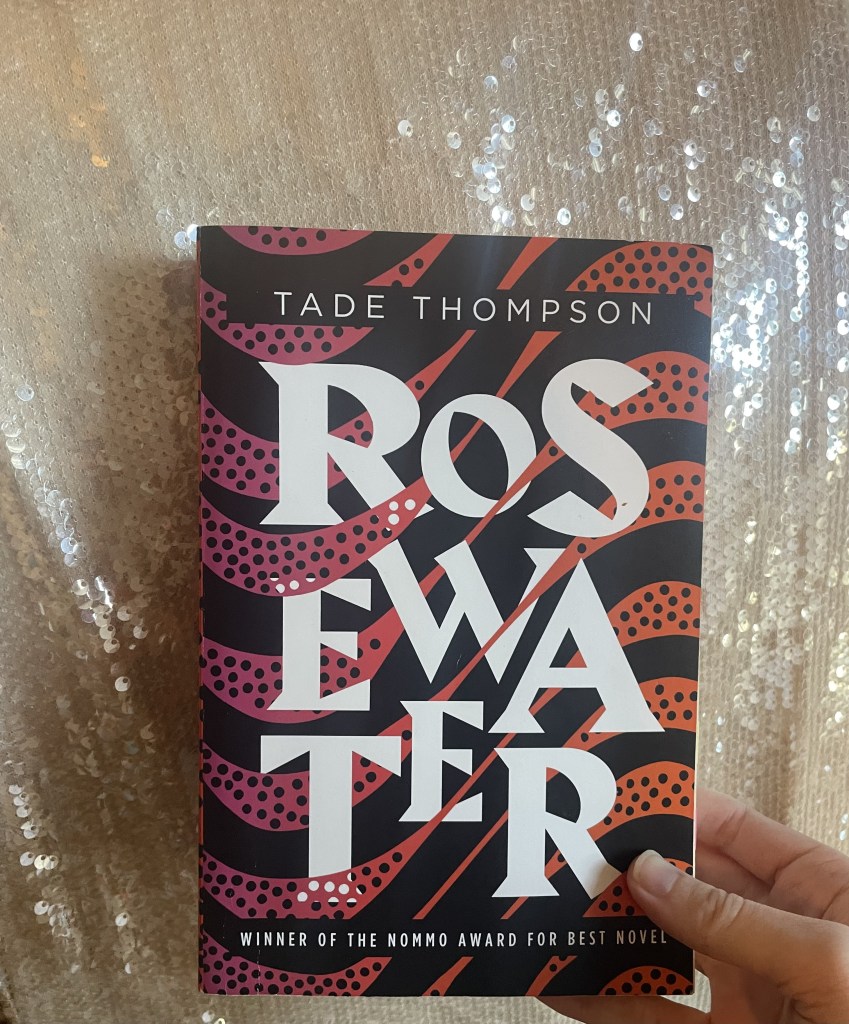
Rosewater by Tade Thompson is a unique blend of science fiction, mystery, and Afro-futurism set in a near-future Nigeria. The story follows Kaaro, a cynical and reluctant psychic working for a secret government agency. He lives in Rosewater, a city that has sprung up around a mysterious alien biodome that occasionally heals the sick and grants strange abilities to some people.

I felt no emotions from these characters. I definitely think this is a plot-driven story rather than a character-driven one. The characters did absolutely nothing for me.

 The atmosphere didn’t do a whole lot either. It is interesting to see Nigeria in a science fiction book, as previously, when I’ve read books set in that location, they were in the contemporary literary fiction genre rather than a sci-fi one. It’s kind of cool to see how modern-day Nigeria developed into the near future, as depicted in the story. However, overall, it did not do a lot for me.

 The writing was definitely my least favorite part. There are three timelines that we are following, and I had a really difficult time trying to distinguish between them. They all feature our main character going on different missions. I think this could have been improved by changing the tense throughout the different timelines, with the present being in first person and the past in third person. 

Another thing that I despised about this book was the overly sexual tone. Books can be sexual; it is completely normal and a part of being human. However, when every woman is described by her breasts or the curve of her buttocks, it becomes inappropriate and uncomfortable. Sexual themes were brought up constantly, and women were objectified in the story.

I can definitely admit when I’m the problem. I purchased this book back when it was first published in 2018, and it took me this long to read it. I think I could have enjoyed it more back then than I did now, as I am more aware of what I like in my reading. This month, I’ve discovered that I not only don’t like mysteries, but I also don’t enjoy mysteries within a science fiction setting. I don’t like stories about people going on quests as detectives or government agents; it’s just not for me. 

However, I do have to give credit where credit is due: by the last quarter of the book, the sci-fi elements become super interesting. This is unlike any other first contact story I’ve read before; it offers a real biological take on an alien invasion. As an alien lover, I’ve never thought of an invasion happening like this, but it makes a lot of sense. 

I don’t see myself continuing the series, as I felt nothing toward the characters and I hated the writing and tones of the book. If, for some reason, anything here intrigues you, I recommend picking this book up from your library, and if you like it, then consider purchasing your own copy.

1.85 out of 5 stars.

‘The Covenant of Water’ Book Review

“The Covenant of Water by Abraham Verghese is an epic multi-generational saga set in Kerala, India, spanning from the early 20th century to the 1970s. The novel explores themes of family, love, loss, and resilience against the backdrop of India’s social and political transformations.”

This was a book where I didn’t hate the characters, but I didn’t love them either. For the majority of the story, I did not feel an emotional connection to the characters. However, there were times when Philipose and Elsie kind of ground my gears. I think they were supposed to be unlikable, people of their time, but it just wasn’t written correctly. However, I did love the characters of Big Ammachi and Baby Mol; some of their scenes were just so wholesome, and you could tell that Big Ammachi was so filled with love. Later in the book, it talks about how she was practically love itself. However, if we have a book that is 700 pages and I don’t feel a connection to the characters, that is definitely going to impact my reading experience.

With the atmosphere, I did learn a lot about India during the 20th century. There were instances where we had paragraphs just about the history, taking us away from the stories of the characters. This is important for world-building, but it was done in a somewhat clunky way. I can appreciate that; I did learn about this country and even about the St. Thomas Christians, which are a group of Christians in India. I was ignorant and never really thought about there being large groups of that religion in an Asian country. I loved getting to learn about the culture of that group. I would highly recommend this book to Christians because it is a great story of God and what it is like to be a Christian in a non-first world country.

The writing itself was beautiful and thought-provoking. I was underlining and tabbing so many quotes that made me think, or quotes that were just so beautifully written that I wanted to remember and make note of them. I do have to mention the clunkiness of the world-building. We have a few characters in the medical field, and there were a lot of academic and scientific discussions that went right over my head. Those kinds of scenes could have been condensed. We also have to take into account that the author is a doctor himself, and it shows on the page.

The plot was fantastic and exactly the kind of book that I’m drawn to; my favorite author even did a blurb on the cover of the book. This is a big epic historical novel spanning the majority of the 20th century in India, focusing on a part of India that we don’t really see a lot in media. This might even be one of the first Indian books I’ve ever read. I love that during this time, a lot of the unknown is becoming known as the world advances due to breakthroughs in industry and technology, with the world overall being opened up by wars and worldwide travel. 

I do want to talk about what I think the main theme of the book is, and that is: we are all human. You might think that is quite obvious and wonder where I’m going with this, but we are all equal and trying to survive in this world. It doesn’t matter your caste, your race, your religion, or your health; no one is better than anyone else. As humans, we need to realize that and take care of one another. We need to be compassionate and empathetic. That’s not just the role of a doctor but the role of every single human being on this planet. To me, that is what the main theme of the story is: compassion and getting through life.

My jaw did drop at times, and I felt emotional, especially in chapter 62. But overall, I just had a little bit of intrigue. This book went places that I didn’t think it would go, but I was never on the edge of my seat, wondering what was going to happen. I will admit the logic in this book is fantastic. Every word on the page had meaning to the story, and the author did a great job of orchestrating this narrative. I did enjoy this book, and I think it’s going to be one that I reflect on for the rest of the year, as it was the first book that I completed in 2025. It was a five-star prediction for me, but I am ultimately giving it a four-star rating. I would still highly recommend picking up this book.

‘Horse’ Book Review

“Horse” by Geraldine Brooks is a historical novel that intertwines multiple narratives across different time periods, centering around the life of a remarkable thoroughbred racehorse named Lexington. The story explores themes of art, history, and the bond between humans and animals, particularly through the perspectives of various characters, including a 19th-century painter, a contemporary art curator, and a young Black man in the present day. Through the lens of Lexington’s legacy, Brooks delves into issues of race, class, and the complexities of love and ambition, ultimately showcasing how the past continues to shape the present. The novel highlights the intersection of personal and collective histories, revealing deeper truths about society and the human experience.

These characters could have been so much more. We are first introduced to our characters in the modern plotline in 2019. They really didn’t bring anything new to me. Yes, they are interesting roles, as one is a scientist at the Smithsonian and the other is a PhD student. However, there is a lack of emotional connection to these characters, and I found them to be quite irritating by the time the novel is over. As for the historical characters, I really wish the bond between man and animal, specifically between Jarrett and Lexington, had been deeper; there would’ve been more depth there. Again, it lacked emotional connection.

I did really enjoy the atmosphere of going through all these different time periods, with our main focus being the ones in the 1800s and then in 2019. You can really tell that the author did her research on the locations and historical figures involved. I don’t have anything strong to say about the writing; it was fine, but this was incredibly slow to get through, making it a very slow-paced book.

I love the idea of this plot, how all the storylines across centuries are connected to one another. They’re all linked by this one horse, one of the greatest racehorses of all time. How could an author screw that up? Well, they managed to create a slow-paced and boring book with characters lacking emotional depth. My favorite plotline was personally the one about how the painting was connected to the story. However, this is the one that we saw the least of on the page. As I stated before, the slowness really made me bored, and the book was lacking intrigue. I have to mention that the last 50 pages of this book are so bizarre; the author really wants to hone in on our current times of police brutality and COVID. Those are important topics and do need to be addressed in fiction, but I don’t think this book was the place to do it. This was a fine book, but it was overall lacking in many categories and did not live up to my five-star expectations of it.

3 out of 5 stars.

‘Project Hail Mary’ Review

“Project Hail Mary” by Andy Weir is a gripping science fiction novel that tells the story of Ryland Grace, an astronaut who wakes up alone on a spaceship with no memory of who he is or how he got there. As his memory gradually returns, he realizes that he is the sole survivor of a last-ditch mission to save humanity and Earth from an extinction-level threat.

I had no emotional connection to these characters whatsoever. When all these big events were happening and I should have felt worried for them, I honestly was just like, “Yeah, that’s happening.” I can definitely tell which characters were meant to be the comic relief, which ones we were supposed to root for, and which ones we were supposed to hate, but honestly, I didn’t feel any of that. Ryland Grace, our main character, had dialogue that was over-the-top quirky. Nobody talks like that, and it made me cringe. However, he did really feel like a human being on this mission. My favorite character was Stratt. I do wish we had more resolute endings for our side characters. That’s something that I’m realizing while writing this review: this book was very open.

The atmosphere was one of my favorite parts. You cannot help but feel anxious and claustrophobic while reading this book. You can feel it for Grace being on this mission, being all alone on the spaceship in outer space where no human has been before. You can also feel it for everyone on Earth. There’s this impending disaster that civilization doesn’t know if it will be able to save itself from or not. It felt like a ticking time bomb, not knowing what was going to happen to not just our main character, but Earth as a whole.

As stated before, the dialogue was rather quirky, and I found that to be cringey. However, there were comedic moments. It feels weird to say, but I think this book was kind of wholesome. The complaint I have about the writing, though, is that the science and math talk was rather much and went over my head. However, this was a medium-paced book and easy and accessible to get through for a science fiction novel. When I saw the length being nearly 500 pages, I was so scared this book was going to be dense, but it wasn’t.

I do not know if this book was intended to be a plot-driven one, but the plot was definitely the highlight for me. Each timeline that we’re following, one being preparing for this mission, and then the mission itself, has so much intrigue. I was wanting to know if the mission would be accomplished and how Ryland Grace got involved in this mission. To make this book more confusing, I would’ve even wanted a third plotline of following what was happening on Earth while Grace was in space. There was a lot of logic, except one decision in the last 10% of the book made me angry. Also, it’s so open, and I’m so curious. I have more questions after finishing this book, which means I will be going on a Reddit deep dive tonight. I did have probably three big questions, and I was so worried that they weren’t going to get answered, but they did. If you’re worried things are going to wrap up properly, they don’t wrap up 100%, but if you keep going through the story, I promise some of your big, important questions will get answered. This was a good book, but it’s nowhere near being a new favorite book of mine. I would still recommend it.

3.75 out of 5 stars.

‘The Yonahlosse Riding Camp for Girls’ Review

“Set against the backdrop of the Great Depression, “The Yonahlossee Riding Camp for Girls” is a captivating and atmospheric debut novel that delves into the complex world of family secrets, guilt, and the cusp of womanhood. Thea Atwell, a fifteen-year-old girl from Florida, is abruptly sent away to a prestigious equestrian boarding school for Southern debutantes in the Blue Ridge Mountains of North Carolina.”

This book is a great example of the awkwardness of coming of age as a woman. It takes place in the early 1930s when there were not a ton of resources for girls going through the teenage experience. I can’t imagine what it must have been like. There are two plot lines in this book: one in the past and one in the present, and it felt like there were two totally different characters, even though these plot lines took place mere months apart. The Thea we meet in the past plot line in Florida is a young and naïve girl, while the Thea we meet a few months later in the mountains in North Carolina is manipulative and knows how to get what she wants. I don’t understand how there is such a big switch of character within only a few months. It would make sense if this took place years apart, but no, it’s only a few months. The side characters outside of the romantic love interests and the family were very flat and one-dimensional, especially her schoolmates. I couldn’t tell them apart.

As for atmosphere, again, this book was the best with its Florida setting. The writing was lush in describing the scenery of Florida, especially old Florida before all the tourism arrived. It even delved into the history of the families involved and the history of Florida, which I found extremely fascinating. The North Carolina plotline was cold, but in a good way, elegant with all the greenery of the evergreen trees in the Appalachians; however, again, the book shined in Florida. I do have two complaints with the atmosphere, though. This book does take place in the first two years of the 1930s, but it doesn’t feel like it does at all. This could take place at any summer camp in any decade before there were cell phones. Yes, there are mentions of the impact that the Depression is having on America and a president might get mentioned, but those are so slim that they don’t really matter. My next issue can really go into the writing section.

The story is being told by Thea as an adult looking back at her life. The flashbacks immersed throughout the story were very disorienting, as they really took you out of the present plot line in North Carolina, and there were even some mentions of events that take place decades later, which had me confused. Now, for what I liked about the writing: the writing was pretty flat, but there were some beautiful paragraphs. For the most part, this is very flat, easy, and accessible. I think it would be great to bring on a mountain vacation this summer.

Once again, the Florida plotline is where this book flourished. There’s so much intrigue around why Thea was sent to the camp. I was so curious where that plotline was going to go, and I was gripped by it. As for the North Carolina plotline, I didn’t really care what was happening because I was so invested in the mystery of the previous one. This is a good book, and as I said, it’s very accessible. I think it would be great if you want to pick up something easy and light as a palate cleanser. I will admit there are some taboo relationships in here that are going to make some readers uncomfortable, so definitely do look up the content warnings before picking up the book because I did not expect those plots at all.

3 out of 5 stars

‘Kindred’ Reader’s Guide Answers

  1. Both Kevin and Dana know that they can’t change history: “We’re in the middle of history. We surely can’t change it.” (page100); and “It’s over . . . There’s nothing you can do to change any of it now.” (page 264). What, then, are the purposes of Dana’ s travels back to the antebellum South? Why must you, the reader, experience this journey with Dana? – I think this book was probably really eye-opening at the time (1979) in showing the brutality of slavery, and how naive the modern population is, and that we shouldn’t forget our history and where our nation came from.
  2. How would the story have been different with a third person narrator? – I do not think the story would have been different with a third-person narrator. Personally, I prefer third person, but I believe the same points would still have been conveyed.
  3. Many of the characters within Kindred resist classification. In what ways does Dana explode the slave stereotypes? In what ways does she transcend them? – Dana transcends these roles by teaching and educating the other slaves. I believe it’s the magic of her ability to time travel, while the others cannot, that ultimately leaves a sense of wonder and raises questions about her.
  4. Despite Dana’s conscious effort to refuse the ‘mammy’ role in the Weylin household, she finds herself caught within it: “I felt like Sarah, cautioning.” (page 156), and others see her as the mammy: “You sound just like Sarah” (page 159). How, if at all, does Dana reconcile this behavior? How would you reconcile it? – I do not think Dana reconciles her conscious efforts with her behavior. I never really noticed this behavior to begin with. I don’t think I would reconcile them. I would just continue to live my life not caring what others thought.
  5. I do think that in the 21st century, we still have conditioned responses to slavery because of what people have been taught in school for so long. Many people don’t really care for history; they just acknowledge that ‘yes, this is bad,’ but they don’t truly realize the brutality of it.
  6. How do you think Butler confronts us with issues of difference in Kindred? How does she challenge us to consider boundaries of black/white, master/slave, husband/wife, past/present? What other differences does she convolute? Do you think such dichotomies are flexible? Artificial? Useful? – Butler challenges us to consider the boundaries between the people in the story by showing the complex relationships between all of the characters. As for other differences, I think it really shows the differences in time periods and how far we have come as a country, but also how there are still a lot of the same stigmas.
  7. Compare Tom Weylin and Rufus Weylin. Is Rufus an improvement or simply an alteration of his father? Where, if any, is there evidence of Dana’s influence on the young Rufus in his adult character? – I don’t think there really can be an improvement between Rufus and his father. Both were awful, and both did terrible things. I do think you can see hints of Dana’s influence on Rufus, mainly in regards to his children, but I won’t go into too much detail, as I don’t want to spoil the story.
  8. Of the slaves’ attitude toward Rufus, Dana observes “Strangely, they seemed to like him, hold him in contempt, and fear him at the same time.” (page 229) How is it they can feel these contradictory emotions? How would you feel toward Rufus if you were in their situation? – I couldn’t feel these contradictory emotions. I don’t think any of the slave characters seemed to like Rufus. I think they all thought he was a bit of a pest and annoying, and I would feel just like them. I would hate him too if I were in their situation.
  9. Compare Dana’s ‘professional’ life (i.e. her work as temporary help) in the present with her life as a slave. – Dana’s professional life in the present, with her riding, allows her to do something she wants to do. She gets to choose her job, so obviously it is way better than her life as a slave.
  10. When Dana and Kevin return from the past together, she thinks to herself: “I felt as though I were losing my place here in my own time. Rufus’s time was a sharper, stronger reality.” (page 191) Why would the twentieth century seem less vivid to Dana than the past? – I think the 20th century will seem less vivid to Dana than the 19th century because it was so brutal in the past, and people were just trying to survive. In the 20th century, they had the pleasure of doing what they wanted. They had freedom.
  11. Dana loses her left arm as she emerges—for the last time in the novel—from the past. Why is this significant? – From what the author has said, this is significant because everybody came away from slavery broken. Even today you can still see the impact it had on society . In how it divided people.
  12. Kevin is stranded in the past five years, while Dana is there for almost one. Is there a reason why Butler felt Kevin needed to stay in the past so much longer? How have their experiences affected their relationship to each other and to the world around them? – I saw Butler felt the need to have Kevin stay in the past so much longer than Dana, so he could truly understand the experience that she was going through because for a white man it was easier tremendously easier than to be a black woman in the 19th century, I think it definitely affected their relationship to each other, because of how different the mentality and morals were of the past.
  13. A common trend in the time-travels of science fiction assumes that one should not tamper with the past, lest s/he disrupt the present. Butler’s characters obviously ignore this theory and continue to invade each other’s lives. How does this influence the movement of the narrative? How does this convolute the idea of ’cause and effect’? – This influences the movement of the narrative by characters, not having to be scared or constantly having to have the same train of thought to me. It did not convolute the idea of cause-and-effect at all.
  14. Dana finds herself caught in the middle of the relationship between Rufus and Alice? Why does Rufus use Dana to get to Alice? Does Alice use Dana? – Rufus uses Dana to get to Alice because he sees them as the same woman he doesn’t see them as their own person so he thinks that Dana thinks like Alice does I would say Alice does use Dana as well because she knows that Dana have some kind of holdover Rufus, because of her abilities to travel through time.
  15. The needs and well-being of other residents of the plantation create a web of obligation that is difficult to navigate. Choose a specific incident; and determine who holds power over whom and assess how it affects that situation. – I think Dana holds a lot of obligation because she ultimately knows what will happen in history to all of these people maybe not individually but as a whole.
  16. Dana states: “It was that destructive single-minded love of his. He loved me. Not the way he loved Alice, thank God. He didn’t seem to want to sleep with me. But he wanted me around—someone to talk to, someone who would listen to him and care about what he said, care about it.” (page 180) How does the relationship between Dana and Rufus develop? How does it change? What are the different levels of love portrayed in Kindred?The relationship between Dana and Rufus develops of her, taking care of him after all his near death experiences, and that they hold each others lives in their hands in a sense, but like any relationship, you can grow tired of the other person just from constant neglect of the relationship and I think you can really see that here all different levels of lover portrayed in Kindred, romantic family. There are so many complex relationships in the story.
  17. Discuss the ways in which the title encapsulates the relationships within the novel. Is it ironic? Literal? Metaphorical? What emphasis do we place on our own kinship? How does it compare with that of the novel? – I think the title is ironic, literal and metaphorical. You can take it in any way you want; literature is art and it’s meant to be interpreted by the reader. I’m not sure how it compares with that of the novel; it’s something that I would definitely have to think about.
  18. Do you believe that Dana and Kevin’s story actually happened to them, or that they simply got caught up in the nostalgia of moving old papers and books? – I do believe that Dana and Kevin story actually happen because it is us too far out to get caught up in nostalgia, examining old papers and books.
     
  19. Butler opens the novel with the conclusion of Dana’s time travels. The final pages of the book, however, make up an epilogue demonstrating a, once again, linearly progressive movement of time. How does the epilogue serve to disrupt the rhythm of the narrative? – I do not think the epilogue serves to disrupt the rhythm of the narrative. I thought it fit in with the story perfectly as the characters were getting closure on the events that they went through.
  20. After returning from his years in the nineteenth-century, Kevin had attained “a slight accent” (page 190). Is this `slight’ alteration symbolic of greater changes to come? How do you imagine Kevin and Dana’s relationship will progress following their re-emergence into life in 1976? – I do think this alteration is symbolic of greater chances change is to come I think that being in the past for so long definitely did change Kevin’s mentality how I imagined Kevin and Dana‘s relationship of progress following reentry to life in 1976 I can see them staying as a couple because they went through this incredible traumatic journey together, but also how the mentalities were impacted as I keep saying I don’t know if it would be good for them to stay together or not.

‘Torch’ Book Review

“Work hard. Do good. Be incredible!” is the advice Teresa Rae Wood shares with the listeners of her local radio show, Modern Pioneers , and the advice she strives to live by every day. She has fled a bad marriage and rebuilta life with her children, Claire and Joshua, and their caring stepfather, Bruce. Their love for each other binds them as a family through the daily struggles of making ends meet. But when they received unexpected news that Teresa, only 38, is dying of cancer, their lives all begin to unravel and drift apart. Strayed’s intimate portraits of these fully human characters in a time of crisis show the varying truths of grief, forgiveness, and the beautiful terrors of learning how to keep living.

These characters are the most authentic I’ve read in a long time. Teresa and Joshua were the ones I connected with the most. Teresa is a mother who falls ill, and I’ve never read from a character who receives a terminal diagnosis. Joshua, her teenage son, deeply affected me because I saw how his mother’s diagnosis, and ultimately her death, impacted his life, and what loss can do to a person. I didn’t really connect with the character of Claire, which is a shock as she’s the character I’m closest in age with. I didn’t like her, but when you go through such a traumatic event, you’re often not a likable person. Ultimately, I just wasn’t drawn to her chapters. Bruce is a character who grew on me throughout the novel. I think he’s a good person, but loss can change us as individuals and transform us. Great character work!

The atmosphere is what blew me away, I wasn’t expecting it to be so powerful. This book is set in a small town in Minnesota, and the author masterfully brought that town to life, along with the Mississippi River, making those settings almost characters in their own right. I love reading about the changing of seasons, and I think the author did a fantastic job portraying this.

While the first chapter initially enamored me with Cheryl Strayed’s choice of language, it eventually felt as though she was using an excess of words, as if she had a certain word count to reach for the book to be published. The story began to drag on and became quite tedious, turning what was once an enjoyable reading experience into something of a chore, especially with chapters that spanned over 20 pages. The overall story was hard to follow, as the way time jumps were all over the place, taking me out of the story as I had to figure out if we were in the past or present.

The author’s portrayal of themes such as loss and grief was commendably done. These are universal experiences that all humans must endure at some point in their lives. While these experiences can be painful, they also hold the transformative power to shape us, often for the better. Not only do they bring us closer together, but they also allow us to grow as individuals. The authenticity and humanity within the story were palpable, truly underscoring the author’s skill in encapsulating such complex emotions and experiences.

These characters are the most authentic I’ve read in a long time. Great character work! The atmosphere is what blew me away, I wasn’t expecting it to be so powerful. I love reading about the changing of seasons, and I think the author did a fantastic job portraying this. While the first chapter initially enamored me with Cheryl Strayed’s choice of language, it eventually felt as though she was using an excess of words, as if she had a certain word count to reach for the book to be published. The overall story was hard to follow, as the way time jumps were all over the place, taking me out of the story as I had to figure out if we were in the past or present. The author’s portrayal of themes such as loss and grief was commendably done. The authenticity and humanity within the story were palpable, truly underscoring the author’s skill in encapsulating such complex emotions and experiences. This was a good and I would still recommend it even if it did not live up to my five star expectation.

3.5 out of 5 stars.

January Book Haul

In 2024, I am allowing myself to buy as many books as I read the month before. In January, that number is eleven. However, you will see more than eleven books included. Why is that? I did receive one gift, aka I did not buy that book, and all my Book of the Month subscription books will only count as one. Let’s get into the haul!

Jezebel by Megan Barnard

 When Jezebel learns she can’t be a king like her father simply because she’s a girl, she vows never to become someone’s decorative wife, nameless and lost to history. At fifteen she’s married off, despite her protests, to Prince Ahab of Israel. There, she does what she must to gain power and remake the dry and distant kingdom in the image of her beloved, prosperous seaside homeland of Tyre, beginning by building temples to the gods she grew up worshipping. As her initiatives usher in an era of prosperity for Israel, her new subjects love her, and her name rings through the land.

I picked up ‘Jezebel’ at Barnes and Noble. It caught my attention after reading ‘The Red Tent,’ a book I loved in 2023. I wanted to add more biblical retellings to my TBR list!

The Prospectors by Ariel Djanikian

 Bringing the Klondike and turn-of-the-century California to vivid life, Ariel Djanikian weaves an ambitious narrative of claiming the American Dream and its rippling effects across generations. Sweeping and awe-inspiring, The Prospectors is an unforgettable story of family loyalties that interrogates the often-overlooked hostilities and inequities born during the Gold Rush era.

 I’ll be honest; the cover drew me in when I saw the sun reflecting on the gold at Barnes and Noble. Upon opening the book, I discovered it’s a family saga with two timelines, and of course, I was sold. Funny thing is, I had no idea this was on my ‘want to read’ list on Goodreads! I guess I know my taste well.

Prophet Song by Paul Lynch

  Ireland is falling apart. The country is in the grip of a government turning towards tyranny and when her husband disappears, Eilish finds herself caught within the nightmare logic of a society that is quickly unravelling.

  This is the book I set out to buy on my Barnes and Noble trip. I aim to read as many Booker Prize-nominated books as possible. The bonus here is that it’s a dystopian novel with an Irish setting!

Flight of Icarus by Caitlin Schneiderhan

Recording costs money. Money Eddie doesn’t have. But he’s willing to do whatever it takes, even if that means relying on his dad. Al Munson has just stumbled back into Eddie’s life with another dubious scheme up his sleeve, and yet Eddie knows this is his only option to make enough dough in enough time. It’s a risk, but if it pays off he will finally have a one-way ticket out of Hawkins. 

This one caught me by surprise. I had no idea this book existed until it popped up on Amazon one day. Having read all the other Stranger Things books and generally enjoyed them, I’ll be continuing the series with this one. My expectations aren’t high, as it seems like this book may be more of a fan service for Joseph Quinn fans. However, I hope I’m wrong and end up enjoying it!

Elvis and Me by Priscilla Beaulieu Presley

 Decades after his death, millions of fans continue to worship Elvis the legend. But very few knew him as Elvis the man. Here in her own words, Priscilla Presley tells the story of their love, revealing the details of their first meeting, their marriage, their affairs, their divorce, and the unbreakable bond that has remained long after his tragic death.

In late December, I watched the movie ‘Priscilla,’ which is based on this book. It was an alright film, but I believe the book will offer much more insight into Priscilla’s life!

The Bullet Swallower by Elizabeth Gonzalez James

 A dazzling magical realism western in the vein of Cormac McCarthy meets Gabriel García Márquez,The Bullet Swallower follows a Mexican bandido as he sets off for Texas to save his family, only to encounter a mysterious figure who has come, finally, to collect a cosmic debt generations in the making.

 We’ve reached the Book of the Month books. This one was my January pick. I’m a fan of a good western and family saga. Plus, being compared to Gabriel García Márquez – need I say more?

Mercury by Amy Jo Burns

 The Joseph brothers become Marley’s whole world before she can blink. Soon, she is young wife to one, The One Who Got Away to another, and adopted mother to them all. As their own mother fades away and their roofing business crumbles under the weight of their unwieldy father’s inflated ego, Marley steps in to shepherd these unruly men. Years later, an eerie discovery in the church attic causes old wounds to resurface and suddenly the family’s survival hangs in the balance. With Marley as their light, the Joseph brothers must decide whether they can save the family they’ve always known—or whether together they can build something stronger in its place.

 I noticed that ‘Mercury’ is set in the 1990s. I love books from that time period; they always evoke a sense of nostalgia for me. Being a nostalgia chaser, I couldn’t say no to this ‘historical’ novel.

The End of October by Lawerence Wright

  At an internment camp in Indonesia, forty-seven people are pronounced dead with acute hemorrhagic fever. When epidemiologist Henry Parsons travels there on behalf of the World Health Organization to investigate, what he finds will have staggering repercussions. Halfway across the globe, the deputy director of U.S. Homeland Security scrambles to mount a response to the rapidly spreading pandemic leapfrogging around the world, which she believes may be the result of an act of biowarfare. And a rogue experimenter in man-made diseases is preparing his own terrifying solution.

  In January, I focused on reading science fiction so I did want to buy more of those as my stack has dwindled. One of my favorite sci-fi tropes is pandemic fiction. And then I lived that in real life… that only makes it more fun (?) to compare how a pandemic is on paper versus in person.

Cataclysm by Lydia Kang

After five years of conflict, the planets Eiram and E’ronoh are on the cusp of real peace. But when news breaks of a disaster at the treaty signing on Jedha, violence reignites on the beleaguered worlds. Together, the royal heirs of both planets—Phan-tu Zenn and Xiri A’lbaran—working alongside the Jedi, have uncovered evidence that the conflict is being orchestrated by outside forces, and all signs point to the mysterious Path of the Open Hand, whom the Jedi also suspect of causing the disaster on Jedha.

As mentioned earlier, I delved into a lot of sci-fi in January, and one of those books happened to be ‘Convergence,’ the prequel to this one. I’m determined to do a better job at getting through series instead of letting the plot fade and the book sit there for years. Here’s to doing better in 2024!

City of Dreams by Beverly Swerling

 In what will be the greatest city in the New World, the fortunes of these two families are inextricably entwined by blood and fire in an unforgettable American saga of pride and ambition, love and hate, and the becoming of the dream that is New York City.

 It’s pretty obvious that I love big chunky historical novels. This is the first book of a series, and I couldn’t be more thrilled to go down that rabbit hole. I found it at a used bookstore called Books and Moore in Calabash, North Carolina.

The Physical Book of Deliverance Dane by Katherine Howe

 A spellbinding, beautifully written novel that moves between contemporary times and one of the most fascinating and disturbing periods in American history – the Salem witch trials.

 It’s kind of crazy how I found this one. The night before my trip to Calabash, I was scrolling through Goodreads and came across this book with dual timelines and about witches. I added it to my ‘want to read’ list and had no idea I would find it the next day. It’s so rare to discover a book you just heard about at the used bookstore the next day!

Fortunes of War: The Balkan Trilogy by Olivia Manning

The Balkan Trilogy by Olivia Manning

The Balkan Trilogy is the story of a marriage and of a war, a vast, teeming, and complex masterpiece in which Olivia Manning brings the uncertainty and adventure of civilian existence under political and military siege to vibrant life. Manning’s focus is not the battlefield but the café and kitchen, the bedroom and street, the fabric of the everyday world that has been irrevocably changed by war, yet remains unchanged.

Mister Hockey by Lia Riley

 For fans of Icebreaker—sparks fly between a hockey player with a dirty mouth and an awkward bookworm in this spicy hockey romance. 

 A hockey book set in the NHL and not at the collegiate level? Oh my! Yeah, I had to grab it off the shelf at Target. It’s short, so it will be perfect for adding to my reading list of romance books for February, and it was on sale!

The Employee by Olga Ravn

 Shortlisted for the International Booker Prize, The Employees reshuffles a sci-fi voyage into a riotously original existential nightmare. Aboard the interstellar Six Thousand Ship, the human and humanoid crew members complain about their daily tasks in a series of staff reports and memos. When the ship takes on a number of strange objects from the planet New Discovery, the crew becomes deeply attached to them, even as tensions boil toward mutiny, especially among the humanoids. In chilling, crackling, and exhilarating prose, The Employees probes into what makes us human, while delivering a hilariously stinging critique of life governed by the logic of productivity.

 Lastly, we have the book that was gifted to me by Ben. Thank you! This is our only piece of translated fiction on the list, and it is coming to us from Denmark. I have seen several reviews for this book on YouTube and cannot wait to give it a try. I plan on reading it this week!