‘Here’ Book Review

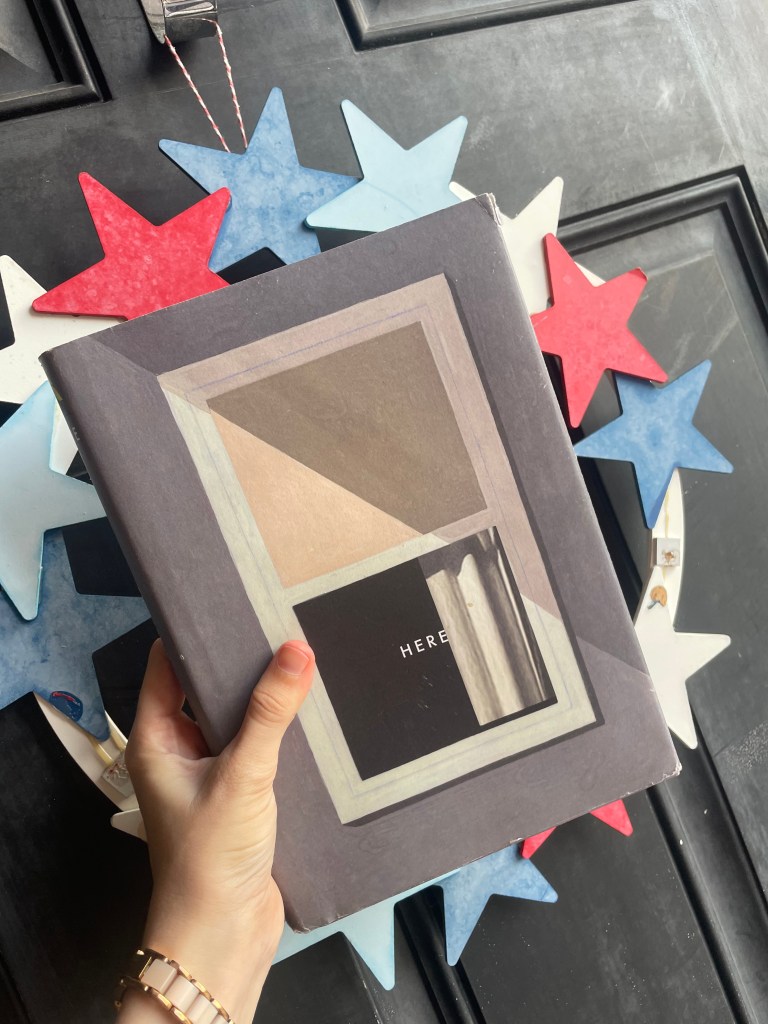
Here by Richard McGuire is an innovative graphic novel that centers on a single corner of a room and examines the flow of time—stretching from billions of years ago (dinosaurs roaming) to far future epochs—through overlapping, non-linear panels supersummary.comen.wikipedia.orgscreendiver.com. What starts as a six-page comic has been expanded into a richly illustrated, 304-page volume where mundane moments (birthdays, arguments, cleaning) stand alongside epochs of geological transformation and human history brokenfrontier.com+5en.wikipedia.org+5newyorker.com+5. With layered visuals and shifting art styles, McGuire offers a poetic meditation on place, memory, and the impermanence—and persistence—of human life within physical space.”

At the time of writing this book review, I’m unsure of how to rate my experience reading the book. I don’t fully know what I just read, but one takeaway is that memory is a significant theme here. A home or a plot of land holds our memories, much like our bodies hold our lives. Our homes experience everything—every emotion, every sense. They witness parties, gifts being exchanged, disasters, sickness, love blooming, and major news events happening around the world. It makes me want to hug my house and say thank you for being the keeper of my memories. Just thinking about that brings up a lot of emotions. 

This has to mean something more than just a physical space; a piece of land or a building must have more significance than being merely physical. There’s an emotional connection there that’s giving me a lot to think about. 

As for the book itself, when I first got into the story, I noticed a lot to look at, visually speaking. There are multiple time frames presented on the same page—maybe one in 1957 and another in 1999—which made it hard for me to follow the story and understand why both events were being shown simultaneously. I found myself questioning how the characters are connected. Are they linked only because they occupied this plot of land at different times? There’s one family that we see having their picture taken every year, which made me wonder if some of these characters, decades down the line, are related to them or if they are the same characters in different forms, and I just can’t tell because of the art style.

This left me very confused, and I found myself getting increasingly frustrated with the flow of the book and the characters. Despite that, I experienced emotional moments that tugged at my heart. I do think this was a valuable experience, and it made me reflect a lot, but it was also quite frustrating. So, I would maybe recommend this book with some reservations.

3.25 out of 5 stars

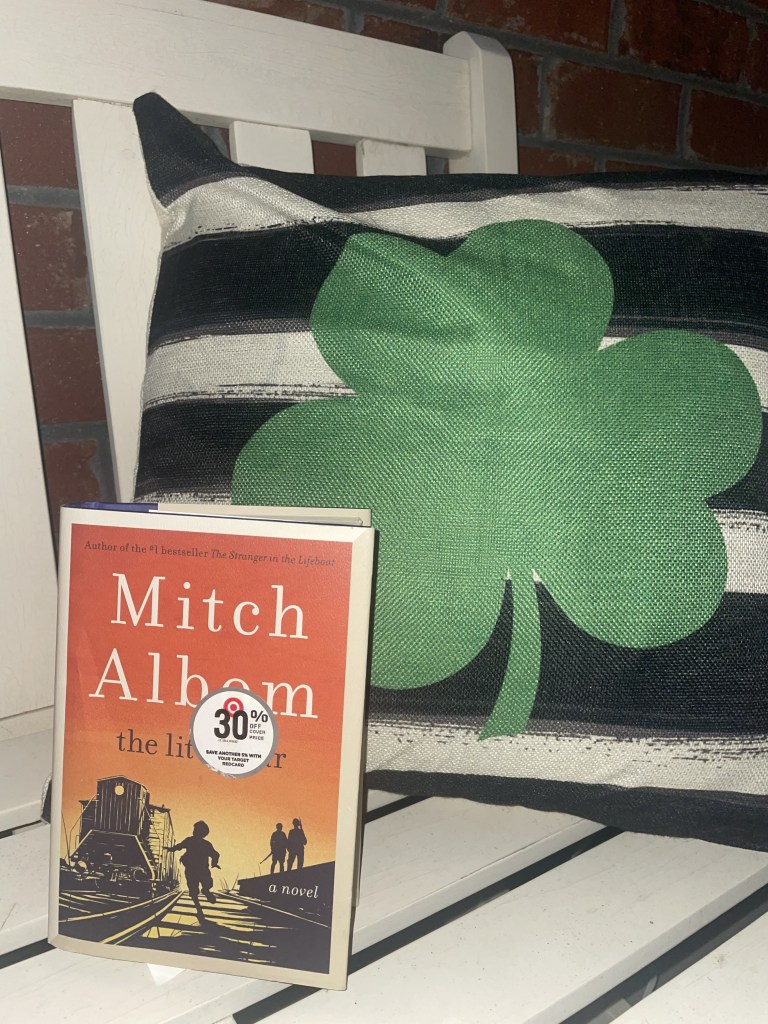
‘The Little Liar’ Book Review

The Little Liar by Mitch Albom is a poignant novel set during the Holocaust, exploring themes of truth, deception, and survival. The story centers on Nico Krispis, an 11-year-old Jewish boy from Salonika, Greece, known for his unwavering honesty. When the Nazis invade, a German officer exploits Nico’s reputation, convincing him to assure his fellow Jews that boarding trains will lead to safety and employment. Unbeknownst to Nico, these trains are destined for Auschwitz, leading to the demise of his community and family. Devastated by his unintended role in their fate, Nico becomes a pathological liar, while his brother Sebastian and friend Fannie survive the death camps and spend years searching for him. Narrated by the personification of Truth, the novel delves into the profound impacts of deceit and the enduring quest for redemption.”

These characters, man, I was scared that I wasn’t going to get a connection to them because we were thrown right into their stories. We are dealing with children during the Second World War and one Nazi. We have Nico, who is so pure that it would tug at my heartstrings. Nico’s brother is Sebastian, and Sebastian is coming of age in a world that is a hellscape. Believe it or not, I think Sebastian is the character that I cared for the most and felt the most for; he really had so much put on his shoulders and had to grow up quickly. Next, we have their friend Fannie. All these characters have layers of guilt that they have to deal with, and we see how everybody handles situations differently. Lastly, among our human characters, we have Udo Graf, who is a high-ranking Nazi. Let me tell you, Udo is a psychopath. However, I found his sections so intriguing, just to see how somebody’s mind can work like that, how someone can be fine sending innocent people to these brutal concentration camps like Auschwitz. These are great, unforgettable characters, and we follow this huge journey of their lives and how they intersect through the decades to come. I almost wish that this book were longer, and we got a little bit more time with these characters.

Next, let’s step into the atmosphere of the story. This is taking place in Salonika, Greece—a completely new take on the World War II setting in historical fiction. I will tell you, I do not know anything about Greece outside of the ancient and classical period. Something that gave me a little laugh was when I was looking at this book on Goodreads. I saw the shelves that people had placed it on, and Greece was one of the main shelves. I am sure this stands out in that collection of books, as all the rest are probably stories based on Greek myths and legends surrounding Mount Olympus. This one is completely new and so vivid. I have no idea how the author was able to make the setting so vivid when we are in this book for only 333 pages; it’s truly remarkable.

May I invite you to a game of pinball? That was the writing style when I was placed into the story. It was so fast-paced, almost choppy at the beginning, as we were jumping all over the place with timelines. I really struggled with that structure. I felt like a pinball being shot around the gaming machine. In all honesty, that’s why I feel like giving this book a 4.75 rather than a full five stars. However, I do think the writing is great. It’s so cleverly written. I was constantly scared that the author would forget about certain characters or certain plot points, but the story overall came full circle by the last few pages. We are incredibly immersed in this story; you feel the anxiety, the tension, the sadness, and the despair of the brutality that the author is putting on the page. Again, that’s so incredible, especially with how fast-paced and short these chapters are. I honestly have no clue how the author did it. It was so clever and extremely fast-paced, and that made me wonder: do I really want fast-paced writing? I always complain about books being too slow, but with this one, I felt like I was being slingshotted around. However, as time progresses, I think I will probably forget about how that writing style made me feel and will just remember the impact that this story had on me.

When I read the description of this book, my jaw literally fell to the floor—a little boy sent his family and everyone he’s ever known to Auschwitz. What do you do once you find out what you did, all because of a lie told to you by someone in power? It’s mind-boggling; it’s so incredible, this life that these characters live and how they handle the consequences of their actions and words. It might be unlike anything I’ve ever read before. 

I really thought this was going to be a four-star read, or at least a high four-star read, but when we got to the last sections of the book, it was such a gut punch to me. In the earlier sections, I didn’t feel an impact from some of these extremely brutal scenes because I was just thrown right into the story, and everything was moving so quickly that I couldn’t grasp what was happening and who these people were. But once we got to those final pages, I felt dead inside, and that’s usually a sign of a five-star read—it’s just that feeling of being unable to do anything. The story is said and done, and it was an experience altogether.

Earlier, I discussed there being human characters, and you might have picked up that I made a special note of those characters being human. This story is told through the personification of truth; again, that’s so clever. The story is all about what truth is and how it impacts all of us. I think it even goes deeper than that; this is a story of humanity and what it means to be human. It really shows how everything in this world is so fragile or fickle—be it nature or other things around us. But there are a few things that all humans experience: love, compassion, longing for belonging, death, tragedy, grief, and most of all, truth. Some of those things we don’t desire, but they are inevitable. We will most likely experience all of those aspects of life that I mentioned. Life is a cycle, and everything will come full circle. Eventually, you just have to give it time. There are consequences for all actions. Every word you say, no matter how little, has an impact on you, those around you, and ultimately, the universe.

4.75 out of 5 stars.
‘People Person’ Book Review

“She’s thirty, and her life isn’t really going anywhere. An aspiring lifestyle influencer with a wayward boyfriend, Dimple’s life has shrunk to the size of a phone screen. And despite a small but loyal following, she’s never felt more alone in her life. That is, until a dramatic event brings her half-siblings—Nikisha, Danny, Lizzie, and Prynce—crashing back into her life. And when they’re all forced to reconnect with Cyril Pennington, the absent father they never really knew, things get even more complicated.”

You can find something relatable in each of the Pennington siblings. That is about the extent it went for me. They were pretty two-dimensional. They had these traits — too nice, rude, or sensitive. Yes, it does make sense for them to have a bad trait, but there was just not enough building into these characters. A lot of times with Dimple, her actions did not add up with who she was as a person. The characters are aware of who they are as people, but it was not an enjoyable reading experience with them.

The atmosphere of South London was a new experience for me, with a few public locations that I have become aware of from other books. I did enjoy exploring this new area and seeing how the atmosphere impacted the upbringing of our characters, the Penningtons.

I really struggled with the writing when I first sat down to read the ebook. I added in the audiobook to read along with at 13%. The writing just did not grip me, and it was taking me a long time to get through without the help of a narrator. My one positive about the writing, though, is that the dialogue was quite comedic in a dark sense of humor way.

The plot did not go how I expected at all. Yes, I knew the characters would somehow have to get together to build their relationships, but the author took it in a whole different route than one usually would. It was funny. Again, I don’t know why I was not fully gripped or intrigued. The plot could have been better if the characters were better.

You can find something relatable in each of the Pennington siblings. The characters are aware of who they are as people, but it was not an enjoyable reading experience with them. I did enjoy exploring this new area and seeing how the atmosphere impacted the upbringing of our characters, the Penningtons. I really struggled with the writing when I first sat down to read the ebook. My one positive about the writing, though, is that the dialogue was quite comedic in a dark sense of humor way. The plot did not go how I expected at all. The plot could have been better if the characters were better. This book did nothing for me; I didn’t like it, but I did not hate it either.

2 out of 5 stars.

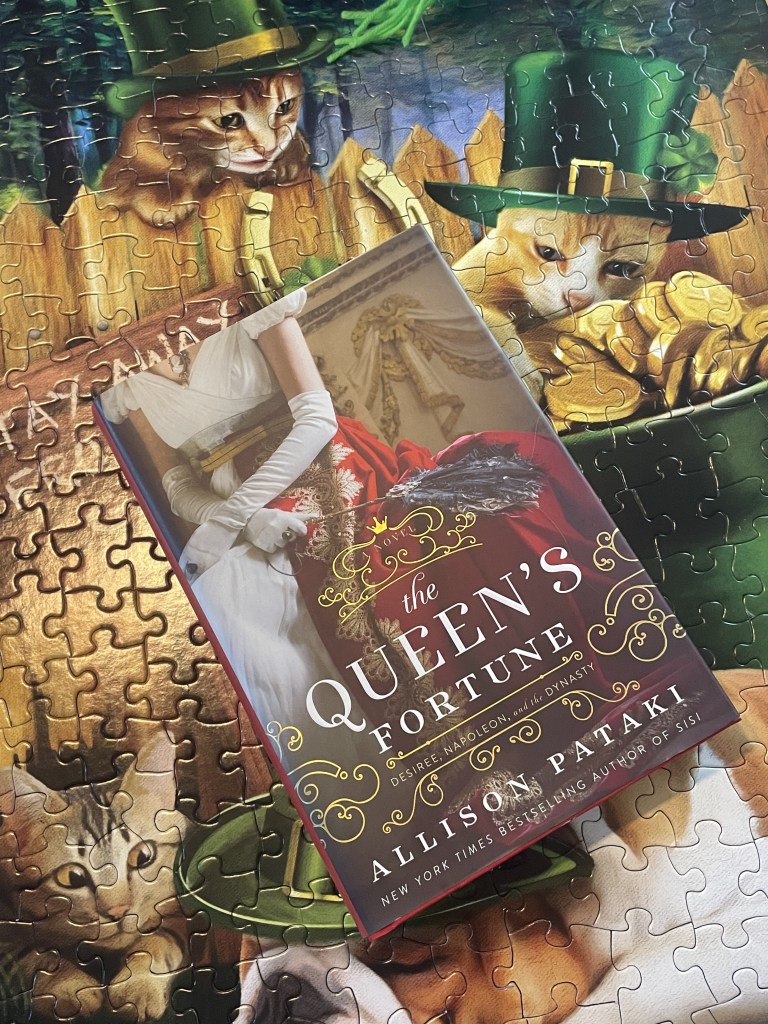
‘The Queen’s Fortune’ Review

“From the lavish estates of the French Riviera to the raucous streets of Paris and Stockholm, Desiree finds herself at the epicenter of the rise and fall of an empire, navigating a constellation of political giants and dangerous, shifting alliances. Emerging from an impressionable girl into a fierce young woman, she discovers that to survive in this world she must learn to rely upon her instincts and her heart.”

I really loved the character work presented in the novel. Desiree comes from the merchant class in post-revolution France. She soon becomes the lover of Napoleon, who falls out of love with her. She then becomes a confidant of his new empress. Eventually, Desiree ends up marrying Napoleon’s rival and becoming queen of Sweden. What a life, and to think I had never heard of her before I picked up this book. My favorite part was probably reading about the dynamics of her relationship with Josephine. Another thing I found really interesting was seeing Napoleon through the eyes of someone close to him, rather than from his own perspective. In that sense, the book reminded me of ‘Booth’ by Karen Joy Fowler.

The atmosphere was great, and the world-building was amazing, especially if you don’t know a lot about this time period, which I didn’t. I never felt lost or confused because the author put so much research into this book and its setting. Also, the early chapters reminded me of ‘The Count of Monte Cristo,’ and we see Dumas mentioned, which I thought was pretty cool.

The writing was the downside for me. This is such a long and slow-paced story. We follow Desiree for the majority of her life, but it just felt too slow for me. I think part of this was my personal problem because I had a lot of interruptions and had to put this book down for extended periods. However, I believe that if I had been able to read it continuously, I probably would have enjoyed the writing more.

The plot was pretty good. I think this was very much a character-heavy novel, which I do prefer. It was so informative, and I learned so much about a European era that I didn’t know much about before. I had no idea that the current modern-day Swedish royal family is descended from an installment of Napoleon. There is so much to be learned from the plot of the story.

I found it really interesting to see Napoleon through the eyes of someone close to him, rather than from his own perspective. In that sense, the book reminded me of ‘Booth’ by Karen Joy Fowler. I never felt lost or confused because the author put so much research into this book and its setting. However, the writing was the downside for me. Overall, there is so much to be learned from the plot of the story. This was a great book but not a new favorite.

3.7 out of 5 stars.

‘Annapolis’ Book Review

Annapolis by William Martin is a good fit for those who are interested in historical fiction that explores the proud traditions and romanticized ideals of the United States Navy, with a focus on the Stafford and Parrish families’ contributions to the nation’s military history.

The characters were placed for the sake of having characters and showcasing historical events. That isn’t to say that I didn’t like them, but they were not that well-developed, and once we hit the American Civil War, I had a hard time keeping up with who was who. There is also a lot of white saviorism in this book, and I know many people don’t like to read that, so I did want to make note of it in my review.

As you can tell by the title, the majority of the story takes place in Annapolis and the surrounding shores of the Chesapeake. The writing of the setting was spot-on, based on my own experiences in the area. It was so vivid and touched on all the senses.

The writing was fine. I liked how we had the two timelines and that the ‘historical’ settings were a part of a book that one of the characters was writing. However, it was episodic, and I think that is why I had a hard time connecting with the characters. There were a lot of loose ends between time periods that had me questioning. It was an interesting premise and take on a typical historical fiction novel.

The plot is the part that I am most excited to write about. As stated with the characters, I think the author really wanted to show the history of the navy as well as this country. The story was episodic, going from one war to the next. This book was very informative, and I learned a lot about some more forgotten bits of American history like fighting with Barbary pirates, the founding of the Navy, the War of 1812, and the Spanish-American War. However, WWI and Korea still remain forgotten. I learned a ton though, and that is my goal from reading.

The characters seemed to be placed primarily to serve as vehicles for showcasing historical events, but the vivid atmosphere evoked by the writing truly engaged the senses. The premise offered an intriguing take on the typical historical fiction novel. Despite some flaws, I found the book informative and fulfilling my goal of learning from reading. Overall, I would recommend it as a good read.

3.25 out of 5 stars.

‘Torch’ Book Review

“Work hard. Do good. Be incredible!” is the advice Teresa Rae Wood shares with the listeners of her local radio show, Modern Pioneers , and the advice she strives to live by every day. She has fled a bad marriage and rebuilta life with her children, Claire and Joshua, and their caring stepfather, Bruce. Their love for each other binds them as a family through the daily struggles of making ends meet. But when they received unexpected news that Teresa, only 38, is dying of cancer, their lives all begin to unravel and drift apart. Strayed’s intimate portraits of these fully human characters in a time of crisis show the varying truths of grief, forgiveness, and the beautiful terrors of learning how to keep living.

These characters are the most authentic I’ve read in a long time. Teresa and Joshua were the ones I connected with the most. Teresa is a mother who falls ill, and I’ve never read from a character who receives a terminal diagnosis. Joshua, her teenage son, deeply affected me because I saw how his mother’s diagnosis, and ultimately her death, impacted his life, and what loss can do to a person. I didn’t really connect with the character of Claire, which is a shock as she’s the character I’m closest in age with. I didn’t like her, but when you go through such a traumatic event, you’re often not a likable person. Ultimately, I just wasn’t drawn to her chapters. Bruce is a character who grew on me throughout the novel. I think he’s a good person, but loss can change us as individuals and transform us. Great character work!

The atmosphere is what blew me away, I wasn’t expecting it to be so powerful. This book is set in a small town in Minnesota, and the author masterfully brought that town to life, along with the Mississippi River, making those settings almost characters in their own right. I love reading about the changing of seasons, and I think the author did a fantastic job portraying this.

While the first chapter initially enamored me with Cheryl Strayed’s choice of language, it eventually felt as though she was using an excess of words, as if she had a certain word count to reach for the book to be published. The story began to drag on and became quite tedious, turning what was once an enjoyable reading experience into something of a chore, especially with chapters that spanned over 20 pages. The overall story was hard to follow, as the way time jumps were all over the place, taking me out of the story as I had to figure out if we were in the past or present.

The author’s portrayal of themes such as loss and grief was commendably done. These are universal experiences that all humans must endure at some point in their lives. While these experiences can be painful, they also hold the transformative power to shape us, often for the better. Not only do they bring us closer together, but they also allow us to grow as individuals. The authenticity and humanity within the story were palpable, truly underscoring the author’s skill in encapsulating such complex emotions and experiences.

These characters are the most authentic I’ve read in a long time. Great character work! The atmosphere is what blew me away, I wasn’t expecting it to be so powerful. I love reading about the changing of seasons, and I think the author did a fantastic job portraying this. While the first chapter initially enamored me with Cheryl Strayed’s choice of language, it eventually felt as though she was using an excess of words, as if she had a certain word count to reach for the book to be published. The overall story was hard to follow, as the way time jumps were all over the place, taking me out of the story as I had to figure out if we were in the past or present. The author’s portrayal of themes such as loss and grief was commendably done. The authenticity and humanity within the story were palpable, truly underscoring the author’s skill in encapsulating such complex emotions and experiences. This was a good and I would still recommend it even if it did not live up to my five star expectation.

3.5 out of 5 stars.

‘Red Rising’ Book Review

“Red Rising” by Pierce Brown is a dystopian science fiction novel set on Mars in a future society stratified by color-coded castes. The protagonist, Darrow, belongs to the lowest caste, the Reds, who work as miners to terraform the planet. After a personal tragedy, Darrow discovers the truth about the oppressive society and joins a rebel group known as the Sons of Ares. Through a transformative process, he infiltrates the Gold caste, the ruling class, to bring about change from within. The novel explores themes of rebellion, power, and social hierarchy, with intense action and political intrigue driving the narrative. “Red Rising” is the first book in a trilogy and has gained praise for its engaging plot and complex characters.

 I could not connect with Darrow as a character. His dialogue was dry, and there was little to no inner dialogue. This could have been improved by giving him character development, of which I saw small hints, and I am certain that he has to grow throughout the series as this is only the first installment. If the reader had more time with him in the mines, an emotional connection could have been easier to build. There needed to be more development and inner dialogue.

 The atmosphere was inspired by Roman history and mythology; I found this rather intriguing and think it makes the story more accessible, as there were names and myths that the average person would be familiar with. However, I did have a hard time actually picturing the world in my head. The author would have benefited from using more descriptive writing.

 The writing was accessible, easy, and readable. The story was fast-paced. As stated before, the story would have improved with inner dialogue and more descriptive writing. With that being said, it was very dry. I hated that this was in the first-person perspective rather than third. First-person does work well for some genres, but science fiction is not one of them. The writing was my biggest problem with the book.

  If I had read ‘Red Rising’ ten years ago, I would have loved it. The plot is very reminiscent of ‘The Hunger Games’: a poor person goes to the big city to take down the empire and partake in a to-the-death style game. There are more similarities, but I will not list them all. This is just a more adult style of the dystopian books that were coming out at the time it was published in 2013. As I have read many of those, this story was not unique or anything new to me.

I could not connect with Darrow as a character. There needed to be more development and inner dialogue. The atmosphere was inspired by Roman history and mythology; I found this rather intriguing and think it makes the story more accessible, as there were names and myths that the average person would be familiar with. The author would have benefited from using more descriptive writing. The writing was accessible, easy, and readable. The writing was my biggest problem with the book. If I had read ‘Red Rising’ ten years ago, I would have loved it. This story was not unique or anything new to me. This read did nothing for me, and if you are familiar with the science fiction genre, I would not recommend picking it up. However, it would be a good starting book if you are new to the genre.

2.4 out of 5 stars.

‘Convergence’ Book Review

“It is an age of exploration. Jedi travel the galaxy, expanding their understanding of the Force and all the worlds and beings connected by it. Meanwhile, the Republic, led by its two chancellors, works to unite worlds in an ever-growing community among near and distant stars.

On the close-orbiting planets of Eiram and E’ronoh, the growing pains of a galaxy with limited resources but unlimited ambition are felt keenly. The two worlds’ hatred for each other has fueled half a decade of escalating conflict and now threatens to consume surrounding systems. The last hope for peace emerges when heirs from the planets’ royal families plan to marry.”

These characters were flat and one-dimensional, except for Axel, the son of the chancellor of the Republic. The Jedi knight, prince, and princess were all set in their ways and did not develop over the course of the novel. However, Axel was constantly questioning things and his path in life. He was the only character who had somewhat of an arc in this story, even if it was not necessarily a redemption arc. This book fell victim to the author adding in too many characters too quickly, not allowing the reader the proper time to form a bond with them.

 The atmosphere was decent. The first chapter did a great job of setting the tense tone of the novel. You could feel the nervousness, yet the way life continued for the citizens of the planets at war. I’m still uncertain about the cause of the war. Was it due to low supplies and resources? It never seemed like there was a shortage, but who knows. Additionally, I struggled to differentiate between the two twin planets. Although the tone set at the start of the novel was good, it didn’t extend beyond the first chapter.

 The writing style was alright—fairly average and neither hated nor loved. However, I found the story hard to follow. It continuously jumped from one point of view to another, making it choppy. I resorted to skimming, which might not have helped much.

  As mentioned earlier, I struggled to follow the plot. Events seemed to unfold just to move the story from point A to point B, lacking logical progression. It felt like the author was pushing to conclude the book rather than building a coherent storyline. As I wasn’t emotionally invested in the characters, certain plot twists had little impact on me, and I found myself disconnected from the story. Better character development and writing might have changed that for me.

These characters were flat and one-dimensional, except for Axel, the son of the chancellor of the Republic. This book fell victim to the author adding in too many characters too quickly, not allowing the reader the proper time to form a bond with them. The atmosphere was decent. Although the tone set at the start of the novel was good, it didn’t extend beyond the first chapter. The writing style was alright—fairly average and neither hated nor loved. I resorted to skimming, which might not have helped much. As mentioned earlier, I struggled to follow the plot. Better character development and writing might have changed that for me. This book did nothing for me but it’s another step in the Star Wars universe for me.

2 out of 5 stars.