
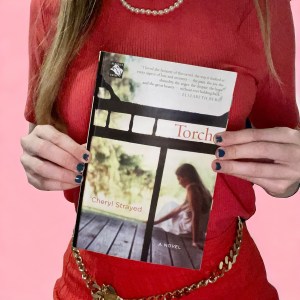
‘Torch’ Book Review

“Work hard. Do good. Be incredible!” is the advice Teresa Rae Wood shares with the listeners of her local radio show, Modern Pioneers , and the advice she strives to live by every day. She has fled a bad marriage and rebuilta life with her children, Claire and Joshua, and their caring stepfather, Bruce. Their love for each other binds them as a family through the daily struggles of making ends meet. But when they received unexpected news that Teresa, only 38, is dying of cancer, their lives all begin to unravel and drift apart. Strayed’s intimate portraits of these fully human characters in a time of crisis show the varying truths of grief, forgiveness, and the beautiful terrors of learning how to keep living.

These characters are the most authentic I’ve read in a long time. Teresa and Joshua were the ones I connected with the most. Teresa is a mother who falls ill, and I’ve never read from a character who receives a terminal diagnosis. Joshua, her teenage son, deeply affected me because I saw how his mother’s diagnosis, and ultimately her death, impacted his life, and what loss can do to a person. I didn’t really connect with the character of Claire, which is a shock as she’s the character I’m closest in age with. I didn’t like her, but when you go through such a traumatic event, you’re often not a likable person. Ultimately, I just wasn’t drawn to her chapters. Bruce is a character who grew on me throughout the novel. I think he’s a good person, but loss can change us as individuals and transform us. Great character work!

The atmosphere is what blew me away, I wasn’t expecting it to be so powerful. This book is set in a small town in Minnesota, and the author masterfully brought that town to life, along with the Mississippi River, making those settings almost characters in their own right. I love reading about the changing of seasons, and I think the author did a fantastic job portraying this.

While the first chapter initially enamored me with Cheryl Strayed’s choice of language, it eventually felt as though she was using an excess of words, as if she had a certain word count to reach for the book to be published. The story began to drag on and became quite tedious, turning what was once an enjoyable reading experience into something of a chore, especially with chapters that spanned over 20 pages. The overall story was hard to follow, as the way time jumps were all over the place, taking me out of the story as I had to figure out if we were in the past or present.

The author’s portrayal of themes such as loss and grief was commendably done. These are universal experiences that all humans must endure at some point in their lives. While these experiences can be painful, they also hold the transformative power to shape us, often for the better. Not only do they bring us closer together, but they also allow us to grow as individuals. The authenticity and humanity within the story were palpable, truly underscoring the author’s skill in encapsulating such complex emotions and experiences.

These characters are the most authentic I’ve read in a long time. Great character work! The atmosphere is what blew me away, I wasn’t expecting it to be so powerful. I love reading about the changing of seasons, and I think the author did a fantastic job portraying this. While the first chapter initially enamored me with Cheryl Strayed’s choice of language, it eventually felt as though she was using an excess of words, as if she had a certain word count to reach for the book to be published. The overall story was hard to follow, as the way time jumps were all over the place, taking me out of the story as I had to figure out if we were in the past or present. The author’s portrayal of themes such as loss and grief was commendably done. The authenticity and humanity within the story were palpable, truly underscoring the author’s skill in encapsulating such complex emotions and experiences. This was a good and I would still recommend it even if it did not live up to my five star expectation.

3.5 out of 5 stars.

‘Red Rising’ Book Review

“Red Rising” by Pierce Brown is a dystopian science fiction novel set on Mars in a future society stratified by color-coded castes. The protagonist, Darrow, belongs to the lowest caste, the Reds, who work as miners to terraform the planet. After a personal tragedy, Darrow discovers the truth about the oppressive society and joins a rebel group known as the Sons of Ares. Through a transformative process, he infiltrates the Gold caste, the ruling class, to bring about change from within. The novel explores themes of rebellion, power, and social hierarchy, with intense action and political intrigue driving the narrative. “Red Rising” is the first book in a trilogy and has gained praise for its engaging plot and complex characters.

 I could not connect with Darrow as a character. His dialogue was dry, and there was little to no inner dialogue. This could have been improved by giving him character development, of which I saw small hints, and I am certain that he has to grow throughout the series as this is only the first installment. If the reader had more time with him in the mines, an emotional connection could have been easier to build. There needed to be more development and inner dialogue.

 The atmosphere was inspired by Roman history and mythology; I found this rather intriguing and think it makes the story more accessible, as there were names and myths that the average person would be familiar with. However, I did have a hard time actually picturing the world in my head. The author would have benefited from using more descriptive writing.

 The writing was accessible, easy, and readable. The story was fast-paced. As stated before, the story would have improved with inner dialogue and more descriptive writing. With that being said, it was very dry. I hated that this was in the first-person perspective rather than third. First-person does work well for some genres, but science fiction is not one of them. The writing was my biggest problem with the book.

  If I had read ‘Red Rising’ ten years ago, I would have loved it. The plot is very reminiscent of ‘The Hunger Games’: a poor person goes to the big city to take down the empire and partake in a to-the-death style game. There are more similarities, but I will not list them all. This is just a more adult style of the dystopian books that were coming out at the time it was published in 2013. As I have read many of those, this story was not unique or anything new to me.

I could not connect with Darrow as a character. There needed to be more development and inner dialogue. The atmosphere was inspired by Roman history and mythology; I found this rather intriguing and think it makes the story more accessible, as there were names and myths that the average person would be familiar with. The author would have benefited from using more descriptive writing. The writing was accessible, easy, and readable. The writing was my biggest problem with the book. If I had read ‘Red Rising’ ten years ago, I would have loved it. This story was not unique or anything new to me. This read did nothing for me, and if you are familiar with the science fiction genre, I would not recommend picking it up. However, it would be a good starting book if you are new to the genre.

2.4 out of 5 stars.

‘Convergence’ Book Review

“It is an age of exploration. Jedi travel the galaxy, expanding their understanding of the Force and all the worlds and beings connected by it. Meanwhile, the Republic, led by its two chancellors, works to unite worlds in an ever-growing community among near and distant stars.

On the close-orbiting planets of Eiram and E’ronoh, the growing pains of a galaxy with limited resources but unlimited ambition are felt keenly. The two worlds’ hatred for each other has fueled half a decade of escalating conflict and now threatens to consume surrounding systems. The last hope for peace emerges when heirs from the planets’ royal families plan to marry.”

These characters were flat and one-dimensional, except for Axel, the son of the chancellor of the Republic. The Jedi knight, prince, and princess were all set in their ways and did not develop over the course of the novel. However, Axel was constantly questioning things and his path in life. He was the only character who had somewhat of an arc in this story, even if it was not necessarily a redemption arc. This book fell victim to the author adding in too many characters too quickly, not allowing the reader the proper time to form a bond with them.

 The atmosphere was decent. The first chapter did a great job of setting the tense tone of the novel. You could feel the nervousness, yet the way life continued for the citizens of the planets at war. I’m still uncertain about the cause of the war. Was it due to low supplies and resources? It never seemed like there was a shortage, but who knows. Additionally, I struggled to differentiate between the two twin planets. Although the tone set at the start of the novel was good, it didn’t extend beyond the first chapter.

 The writing style was alright—fairly average and neither hated nor loved. However, I found the story hard to follow. It continuously jumped from one point of view to another, making it choppy. I resorted to skimming, which might not have helped much.

  As mentioned earlier, I struggled to follow the plot. Events seemed to unfold just to move the story from point A to point B, lacking logical progression. It felt like the author was pushing to conclude the book rather than building a coherent storyline. As I wasn’t emotionally invested in the characters, certain plot twists had little impact on me, and I found myself disconnected from the story. Better character development and writing might have changed that for me.

These characters were flat and one-dimensional, except for Axel, the son of the chancellor of the Republic. This book fell victim to the author adding in too many characters too quickly, not allowing the reader the proper time to form a bond with them. The atmosphere was decent. Although the tone set at the start of the novel was good, it didn’t extend beyond the first chapter. The writing style was alright—fairly average and neither hated nor loved. I resorted to skimming, which might not have helped much. As mentioned earlier, I struggled to follow the plot. Better character development and writing might have changed that for me. This book did nothing for me but it’s another step in the Star Wars universe for me.

2 out of 5 stars.