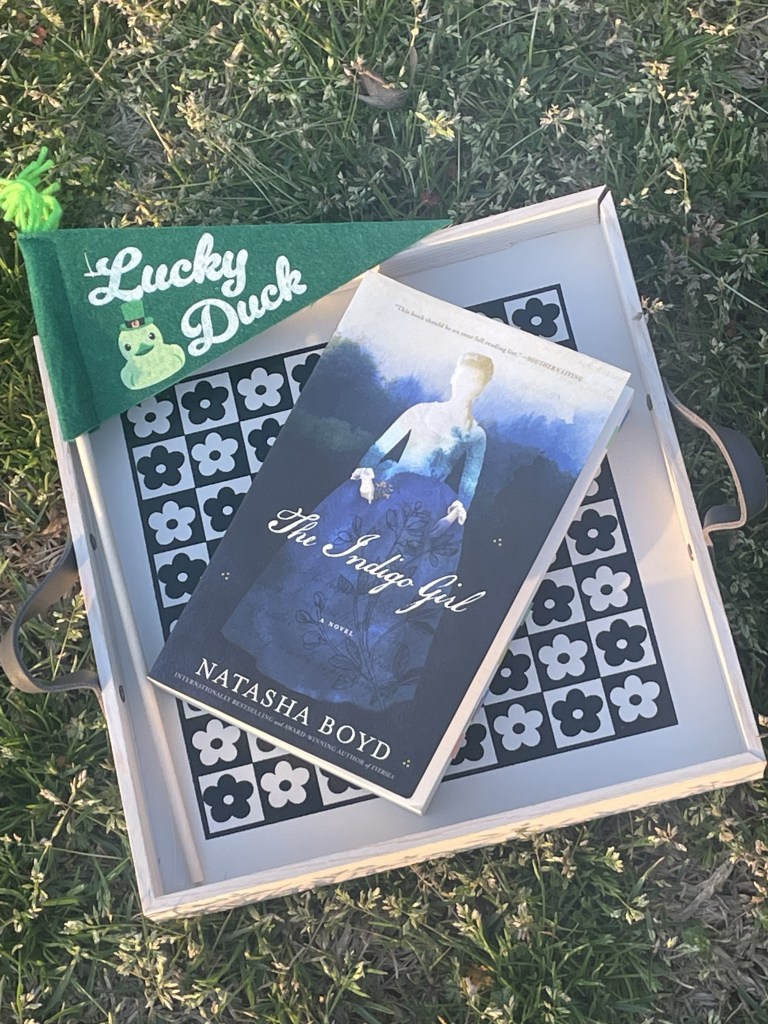
Based on historical documents, including Eliza’s letters, this is a historical fiction account of how a teenage girl produced indigo dye, which became one of the largest exports out of South Carolina, an export that laid the foundation for the incredible wealth of several Southern families who still live on today. Although largely overlooked by historians, the accomplishments of Eliza Lucas influenced the course of US history. When she passed away in 1793, President George Washington served as a pallbearer at her funeral.
The characters, heroes and villains alike, were all one-dimensional; flat. For the first seventy-five percent of the book, I had no issue with Eliza, but by the last quarter, I did not like her. She’s another example of a Mary Sue and whines like no other when things don’t go her way. Flat characters.
There are real historical letters immersed throughout the book, and the author had the dialogue and overall personality of Eliza spot on, transitioning from historical records to a fictional novel.
The atmosphere came right off the page. The author did a great job of depicting the area of coastal South Carolina and making it easy for the reader to picture the locales of the scenes.
The writing itself was fine, but bits and pieces of the dialogue did get repeated quite a bit, even within a page of each other. Also, I wonder how many times the author used the word ‘blue’ or some variation in the book. We get it, the book is about indigo!! This book does read young, and I think it would be great for young adults to read.
As an idea, the plot sounds pretty good. On the page, it just wasn’t executed properly. I was not gripped or intrigued by what would happen next, and that ultimately led me to skim-read the last quarters of the book. This story sounds unbelievable, but it’s a real story. However, some of the plot points were unnecessary and would have caused an uproar if genders had been reversed. However, as historical fiction, I do believe this was a well-researched story.
The characters, heroes and villains alike, were all one-dimensional; flat. The author did a great job of depicting the area of coastal South Carolina and making it easy for the reader to picture the locales of the scenes. The writing itself was fine, but bits and pieces of the dialogue did get repeated quite a bit, even within a page of each other. However, as historical fiction, I do believe this was a well-researched story. Overall, this book didn’t do a lot for me, and I really wouldn’t recommend it
3 out of 5 stars.

 Izzy Reads