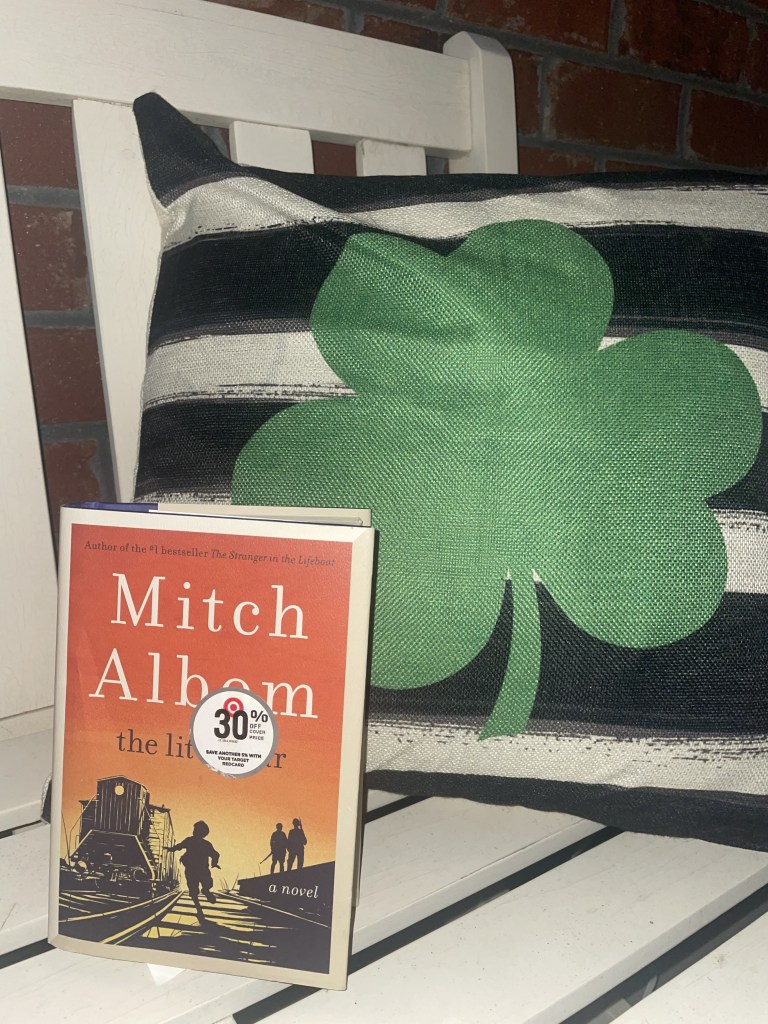
“The Little Liar by Mitch Albom is a poignant novel set during the Holocaust, exploring themes of truth, deception, and survival. The story centers on Nico Krispis, an 11-year-old Jewish boy from Salonika, Greece, known for his unwavering honesty. When the Nazis invade, a German officer exploits Nico’s reputation, convincing him to assure his fellow Jews that boarding trains will lead to safety and employment. Unbeknownst to Nico, these trains are destined for Auschwitz, leading to the demise of his community and family. Devastated by his unintended role in their fate, Nico becomes a pathological liar, while his brother Sebastian and friend Fannie survive the death camps and spend years searching for him. Narrated by the personification of Truth, the novel delves into the profound impacts of deceit and the enduring quest for redemption.”
These characters, man, I was scared that I wasn’t going to get a connection to them because we were thrown right into their stories. We are dealing with children during the Second World War and one Nazi. We have Nico, who is so pure that it would tug at my heartstrings. Nico’s brother is Sebastian, and Sebastian is coming of age in a world that is a hellscape. Believe it or not, I think Sebastian is the character that I cared for the most and felt the most for; he really had so much put on his shoulders and had to grow up quickly. Next, we have their friend Fannie. All these characters have layers of guilt that they have to deal with, and we see how everybody handles situations differently. Lastly, among our human characters, we have Udo Graf, who is a high-ranking Nazi. Let me tell you, Udo is a psychopath. However, I found his sections so intriguing, just to see how somebody’s mind can work like that, how someone can be fine sending innocent people to these brutal concentration camps like Auschwitz. These are great, unforgettable characters, and we follow this huge journey of their lives and how they intersect through the decades to come. I almost wish that this book were longer, and we got a little bit more time with these characters.
Next, let’s step into the atmosphere of the story. This is taking place in Salonika, Greece—a completely new take on the World War II setting in historical fiction. I will tell you, I do not know anything about Greece outside of the ancient and classical period. Something that gave me a little laugh was when I was looking at this book on Goodreads. I saw the shelves that people had placed it on, and Greece was one of the main shelves. I am sure this stands out in that collection of books, as all the rest are probably stories based on Greek myths and legends surrounding Mount Olympus. This one is completely new and so vivid. I have no idea how the author was able to make the setting so vivid when we are in this book for only 333 pages; it’s truly remarkable.
May I invite you to a game of pinball? That was the writing style when I was placed into the story. It was so fast-paced, almost choppy at the beginning, as we were jumping all over the place with timelines. I really struggled with that structure. I felt like a pinball being shot around the gaming machine. In all honesty, that’s why I feel like giving this book a 4.75 rather than a full five stars. However, I do think the writing is great. It’s so cleverly written. I was constantly scared that the author would forget about certain characters or certain plot points, but the story overall came full circle by the last few pages. We are incredibly immersed in this story; you feel the anxiety, the tension, the sadness, and the despair of the brutality that the author is putting on the page. Again, that’s so incredible, especially with how fast-paced and short these chapters are. I honestly have no clue how the author did it. It was so clever and extremely fast-paced, and that made me wonder: do I really want fast-paced writing? I always complain about books being too slow, but with this one, I felt like I was being slingshotted around. However, as time progresses, I think I will probably forget about how that writing style made me feel and will just remember the impact that this story had on me.
When I read the description of this book, my jaw literally fell to the floor—a little boy sent his family and everyone he’s ever known to Auschwitz. What do you do once you find out what you did, all because of a lie told to you by someone in power? It’s mind-boggling; it’s so incredible, this life that these characters live and how they handle the consequences of their actions and words. It might be unlike anything I’ve ever read before.
I really thought this was going to be a four-star read, or at least a high four-star read, but when we got to the last sections of the book, it was such a gut punch to me. In the earlier sections, I didn’t feel an impact from some of these extremely brutal scenes because I was just thrown right into the story, and everything was moving so quickly that I couldn’t grasp what was happening and who these people were. But once we got to those final pages, I felt dead inside, and that’s usually a sign of a five-star read—it’s just that feeling of being unable to do anything. The story is said and done, and it was an experience altogether.
Earlier, I discussed there being human characters, and you might have picked up that I made a special note of those characters being human. This story is told through the personification of truth; again, that’s so clever. The story is all about what truth is and how it impacts all of us. I think it even goes deeper than that; this is a story of humanity and what it means to be human. It really shows how everything in this world is so fragile or fickle—be it nature or other things around us. But there are a few things that all humans experience: love, compassion, longing for belonging, death, tragedy, grief, and most of all, truth. Some of those things we don’t desire, but they are inevitable. We will most likely experience all of those aspects of life that I mentioned. Life is a cycle, and everything will come full circle. Eventually, you just have to give it time. There are consequences for all actions. Every word you say, no matter how little, has an impact on you, those around you, and ultimately, the universe.
4.75 out of 5 stars.

 Izzy Reads