‘Earth’ Review

Earth by John Boyne is the second novella in his Elements series, focusing on Evan Keogh, a young man who escapes his oppressive upbringing on a remote Irish island to pursue a life in London. While Evan aspires to be an artist, financial hardships and societal pressures lead him into professional football—a career he never desired. As a gay man in a sport that often lacks inclusivity, Evan grapples with his identity and the expectations placed upon him. The narrative unfolds with Evan standing trial as an accessory to a sexual assault committed by a teammate, prompting him to reflect on his past choices, personal integrity, and the life he has constructed. Through themes of toxic masculinity, homophobia, and the complexities of personal accountability, Boyne crafts a poignant exploration of a young man’s struggle for self-acceptance and redemption.”

I do think this was good character development for the time we had with our character, Evan. You really feel immersed in his shoes and can sense all the emotions and tensions in these scenes. However, I never felt a true connection to him; his character very much reminds me of Jude from “A Little Life.” So, if you’re a fan of that book, then you might like this one as well. 

The atmosphere was good. Our story is mainly set in England but flashes back to Ireland. It definitely has the tone of an Irish book—think of those big Irish names—and this book is reminiscent of that. I did like the writing style. There is some purple prose, but it’s never over the top. 

Now, the plot is a story we have heard many times, especially in the last decade, but it’s an important story. It’s a powerful narrative that shows how people can find themselves in difficult situations and, sadly, how cases unfold in the real world. It was interesting to see this from an English perspective rather than an American perspective. 

However, at the same time, I wasn’t really intrigued to know where the story would go since I didn’t care that much for the characters. Again, they were fine; I had nothing against them, and I do think it was good character work. I just wish we had a little more backstory and, in all honesty, that this book was longer than the novella that it is. 

However, I can’t fault the book for its logic; as I said, this sadly happens in the real world. This book didn’t do a whole lot for me. It was very quiet and easy to get through, even though it has a very dark theme. The book got a lot darker than I expected it to. So, if you’re thinking of picking this up, maybe give it a go at the library first.

3 out of 5 stars.

‘The Survival of the Princes in the Tower’ Book Review

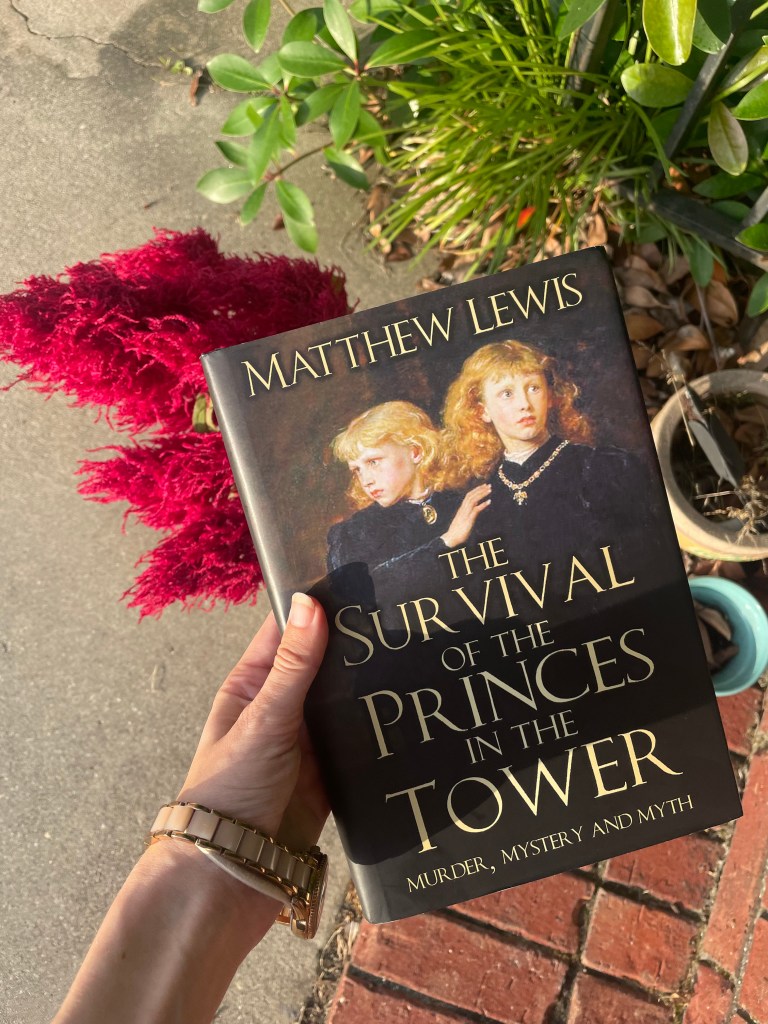
The Survival of the Princes in the Tower by Matthew Lewis is a historical investigation into one of England’s most enduring mysteries—the fate of Edward V and his younger brother, Richard, Duke of York. Traditionally believed to have been murdered in the Tower of London in 1483, the book challenges this narrative by examining contemporary sources, political motives, and alternative theories. Lewis explores the possibility that one or both princes may have survived, questioning the role of Richard III and others in their disappearance. Thorough and thought-provoking, the book invites readers to reconsider long-held assumptions about a pivotal moment in English history.”

This book really got interesting when we reached the part that the title describes—the survival of the princes in the tower—not all the different theories about the murders and who the suspects might be. I already knew a lot of that information or at least a good majority of it. I was even aware of some of the imposters who came forward, pretending to be not only the princes but also their cousins. While this book provided me with a bit more knowledge on the topic, it was in the last few chapters, especially the final chapter, where things became truly intriguing. It presented different theories about whether the princes survived but went into hiding, posing no threat to the royal Tudor family because some deals could have been made.

I had never considered this theory before, and some of the evidence supporting it is mind-blowing—like evidence hiding in plain sight within works of art. It’s really intriguing to think about, and I cannot wait to research it further and hear different people’s opinions.

However, my complaints were that I already knew a lot of the information in this book, which made it feel like it was just regurgitating knowledge I was already familiar with. Additionally, especially at the beginning of the book, the writing was rather chaotic and all over the place, with a lot of backtracking. It just wasn’t clear and concise. 

I would recommend this book if you’re new to the Wars of the Roses or the Tudor era in English history. I think this book is well-suited for that audience, but if you’re someone who is already well-versed in that part of history and have consumed a lot of media or other nonfiction books on the topic, this book probably won’t offer you much new insight.

2.75 out of 5 stars.

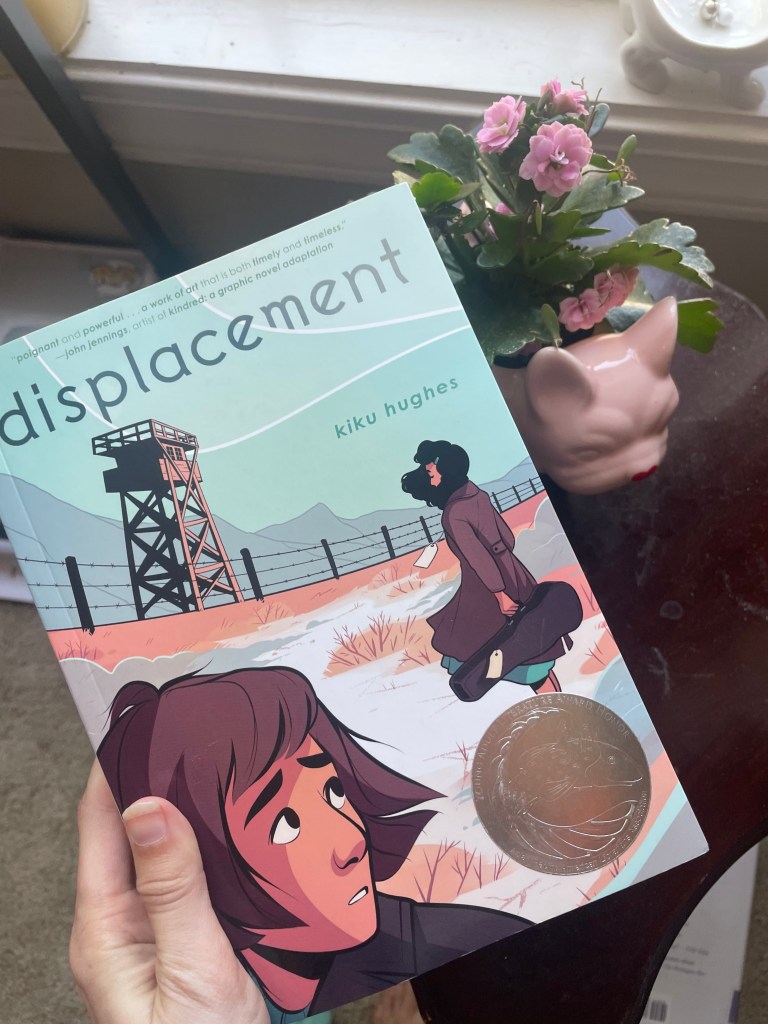
‘Displacement’ Book Review

” “Displacement” by Kiku Hughes is a poignant graphic novel that intertwines the story of a modern-day Japanese American girl, Kiku, with the historical context of Japanese internment during World War II. When Kiku is transported back in time to a Japanese internment camp, she grapples with her family’s past and the trauma of displacement faced by her ancestors. Through her journey, she experiences the harsh realities of life in the camps, the impact of racism, and the struggle for identity, ultimately reflecting on the importance of remembering history and understanding the ongoing effects of systemic injustice. The narrative blends personal and collective memory, highlighting themes of resilience, belonging, and the fight against erasure.”

Each month, I like to add a graphic novel to my TBR, and this month it is ‘Displacement’ by Kiku Hughes. As a child, I read a ‘Dear America’ book on Japanese internment camps in the American West, but I haven’t read anything on it since. This is another work of young adult fiction that mixes fact and fiction. I love seeing these bits of history told in various forms—whether for adults, young adults, graphic novels, or memoirs. I think it’s so important to present history in as many formats as possible so it can be accessible to everyone.

The time travel elements are reminiscent of ‘Kindred’ by Octavia E. Butler, as we have a character going back for a little bit every now and then. It also reminds me of ‘One Italian Summer’ by Rebecca Serle, as we see our main character visiting a family member in the past when they were young. The big theme here is the importance of being educated on history, as history tends to repeat itself. These internment camps really need to be discussed more. I previously read about this subject, and we learned about it in school, but it needs to be more widely addressed.

World War II fiction is extremely popular, but it often focuses mainly on the European front. I believe the stories of Japanese Americans need to be spoken about more, as they endured significant injustices at the hands of the American government simply because of their ancestral background. I thought it was clever to use time travel in this book because Kiku is displaced from 2016 back to the 1940s, while the people of that time are being displaced from their lives and sent to these camps. Both have experienced displacement.

The author used this time travel element to cover gaps in her knowledge of her grandmother’s story. I do wish the glossary had been at the front of the book, as there were some terms I wasn’t familiar with, and I discovered the glossary was at the very back but once I had finished the book. One theme I found interesting was the struggle between trying to survive and doing the right thing, and how hard that choice can be. A quote that really captures this book is, “A memory is too powerful a weapon.” We have to remember history and how it shaped us because it tells the story of where humanity comes from and where it will go.

There were also things I had never heard of that I learned about in this book, like how Japanese Americans were portrayed as a model minority during the civil rights movement. Who knew that people in power were trying to pit other minorities against each other and spread anti-Black racism? This wasn’t the only time that camps were discussed in American history; while we hear about them today, back in the 70s, there were rumors and efforts to start camps to detain communists or Black Panthers.

I’d like to end with two more quotes. The first is, “Rumors start when there’s fear and a lack of information, and they still influence our memories forever.” The second is, “Never again is now.” So many times, we hear people say that we won’t allow things like concentration camps to happen again, but we really need to hold true to that as history progresses. This was a good book, and if you want to learn more about this time in American history and these atrocities, I recommend that you pick it up.

‘Small Great Things’ Book Review

Small Great Things by Jodi Picoult is a powerful novel that tackles issues of race, privilege, and justice. It centers on Ruth Jefferson, a Black labor and delivery nurse who is ordered not to touch the newborn of white supremacist parents. When the baby goes into cardiac distress while Ruth is briefly alone with him, she hesitates—an action that leads to her being charged with a serious crime. As Ruth faces trial, she is represented by a white public defender forced to confront her own biases. The novel explores moral complexity and systemic racism through a gripping courtroom drama and deeply human characters.”


The author presents us with all kinds of characters: Ruth, who is a Black woman; Kennedy, a white public defender who does not view herself as racist; and Turk, a white supremacist. We get to follow along and see why they believe what they believe and why they are living the lives that they are. The reader isn’t only confronted with their own beliefs, but we also see the characters being confronted, which was unique to me. I often see readers being challenged, but rarely do the characters face the same level of confrontation.

There were little instances here and there where the characters would say or think something that annoyed me, but I had to remind myself that it is completely realistic for someone in these situations to think these things. These characters may not be lovable, but they are extremely real and provide a glimpse into how race is viewed by different groups in the United States. 

At first, I really didn’t know what to think of the atmosphere and whether it actually played any part in the story. When I first heard about this book on social media, I pictured it taking place in the South, where racism is typically depicted in works of fiction. However, when I actually started reading the book, I realized that it is set in New Haven, Connecticut, a town in New England and home to an Ivy League school. That’s not typically the location you would think of for a story like this, and I think that really highlights the fact that racism is prevalent everywhere. It can happen in Georgia, it can happen in Connecticut, and it can occur in a Walmart or a hospital. You could see people with Confederate flags in their yards and attending white supremacist rallies in a state that wasn’t even part of the Confederacy. Racism is everywhere in the United States and the world.

I will admit that I was initially intimidated by the writing style. There is an extreme amount of research put into this book, which is crucial for a white woman telling a story about racism, systemic injustice, and inequality in this country. She spoke with different Black individuals and even some college presidents of historically Black colleges. She even interviewed reformed white supremacists who now spread anti-hate messages to get the lingo down for how a white supremacist would talk.

Additionally, there are details like Ruth being a labor and delivery nurse, and we see all the little aspects involved in taking care of a baby and the mother after birth. Most of us have hopefully never experienced being put on trial, but again, we see the depth of research that Jodi Picoult, the writer, put into that. Even the seemingly small details, like making a Big Mac—who knew the amount of research a writer would need to do for something like that?

As I stated before, I was initially scared when I started the book and encountered all the medical terms in the labor and delivery unit. Thankfully, though, the author does an excellent job of explaining everything, allowing you to gain a real understanding of what you’re reading. You’re never left feeling confused.


As I mentioned before, this book is a confrontation—a confrontation for white people who don’t necessarily see themselves as racist or biased. I know that when I recommend this book to a lot of people, they’re going to feel uncomfortable with it. I even worry that some of them will read it and still not recognize the issues, feeling too entrenched in their beliefs to come out of it. But, as the author notes, she spoke with skinheads who are now part of groups educating people against hate, and if they can change, then anyone can.

One of the quotes from the author’s note is, “I wrote it because I believed it was the right thing to do, and because the things that make us uncomfortable are the things that teach us what we all need to know.” Let me tell you, you see that with all of the characters in this book, and you will even see it in yourself and your community afterwards. Obviously, systemic racism is the main theme of this book, but there are other themes as well, such as nature versus nurture, and the importance of the beliefs we instill in our children as parents. It’s crucial to ensure that we are teaching them the right values, making sure they step forward in the right direction.

Being a parent itself might even be a confrontation as you observe the path your child is taking. It really makes you take a step back and reflect on yourself, as your child can serve as a mirror of you. It prompts you to second-guess some things. While we may not be able to change systemic racism today, we need to instill awareness in our children and, consequently, in ourselves so that hopefully it can be dismantled in the future. However, is there really a future without racism? That’s another discussion that Ruth and Kennedy have in the book.

I’d also like to include the last quote of the novel: “I hold my daughter’s hand—or maybe she holds mine—like we are at an intersection, and it’s my job to take her safely to the other side.” I think that beautifully describes the theme of parenting in this book. I recommend this book to everyone; I believe it should be required reading for adults in this country. Please, please, please pick up this book. I followed along with the audiobook and had a great experience with that as well.

5 out of 5 stars.

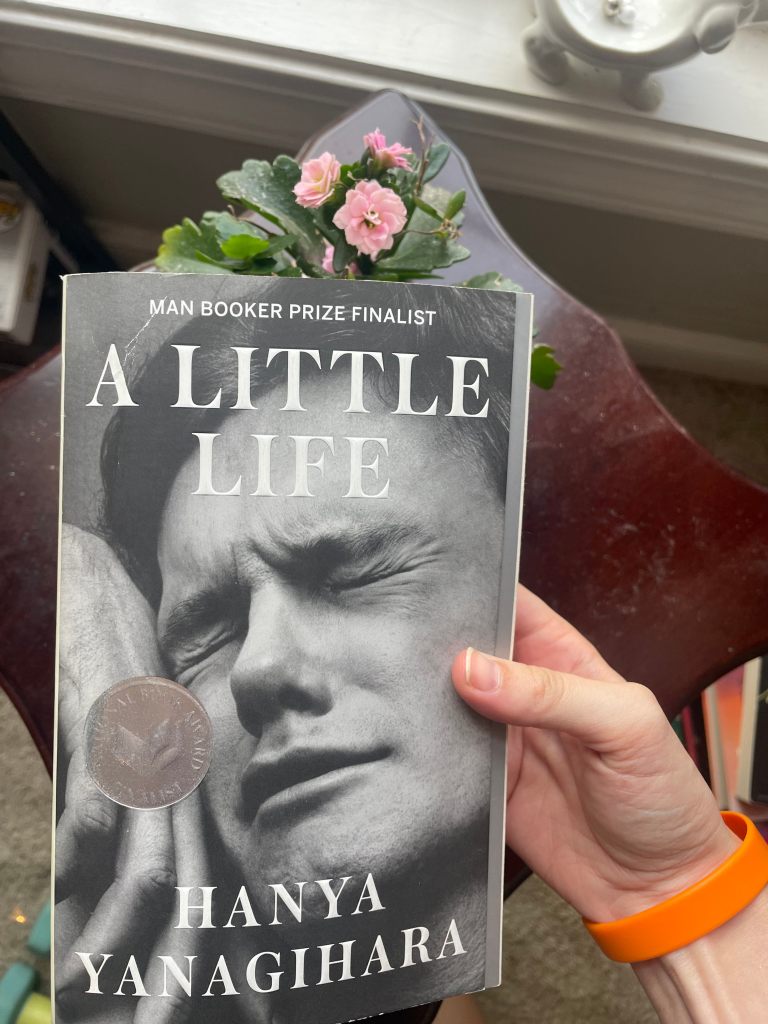
‘A Little Life’ Book Review

A Little Life by Hanya Yanagihara is an emotional and harrowing novel that follows four college friends—Jude, Willem, JB, and Malcolm—as they navigate life in New York City. At the heart of the story is Jude, a brilliant but deeply traumatized man with a mysterious and painful past. As the years pass, the novel delves into themes of friendship, love, suffering, and the long shadows of abuse. With its unflinching portrayal of trauma and resilience, A Little Life is a devastating and profoundly moving exploration of what it means to survive.

As always, let’s start with the characters first and foremost. I really enjoyed two of these characters: Harold, who is Jude’s somewhat mentor, and Willem, who is one of the four friends. I would absolutely have devoured this book if it had only been about Willem; I loved his story. One of the things I think this book teaches is that empathy needs to be directed towards everyone, not just a select group of people. To make the world a better place, you have to show compassion and empathy to everybody around you. That was something great about this book. Even if I didn’t necessarily love all of these characters, I could see a little bit of myself in their relatability.

Now, what did I not like about the characters? The side characters were very interchangeable, and I didn’t think they had a significant role in the story. I’m thinking of characters like Richard, Kit, Lucian, and so many more that I can’t even remember the names of because they were so underdeveloped. I don’t understand the purpose of having them in the story. Additionally, two of the college friends, JB and Malcolm, just kind of got pushed to the side. It almost seemed pointless to have these long chapters dedicated to them at the start of the book if we’re not going to follow their whole story in the same manner.

My biggest gripe, though, was that I was not immersed in the shoes of these characters. We have Jude, who is presented as being so brilliant, but I don’t understand why they felt this way. I guess it was the mystery surrounding him. Every bad thing that could happen to a person happens to Jude, which typically would make me feel despair, evoke emotions, or frustrate me to the point of anger with the book. In this case, I felt neither of those because I was never immersed in the story. Sure, I can admit that what he went through was disgusting, terrible, and just plain awful, and I did feel uncomfortable reading those scenes—if you don’t, there’s probably something wrong with you—but I never felt like I was truly put into the shoes of these characters, even if this book does a great job at depicting the dynamics between people.


Regarding the atmosphere, the vibe and tone are very pretentious. I think if you are a fan of ‘The Secret History’ or maybe ‘The Goldfinch’, then you’ll like the tone of ‘A Little Life’. But let’s talk about where and when the book is actually set. This book feels very New York City; it gets that vibe across perfectly. Now, on the back of the book, it says this is a 21st-century story. I don’t know when in the 21st century this book takes place. It feels rather timeless, as it does mention emails and phones, but we don’t have any pop culture references. Since this is in New York City, we never get, for instance, a 9/11 reference, so I’m not sure when this is entirely taking place, and that’s something we’re going to discuss a little more when we get into the writing. I don’t understand emphasizing the 21st-century setting in the synopsis if the book isn’t going to utilize that aspect.

As I mentioned earlier, the writing did lack clarity for me, particularly in terms of when the story is taking place. Mainly, as we moved from chapter to chapter, it would take me a moment to adjust and figure out whose POV we were reading from and why that particular story was being told in the format it was. However, when you step back and look at some of the passages in this book, it is beautifully written. I wouldn’t classify it as lyrical prose or anything like that; it’s more descriptive. I compared this to the works of Donna Tartt, as it has a very similar writing style—very beautiful writing—but it did get confusing at times.

The plot was good. This is definitely a character-driven story, but I loved the themes of relationships and how they shape us as individuals. This book really made me realize that we are the way we are because of the people around us. Our relationships with those people—not just romantic relationships, but also platonic and familial relationships—shape us into the humans we become. It’s honestly mind-blowing to think about. This book did such a great job at portraying all the different kinds of relationships we experience in our lives and how a friendship can spawn many other kinds of bonds with various people.

The book shows what it’s like for someone who has been through abuse and trauma to love someone else, and what it’s like to love someone who has endured such awful experiences. There has been a lot of discourse about this book in recent years. When I first got into reading as an adult, this book was very popular back in the 2010s, but in the 2020s, the tides have somewhat started to turn. There has been discussion about how it represents the LGBT community; some instances, especially in the last quarter of the book, made me feel uncomfortable regarding that depiction. However, as I am not part of the community, I can’t say for certain how well it was represented.

There’s also disability representation, and we have several characters who are people of color. Our main character’s race or ethnicity is never stated, which adds to the mystery surrounding him. There’s been discourse about how abuse is portrayed in this book. Allegedly, the author did not research sexual trauma and just went with the flow of things, which to me seems quite surprising—writing something without doing any research on it. But again, this is all just hearsay I’ve seen online. 

I wanted to note these claims about representation and the depiction of abuse because they could influence someone’s decision to read this book. I don’t think this is a bad book, but I also didn’t love it, nor did I hate it. I didn’t feel a strong emotional connection to it. This is one of the highest-rated literary fiction books on my TBR according to Goodreads and has been nominated for numerous awards. Therefore, if you do want to pick it up, maybe consider borrowing it from your library first before purchasing a copy.

2.75 out of 5 stars.

‘Remarkably Bright Creatures’ Review

“Remarkably Bright Creatures by Shelby Van Pelt is a heartwarming novel about unlikely connections and healing from loss. It follows Tova Sullivan, a lonely widow who works the night shift at an aquarium in a small Washington town, where she befriends Marcellus, a remarkably intelligent giant Pacific octopus. Still grieving her son’s mysterious disappearance decades earlier, Tova finds her life unexpectedly intertwined with Cameron, a young man searching for his identity. Narrated in part by the witty and observant Marcellus, the story explores themes of grief, friendship, and the surprising ways lives can intersect and transform.”

I would definitely say the characters are the best part of *Remarkably Bright Creatures*. I loved Marcellus as soon as we were introduced to him, and I honestly wished we had more of him as a character. All these characters feel extremely real; they could be you or people in your life. They are living real lives without the spectacular instances you usually see in books, but it also shows how remarkably beautiful our lives are because of some very simple things and highlights the importance of the relationships we have. If you’re a fan of the found family trope, oh my gosh, you need to pick up this book because it is the perfect example of that trope. My only issue with the characters was with Cameron; honestly, I think he should’ve been aged down a little. He was very immature for being in his 30s, and some of his plotlines seemed pointless. I didn’t really like how his character arc was handled, but we do have to remember this is a debut book from the author.

I really liked the setting of *Remarkably Bright Creatures*. The town of Sowell Bay is painted so well; it’s another trope for those who are fans of small towns, and I do think you will enjoy this setting. Again, we’re seeing just normal people in normal settings like an aquarium, a grocery store, and a paddle shop. There was one weird instance, though—I could be wrong on this—but early in the book, with Cameron’s plotline, I was pretty sure it mentioned that we were in Merced, California, and later it’s constantly referred to as Modesto. I was picturing the Bay Area, but no, we’re in Central California. Again, maybe this is just something I missed or it could be a typo.

The writing was good; there weren’t any real standout moments for me, but I do think the story was conveyed well. Again, I really loved Marcellus’s chapters and just how clever they were. The only time I really struggled was with Tova’s chapters. I don’t know if it was just my headspace at the time, but during her chapters, my mind would wander off a lot. Everything wrapped up nicely at the end.However, I have no complaints about the writing whatsoever. It was good.

Now, this is not a plot-heavy book, as I stated in the first paragraph of the review. This is a character-driven story, but don’t go in thinking it’s going to be boring or that not much is happening. While not a lot is happening, I love focusing on the relationships between these characters and how you can be of different ages—you could be 30 or you could be 70—but still have the same struggles in life. Life, with all its emotions and experiences, isn’t one linear thing; it’s different for everybody. At the end of the day, we are all human—or maybe one of us in this book is an octopus! 

It was such a beautiful story of finding yourself, and that can happen at any age. Don’t think that just because you’re in your 20s and you haven’t found yourself yet that you’re a failure; you have your whole life to do so. Don’t beat yourself up. This is a story for misfits, animals and humans alike, about how you might feel like you don’t fit, but one day you are going to find that group of people you just click with. 

Another thing I loved was how animals can bring people together, even if they don’t necessarily mean to, just by being themselves. Maybe we need to be more like that as humans. Now, let’s talk a little bit about the intrigue. I did predict a lot of what would happen in this book, but I’m not upset about it because the author sprinkled in little instances early on in the story—Easter eggs—that didn’t really click into place until later, when I thought, “Oh my gosh, how did I miss that? I should have known this plot was going to unfold the way it did!” 

Even if I did predict it, the Easter egg work was fantastic. I do wish I had felt a little more emotional pull towards the story and its characters. Again, this could just be a me problem; the week I read this book was one of the craziest weeks of my life, filled with so many outside emotions, and maybe I wasn’t fully engaging with my reading. 

However, I really enjoyed this book, and it’s probably the one I found closest to the works of one of my favorite authors, Fredrik Backman. So definitely, if you like his books, give this one a go. I think it will be a great summer read. Also, the paperback came out recently. This was the highest rated contemporary fiction book on my TBR according to Goodreads. I loved this book and would recommend that you pick it up!

4 out of 5 stars

‘Before We Were Yours’ Book Review

Before We Were Yours by Lisa Wingate is a historical fiction novel inspired by true events, specifically the Tennessee Children’s Home Society scandal. The story follows two timelines:

In 1939, twelve-year-old Rill Foss and her siblings live a happy but impoverished life on a houseboat in the Mississippi River. Their world is shattered when they are kidnapped by the Tennessee Children’s Home Society and forced into an orphanage, where they suffer abuse and separation as they are illegally adopted by wealthy families.

In the present day, Avery Stafford, a successful attorney from a prominent political family, uncovers a hidden connection between her grandmother and the dark history of the orphanage. As she digs deeper, she unravels long-buried family secrets.”


It is really a toss-up with these characters, and they were not the main point of the story, which falls back on the plot. Avery, in particular, started to become insufferable for me. She often put her nose where it didn’t necessarily need to be. Sure, it was because of her love and loyalty to her family, but at the same time, you would think that if family is so important to her, she would share her quest with them. I’m honestly shocked that this character is in her 30s and not 10 years younger, like in her early 20s. 

And, of course, as I predicted in my vlog, this book featured one of my least favorite tropes: can a female character never start the book in a happy relationship? Why are they always unsure about their relationships? This is something I have disliked about recent fiction, where there’s always a partner who isn’t what they seem to be.

Now, let’s go to our second cast of characters, set in Memphis in 1939. I didn’t feel a true connection to the Foss family, but I could definitely empathize with those children. That is the plotline that elicited the most emotion from me. You might have to suspend your disbelief with some of their antics, but I do think their story will be quite memorable.


The atmosphere was really good; it’s gritty and encompasses everything you would expect from a story set in the Great Depression era. This is also a very Southern story, with a lot of Southern culture woven throughout the book. I’m not necessarily going to say it’s something you can really view as a southerner, because this is a well-to-do, politically influential kind of family. Nevertheless, it presents your stereotypical rich Southern atmosphere. 

I even got some vibes reminiscent of the movie Cruella and could easily see some of that cast of actors fitting into this story if it were adapted into a movie. Another piece of media this book reminded me of was some of the works of Pat Conroy. If you are intimidated by his 500 page books, Lisa Wingate would be a good place to start. She was even a winner of one of his awards before!

The writing is very reminiscent of Kristin Hannah,if you are a fan of her books, you should check out Lisa Wingate. The only part of the writing that I had an issue with was the transitions, especially between dream sequences and real life or when moving from the past to the present. I believe the dreams or past events should have been in an italicized font rather than in the same font as the normal prose of the story.

The plot will definitely be what stands out to me the longest. This story is almost reminiscent of Mark Twain or just a classic American tale. It’s so eye-opening regarding the past and how the elite of America have operated behind the scenes. It’s heartbreaking to know what happened to these children and families in the Memphis, Tennessee area.

I want to talk about several prominent themes that you will see on the pages: family and sisterhood, which resonated with me emotionally due to their relatability. Another theme I’ve been encountering lately is, like the song says, “make your own kind of music, even if nobody else sings along.” It emphasizes that you have to live your own life; you can’t live the life others want you to live. Having a hidden identity and keeping secrets is not a way to live, and that must say something about the world we’re living in and the society we inhabit if it keeps coming up in the books I’m reading. Perhaps it’s just a theme I’m drawn to.

One last thing about the plot: I love how Lisa Wingate can take these historical stories and connect them to modern times, because that’s what history is—it’s connected to us and always will be.

The intrigue was definitely the best part of the story. I was making theories all throughout, and even at one point early in the story, I came up with the right theory. However, it felt a bit out there in my head, so I kept coming up with other theories as I read. If you like mysteries, you might enjoy this one because you’re trying to uncover how these two timelines are connected and who these people really are. 

As I mentioned before, with the logic of the book, you are going to have to suspend your disbelief just a little bit, as it’s crazy to think that children were able to do some of these things, even if it was 90 years ago. Overall, I thought this was a good book. It’s not my favorite, and definitely not my favorite by Lisa Wingate, but she’s an author I will keep coming back to. She tells good, unique stories that highlight instances of history that seem to have been forgotten by the masses. I would recommend giving this book a go.

3.5 out of 5 stars.

‘The Women’ Book Review

The Women by Kristin Hannah is a historical fiction novel that follows Frances “Frankie” McGrath, a young nurse from a privileged background who volunteers to serve in the Vietnam War. Amidst the chaos and brutality of the conflict, Frankie matures into a skilled operating room nurse, facing the harrowing realities of war. Upon returning home, she encounters a society unprepared to acknowledge the contributions and sacrifices of female veterans, leading her to struggle with reintegration and seek recognition for the women who served. The novel delves into themes of heroism, gender roles, and the often-overlooked experiences of women in wartime.”

Any and all bad things happened to our main character, Frankie McGrath. It was trauma galore. Let me tell you what she went through as a character. Frankie follows her older brother to Vietnam. She is a nurse, and at first, she’s very meek and scared of the role of a combat nurse and being at war. A traumatic event happens to a friend that awakens something in Frankie, and suddenly she is passionate and determined to get her job done in Vietnam. She realizes that she is making a difference in many people’s lives. Her tour of duty then comes to an end, and she returns to America. She’s angry, and there are so many emotions inside of her. The book then unravels all those emotions and what comes with them. Now, doesn’t that sound like a great book? It does! However, believe it or not, Kristin Hannah did not properly execute this character arc. I am honestly amazed that Hannah was the one to write this character’s story. I felt angry reading this; that middle part of the book when Frankie returns to the United States had me raging after I read it. I truly felt the emotions that Frankie was feeling, but not in a good way, as I was feeling them directed towards her. I am well aware of what war can do to a person—not from firsthand experience, but from reading and hearing other people’s stories and experiences. Frankie’s story makes complete sense of why she felt the way that she felt, but the way it was written was awful. There was a lot of telling us that Frankie felt these feelings, but not showing us. There was no real flow in how her character developed. It was all very sudden. Frankie might be one of my least favorite characters I’ve read about in 2025. She was a Mary Sue. Let’s talk about her character connections. I really could feel the chemistry between her and her romantic interests. I really loved the character of Jamie. Now, this book is called “The Women,” and women play a big part in the story. However, I didn’t feel any connection between her and her so-called best friends. There were also a lot of contradictions in those female friendships. I can appreciate that there was never any competitiveness between women in this book, and I am really happy about that, but I could not feel the connection between Frankie and her friends—only between her and her romantic partners.

Kristin Hannah is great at painting a picture in the reader’s head and dropping the reader into that landscape. I could easily picture the jungles of Vietnam, the beaches along the South China Sea, and the all-American vibes of Coronado and San Diego, as well as the more rural scenes throughout the United States. Great visuals create atmosphere, and this is also the most well-researched book I’ve read that takes place in the 1960s and 70s.

The author’s writing style may not be my favorite, but it’s still great. As I said, she does a fantastic job of creating a vivid setting. This book is nearly 500 pages, and I read it in four days. It was so fast to get through, and the plot moves at such an organic pace. I never felt bogged down, nor did I feel rushed through the story. The pacing was fantastic, and I love that because it’s something I struggled with in books like “The Nightingale.” I can definitely see improvement from her earlier historical works in this one regarding the writing style.

The plot is definitely the best thing about this book. As I mentioned earlier, the character journey is amazing; it just wasn’t executed properly. Again, I talked about how incredibly well-researched this book is. I love the research that Kristin Hannah put into it. She had the idea of writing this book all the way back in 1997, but at the time, she didn’t feel mature or equipped enough to write it. She did the right thing by keeping that idea locked in her head and waiting for the right time to write it out. I honestly respect that so much. This book paints the perfect picture of what America was like at that time and the unraveling of the American dream that was instilled in our minds back in World War II and the 1950s. People were beginning to realize that their government might not really care about them, and things might not be exactly as they seemed. 

We see all different sides of the political spectrum in this book, from conservative parents to radical best friends, patriotism, and whatever the opposite of that is. In many books about this time, you see people protesting, but I don’t think the authors really understood what they were writing. They just wanted to include that because, when people think of this time, they picture individuals with signs in Washington, D.C., and San Francisco. They don’t really realize what these people were trying to say. I love that you see all different kinds of people who are protesting: some who are not well-informed and others who are actually intelligent. 

One of the great things about historical fiction is relating it to the modern day. I think this time in history is one of the most reminiscent of what we are going through right now. There are going to be so many quotes in here about division that you can’t help but relate to the 2020s. I believe this book will be a big eye-opener for a lot of people regarding what the Vietnam War was like. This wasn’t that long ago, and there were so many instances of things I’ve heard about from family members—things they remember from that time. I got to see it on the page, and that was so cool, getting to see scenes written out of stories I had heard from my own family. 

This book showed what a huge impact the Vietnam War had on America and things that I never realized were caused by this war. A huge theme here is remembrance—remembering our veterans, not only male but female as well. This is a story of a woman who is coming to find herself in a time when women aren’t going to be just pretty things sitting around anymore; they’re not going to be objectified. They’re going to be out there in the field, saving lives and changing the world. The plot of this book is extremely powerful. I would still recommend picking up this book, but maybe give it a try at the library first.

3.75 out of 5 stars.

I would like to add a few more thoughts, although I’m not sure if this fits better with writing or plot. The book is really repetitive when we’re in Vietnam. We go through surgeries, then we’re out in the community vaccinating kids, and every time there’s a bigger issue, it’s only Frankie who’s called upon to solve it, adding more emotional burdens to her shoulders. We get the occasional fun scene at the officers’ club, and when she comes home, she has to deal with her family not approving of her actions, which leads to her being upset and having public freakouts. These kinds of situations happen over and over.

There were also some things that were unbelievable to me. For example, in the middle of a war, she can go through a tough shift, and her boyfriend can just fly a helicopter over to cuddle her through it. Maybe that could happen; I don’t know. Another point is that her friends could just pick up and come hang out with her at any moment. It’s not like they had lives of their own; they weren’t in school or had jobs. They could just fly across the country anytime Frankie was in trouble.

As I mentioned before, there are so many contradictions within the friend group and with Frankie’s character development in general.

I did find a lot of the plot points to be predictable, even minor ones, but overall that didn’t hinder my reading experience, and I still found it to be satisfying.

‘The Little Liar’ Book Review

The Little Liar by Mitch Albom is a poignant novel set during the Holocaust, exploring themes of truth, deception, and survival. The story centers on Nico Krispis, an 11-year-old Jewish boy from Salonika, Greece, known for his unwavering honesty. When the Nazis invade, a German officer exploits Nico’s reputation, convincing him to assure his fellow Jews that boarding trains will lead to safety and employment. Unbeknownst to Nico, these trains are destined for Auschwitz, leading to the demise of his community and family. Devastated by his unintended role in their fate, Nico becomes a pathological liar, while his brother Sebastian and friend Fannie survive the death camps and spend years searching for him. Narrated by the personification of Truth, the novel delves into the profound impacts of deceit and the enduring quest for redemption.”

These characters, man, I was scared that I wasn’t going to get a connection to them because we were thrown right into their stories. We are dealing with children during the Second World War and one Nazi. We have Nico, who is so pure that it would tug at my heartstrings. Nico’s brother is Sebastian, and Sebastian is coming of age in a world that is a hellscape. Believe it or not, I think Sebastian is the character that I cared for the most and felt the most for; he really had so much put on his shoulders and had to grow up quickly. Next, we have their friend Fannie. All these characters have layers of guilt that they have to deal with, and we see how everybody handles situations differently. Lastly, among our human characters, we have Udo Graf, who is a high-ranking Nazi. Let me tell you, Udo is a psychopath. However, I found his sections so intriguing, just to see how somebody’s mind can work like that, how someone can be fine sending innocent people to these brutal concentration camps like Auschwitz. These are great, unforgettable characters, and we follow this huge journey of their lives and how they intersect through the decades to come. I almost wish that this book were longer, and we got a little bit more time with these characters.

Next, let’s step into the atmosphere of the story. This is taking place in Salonika, Greece—a completely new take on the World War II setting in historical fiction. I will tell you, I do not know anything about Greece outside of the ancient and classical period. Something that gave me a little laugh was when I was looking at this book on Goodreads. I saw the shelves that people had placed it on, and Greece was one of the main shelves. I am sure this stands out in that collection of books, as all the rest are probably stories based on Greek myths and legends surrounding Mount Olympus. This one is completely new and so vivid. I have no idea how the author was able to make the setting so vivid when we are in this book for only 333 pages; it’s truly remarkable.

May I invite you to a game of pinball? That was the writing style when I was placed into the story. It was so fast-paced, almost choppy at the beginning, as we were jumping all over the place with timelines. I really struggled with that structure. I felt like a pinball being shot around the gaming machine. In all honesty, that’s why I feel like giving this book a 4.75 rather than a full five stars. However, I do think the writing is great. It’s so cleverly written. I was constantly scared that the author would forget about certain characters or certain plot points, but the story overall came full circle by the last few pages. We are incredibly immersed in this story; you feel the anxiety, the tension, the sadness, and the despair of the brutality that the author is putting on the page. Again, that’s so incredible, especially with how fast-paced and short these chapters are. I honestly have no clue how the author did it. It was so clever and extremely fast-paced, and that made me wonder: do I really want fast-paced writing? I always complain about books being too slow, but with this one, I felt like I was being slingshotted around. However, as time progresses, I think I will probably forget about how that writing style made me feel and will just remember the impact that this story had on me.

When I read the description of this book, my jaw literally fell to the floor—a little boy sent his family and everyone he’s ever known to Auschwitz. What do you do once you find out what you did, all because of a lie told to you by someone in power? It’s mind-boggling; it’s so incredible, this life that these characters live and how they handle the consequences of their actions and words. It might be unlike anything I’ve ever read before. 

I really thought this was going to be a four-star read, or at least a high four-star read, but when we got to the last sections of the book, it was such a gut punch to me. In the earlier sections, I didn’t feel an impact from some of these extremely brutal scenes because I was just thrown right into the story, and everything was moving so quickly that I couldn’t grasp what was happening and who these people were. But once we got to those final pages, I felt dead inside, and that’s usually a sign of a five-star read—it’s just that feeling of being unable to do anything. The story is said and done, and it was an experience altogether.

Earlier, I discussed there being human characters, and you might have picked up that I made a special note of those characters being human. This story is told through the personification of truth; again, that’s so clever. The story is all about what truth is and how it impacts all of us. I think it even goes deeper than that; this is a story of humanity and what it means to be human. It really shows how everything in this world is so fragile or fickle—be it nature or other things around us. But there are a few things that all humans experience: love, compassion, longing for belonging, death, tragedy, grief, and most of all, truth. Some of those things we don’t desire, but they are inevitable. We will most likely experience all of those aspects of life that I mentioned. Life is a cycle, and everything will come full circle. Eventually, you just have to give it time. There are consequences for all actions. Every word you say, no matter how little, has an impact on you, those around you, and ultimately, the universe.

4.75 out of 5 stars.

‘Fever’ Book Review

Fever by Deon Meyer is a gripping post-apocalyptic thriller set in a world ravaged by a deadly virus that has wiped out most of humanity. The story is narrated by Nico Storm, a teenage boy, as he recounts his journey with his father, Willem, who is determined to rebuild civilization from the ashes.”

The characters were fine. I liked them. I found them to be two-dimensional, though. They all had their roles and places in the story; there could have been a little more depth to them. Obviously, Nico is our most developed character, as this book is a fictional memoir of Nico’s life. This is a fictional character, giving his story something that is kind of new for me. It’s like a book within a book. Something that is unique about the story, though, is that we are seeing someone come of age in a sci-fi, post-apocalyptic setting. I think you could even relate that to the real world of somebody who is growing up in a hard situation, but this one is in a world ravaged by plague. I never really thought about what happened to kids in this post-apocalyptic subgenre, but this book really touches on that.

The atmosphere was something new to the post-apocalyptic subgenre, as this story takes place in South Africa. Those elements were really cool. When I think of dystopian settings, I usually think of America or a world that is so unrecognizable. I like to see the spin of the story set in a different country. However, by the end, I had a lot more questions about this world, and even though this book is over 500 pages, I wanted a little bit more.

I actually did fairly enjoy the writing style, even if it’s not my typical taste. There was a lot of wisdom and intelligence on these pages. I highlighted and tabbed many of the quotes so I could save them to think about later. There was a lot of telling rather than showing, and that did kind of bother me, but I have to remind myself that this is a memoir—someone looking back at their life rather than being in the moment with that person. Also, around the chapters in the middle part of the book, the transitions were fantastic, moving from the history project to Nico’s narrative. I keep mentioning that this is a fictional memoir, but that had a huge impact on my reading experience. I never felt too worried about our characters since I knew that they lived, as we have them looking back and telling the story. I never felt anxious or on the edge of my seat.

There is always going to be one part that is a little bit tricky, and with “Fever,” it is the plot, which feels somewhat surface-level. This brings nothing new to post-apocalyptic pandemic novels; it’s your typical story of a plague with only a select group of people alive, trying to survive in a world full of raiders and humans acting like monsters. However, there are some pretty good themes here, the main one being community. What makes a community? We see these people build a community after this tragic plague took over the world. It almost reminds me of the dawn of time when civilization was forming. I wrote in my notes that the story almost feels ancient. Yes, the author brings up Rome quite a bit, and even books like “Sapiens” by Yuval Noah Harari. It just feels ancient in exploring what makes a community, what makes a civilization, and what makes a human, human. 

Another big theme is the resilience of humans and how we will work ourselves out of these bad situations because, at our core, we are just trying to survive in this world. I really thought I knew where this book was going to go, but it became unpredictable towards the end, and I really don’t know how I feel about the ending. I don’t think it was bad, but I just needed more development with it, and again, this book is already over 500 pages. Did we waste some of those pages? I’m not sure. This is a fine book. I think if you haven’t read a lot of post-apocalyptic books, it could be a good place to start, but for someone who really enjoys a good plague novel, it didn’t bring anything new to the table for me. I’d recommend checking this book out from your library.

3.25 out of 5 stars.