‘Before We Were Yours’ Book Review

Before We Were Yours by Lisa Wingate is a historical fiction novel inspired by true events, specifically the Tennessee Children’s Home Society scandal. The story follows two timelines:

In 1939, twelve-year-old Rill Foss and her siblings live a happy but impoverished life on a houseboat in the Mississippi River. Their world is shattered when they are kidnapped by the Tennessee Children’s Home Society and forced into an orphanage, where they suffer abuse and separation as they are illegally adopted by wealthy families.

In the present day, Avery Stafford, a successful attorney from a prominent political family, uncovers a hidden connection between her grandmother and the dark history of the orphanage. As she digs deeper, she unravels long-buried family secrets.”


It is really a toss-up with these characters, and they were not the main point of the story, which falls back on the plot. Avery, in particular, started to become insufferable for me. She often put her nose where it didn’t necessarily need to be. Sure, it was because of her love and loyalty to her family, but at the same time, you would think that if family is so important to her, she would share her quest with them. I’m honestly shocked that this character is in her 30s and not 10 years younger, like in her early 20s. 

And, of course, as I predicted in my vlog, this book featured one of my least favorite tropes: can a female character never start the book in a happy relationship? Why are they always unsure about their relationships? This is something I have disliked about recent fiction, where there’s always a partner who isn’t what they seem to be.

Now, let’s go to our second cast of characters, set in Memphis in 1939. I didn’t feel a true connection to the Foss family, but I could definitely empathize with those children. That is the plotline that elicited the most emotion from me. You might have to suspend your disbelief with some of their antics, but I do think their story will be quite memorable.


The atmosphere was really good; it’s gritty and encompasses everything you would expect from a story set in the Great Depression era. This is also a very Southern story, with a lot of Southern culture woven throughout the book. I’m not necessarily going to say it’s something you can really view as a southerner, because this is a well-to-do, politically influential kind of family. Nevertheless, it presents your stereotypical rich Southern atmosphere. 

I even got some vibes reminiscent of the movie Cruella and could easily see some of that cast of actors fitting into this story if it were adapted into a movie. Another piece of media this book reminded me of was some of the works of Pat Conroy. If you are intimidated by his 500 page books, Lisa Wingate would be a good place to start. She was even a winner of one of his awards before!

The writing is very reminiscent of Kristin Hannah,if you are a fan of her books, you should check out Lisa Wingate. The only part of the writing that I had an issue with was the transitions, especially between dream sequences and real life or when moving from the past to the present. I believe the dreams or past events should have been in an italicized font rather than in the same font as the normal prose of the story.

The plot will definitely be what stands out to me the longest. This story is almost reminiscent of Mark Twain or just a classic American tale. It’s so eye-opening regarding the past and how the elite of America have operated behind the scenes. It’s heartbreaking to know what happened to these children and families in the Memphis, Tennessee area.

I want to talk about several prominent themes that you will see on the pages: family and sisterhood, which resonated with me emotionally due to their relatability. Another theme I’ve been encountering lately is, like the song says, “make your own kind of music, even if nobody else sings along.” It emphasizes that you have to live your own life; you can’t live the life others want you to live. Having a hidden identity and keeping secrets is not a way to live, and that must say something about the world we’re living in and the society we inhabit if it keeps coming up in the books I’m reading. Perhaps it’s just a theme I’m drawn to.

One last thing about the plot: I love how Lisa Wingate can take these historical stories and connect them to modern times, because that’s what history is—it’s connected to us and always will be.

The intrigue was definitely the best part of the story. I was making theories all throughout, and even at one point early in the story, I came up with the right theory. However, it felt a bit out there in my head, so I kept coming up with other theories as I read. If you like mysteries, you might enjoy this one because you’re trying to uncover how these two timelines are connected and who these people really are. 

As I mentioned before, with the logic of the book, you are going to have to suspend your disbelief just a little bit, as it’s crazy to think that children were able to do some of these things, even if it was 90 years ago. Overall, I thought this was a good book. It’s not my favorite, and definitely not my favorite by Lisa Wingate, but she’s an author I will keep coming back to. She tells good, unique stories that highlight instances of history that seem to have been forgotten by the masses. I would recommend giving this book a go.

3.5 out of 5 stars.

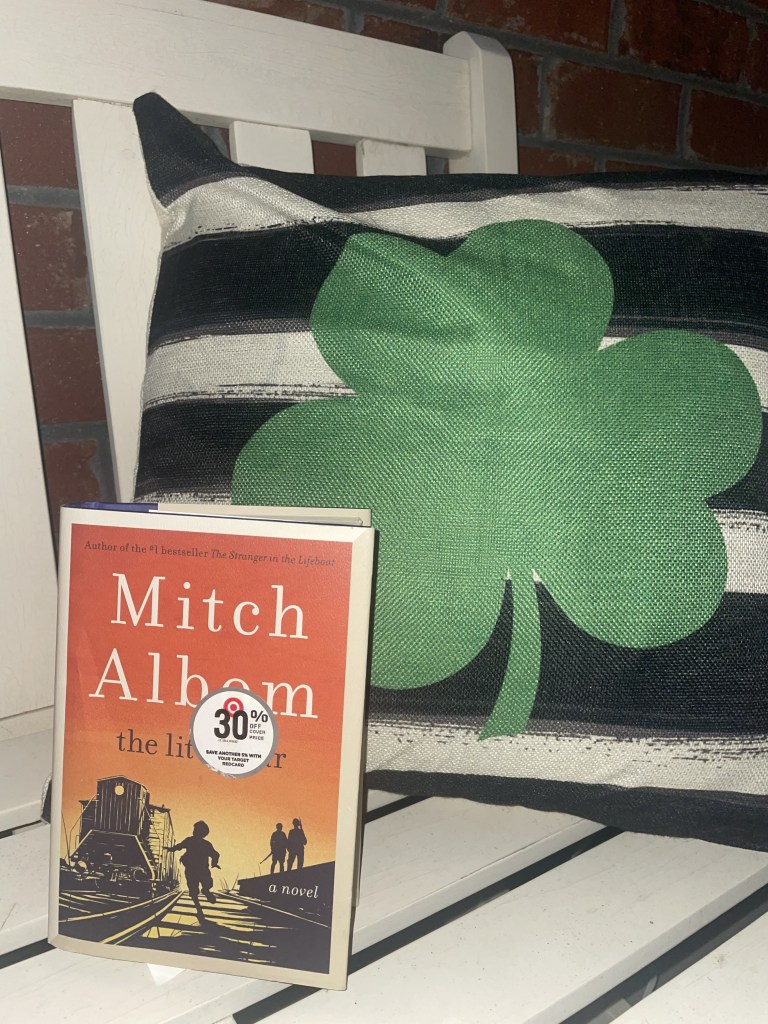
‘The Little Liar’ Book Review

The Little Liar by Mitch Albom is a poignant novel set during the Holocaust, exploring themes of truth, deception, and survival. The story centers on Nico Krispis, an 11-year-old Jewish boy from Salonika, Greece, known for his unwavering honesty. When the Nazis invade, a German officer exploits Nico’s reputation, convincing him to assure his fellow Jews that boarding trains will lead to safety and employment. Unbeknownst to Nico, these trains are destined for Auschwitz, leading to the demise of his community and family. Devastated by his unintended role in their fate, Nico becomes a pathological liar, while his brother Sebastian and friend Fannie survive the death camps and spend years searching for him. Narrated by the personification of Truth, the novel delves into the profound impacts of deceit and the enduring quest for redemption.”

These characters, man, I was scared that I wasn’t going to get a connection to them because we were thrown right into their stories. We are dealing with children during the Second World War and one Nazi. We have Nico, who is so pure that it would tug at my heartstrings. Nico’s brother is Sebastian, and Sebastian is coming of age in a world that is a hellscape. Believe it or not, I think Sebastian is the character that I cared for the most and felt the most for; he really had so much put on his shoulders and had to grow up quickly. Next, we have their friend Fannie. All these characters have layers of guilt that they have to deal with, and we see how everybody handles situations differently. Lastly, among our human characters, we have Udo Graf, who is a high-ranking Nazi. Let me tell you, Udo is a psychopath. However, I found his sections so intriguing, just to see how somebody’s mind can work like that, how someone can be fine sending innocent people to these brutal concentration camps like Auschwitz. These are great, unforgettable characters, and we follow this huge journey of their lives and how they intersect through the decades to come. I almost wish that this book were longer, and we got a little bit more time with these characters.

Next, let’s step into the atmosphere of the story. This is taking place in Salonika, Greece—a completely new take on the World War II setting in historical fiction. I will tell you, I do not know anything about Greece outside of the ancient and classical period. Something that gave me a little laugh was when I was looking at this book on Goodreads. I saw the shelves that people had placed it on, and Greece was one of the main shelves. I am sure this stands out in that collection of books, as all the rest are probably stories based on Greek myths and legends surrounding Mount Olympus. This one is completely new and so vivid. I have no idea how the author was able to make the setting so vivid when we are in this book for only 333 pages; it’s truly remarkable.

May I invite you to a game of pinball? That was the writing style when I was placed into the story. It was so fast-paced, almost choppy at the beginning, as we were jumping all over the place with timelines. I really struggled with that structure. I felt like a pinball being shot around the gaming machine. In all honesty, that’s why I feel like giving this book a 4.75 rather than a full five stars. However, I do think the writing is great. It’s so cleverly written. I was constantly scared that the author would forget about certain characters or certain plot points, but the story overall came full circle by the last few pages. We are incredibly immersed in this story; you feel the anxiety, the tension, the sadness, and the despair of the brutality that the author is putting on the page. Again, that’s so incredible, especially with how fast-paced and short these chapters are. I honestly have no clue how the author did it. It was so clever and extremely fast-paced, and that made me wonder: do I really want fast-paced writing? I always complain about books being too slow, but with this one, I felt like I was being slingshotted around. However, as time progresses, I think I will probably forget about how that writing style made me feel and will just remember the impact that this story had on me.

When I read the description of this book, my jaw literally fell to the floor—a little boy sent his family and everyone he’s ever known to Auschwitz. What do you do once you find out what you did, all because of a lie told to you by someone in power? It’s mind-boggling; it’s so incredible, this life that these characters live and how they handle the consequences of their actions and words. It might be unlike anything I’ve ever read before. 

I really thought this was going to be a four-star read, or at least a high four-star read, but when we got to the last sections of the book, it was such a gut punch to me. In the earlier sections, I didn’t feel an impact from some of these extremely brutal scenes because I was just thrown right into the story, and everything was moving so quickly that I couldn’t grasp what was happening and who these people were. But once we got to those final pages, I felt dead inside, and that’s usually a sign of a five-star read—it’s just that feeling of being unable to do anything. The story is said and done, and it was an experience altogether.

Earlier, I discussed there being human characters, and you might have picked up that I made a special note of those characters being human. This story is told through the personification of truth; again, that’s so clever. The story is all about what truth is and how it impacts all of us. I think it even goes deeper than that; this is a story of humanity and what it means to be human. It really shows how everything in this world is so fragile or fickle—be it nature or other things around us. But there are a few things that all humans experience: love, compassion, longing for belonging, death, tragedy, grief, and most of all, truth. Some of those things we don’t desire, but they are inevitable. We will most likely experience all of those aspects of life that I mentioned. Life is a cycle, and everything will come full circle. Eventually, you just have to give it time. There are consequences for all actions. Every word you say, no matter how little, has an impact on you, those around you, and ultimately, the universe.

4.75 out of 5 stars.

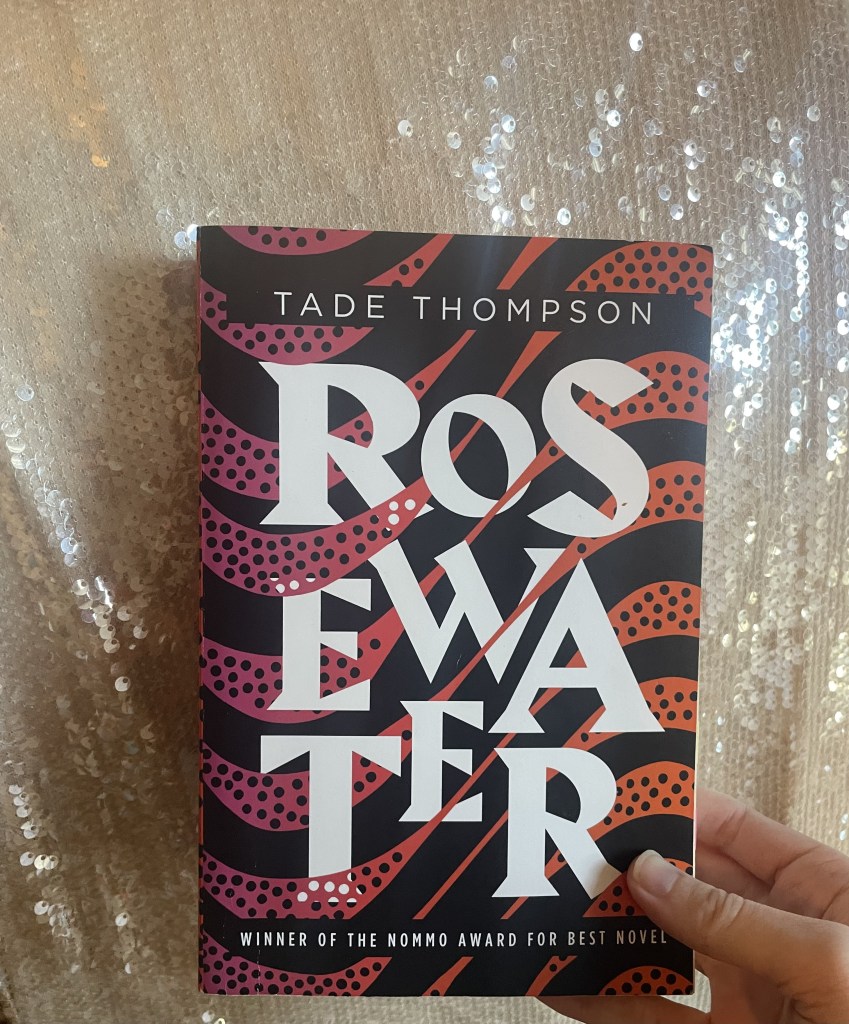
‘Rosewater’ Book Review

Rosewater by Tade Thompson is a unique blend of science fiction, mystery, and Afro-futurism set in a near-future Nigeria. The story follows Kaaro, a cynical and reluctant psychic working for a secret government agency. He lives in Rosewater, a city that has sprung up around a mysterious alien biodome that occasionally heals the sick and grants strange abilities to some people.

I felt no emotions from these characters. I definitely think this is a plot-driven story rather than a character-driven one. The characters did absolutely nothing for me.

 The atmosphere didn’t do a whole lot either. It is interesting to see Nigeria in a science fiction book, as previously, when I’ve read books set in that location, they were in the contemporary literary fiction genre rather than a sci-fi one. It’s kind of cool to see how modern-day Nigeria developed into the near future, as depicted in the story. However, overall, it did not do a lot for me.

 The writing was definitely my least favorite part. There are three timelines that we are following, and I had a really difficult time trying to distinguish between them. They all feature our main character going on different missions. I think this could have been improved by changing the tense throughout the different timelines, with the present being in first person and the past in third person. 

Another thing that I despised about this book was the overly sexual tone. Books can be sexual; it is completely normal and a part of being human. However, when every woman is described by her breasts or the curve of her buttocks, it becomes inappropriate and uncomfortable. Sexual themes were brought up constantly, and women were objectified in the story.

I can definitely admit when I’m the problem. I purchased this book back when it was first published in 2018, and it took me this long to read it. I think I could have enjoyed it more back then than I did now, as I am more aware of what I like in my reading. This month, I’ve discovered that I not only don’t like mysteries, but I also don’t enjoy mysteries within a science fiction setting. I don’t like stories about people going on quests as detectives or government agents; it’s just not for me. 

However, I do have to give credit where credit is due: by the last quarter of the book, the sci-fi elements become super interesting. This is unlike any other first contact story I’ve read before; it offers a real biological take on an alien invasion. As an alien lover, I’ve never thought of an invasion happening like this, but it makes a lot of sense. 

I don’t see myself continuing the series, as I felt nothing toward the characters and I hated the writing and tones of the book. If, for some reason, anything here intrigues you, I recommend picking this book up from your library, and if you like it, then consider purchasing your own copy.

1.85 out of 5 stars.

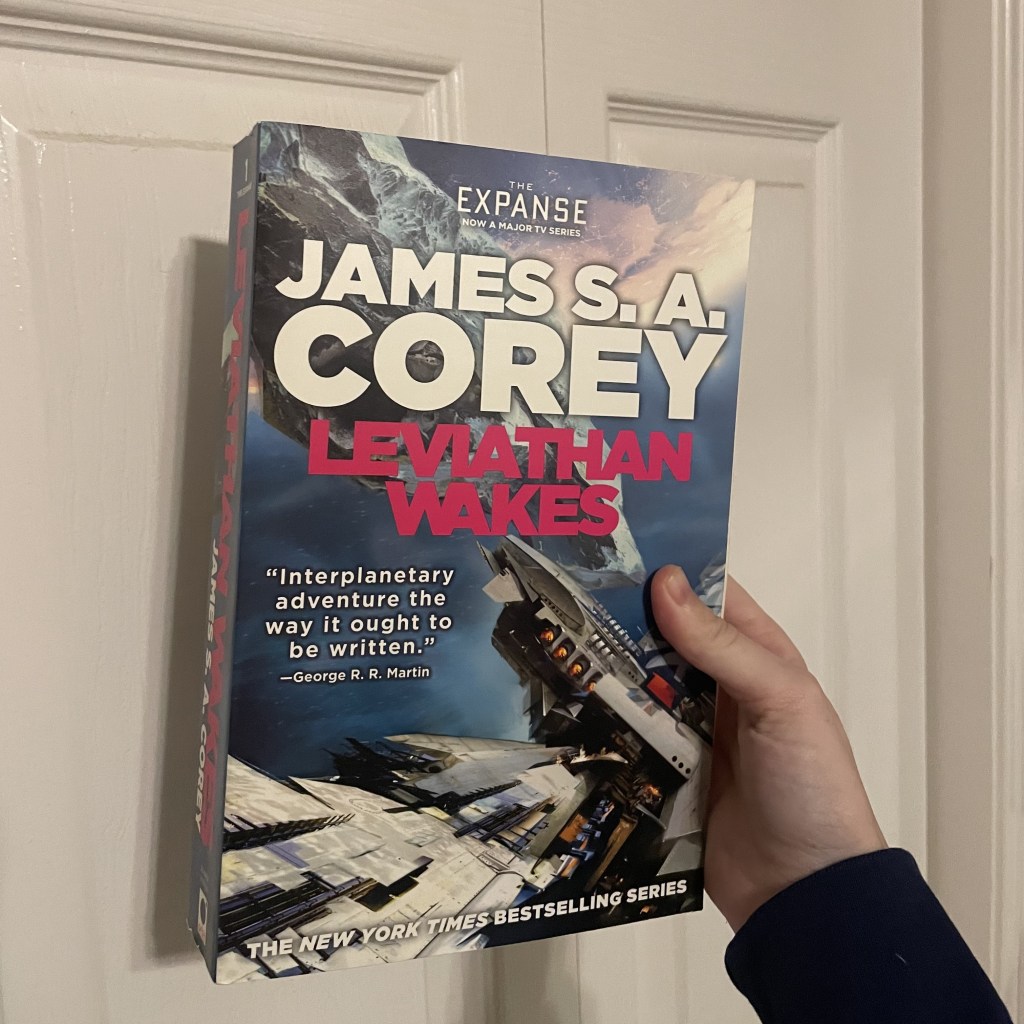
‘Leviathan Wakes’ Book Review

Leviathan Wakes by James S.A. Corey is the first book in The Expanse series, blending space opera with noir detective fiction. Set in a future where humanity has colonized the Solar System, the story follows two main characters: James Holden, the idealistic executive officer of the ice hauler Canterbury, and Detective Joe Miller, a grizzled investigator on Ceres Station.”

This is not a character-driven story for half the book; that’s such an odd statement that I’ve never really had to write for a review. The chapters with Holden as the main character are plot-driven, while our chapters with Miller are character-driven. Let me explain: with James Holden, when we are introduced to his plotline, we are introduced to his whole crew all at once. For me, that is extremely overwhelming to be introduced to a handful of characters within a few pages of each other. It’s especially bad when the majority, if not all, of those characters do not develop throughout the course of a nearly 500-page book. Miller is like a lone wolf, so you’re really in his head a lot, and I think the depiction of mental health and PTSD was done fantastically in this book, as it’s something that you see a lack of in science fiction and fantasy genres, even though these characters are going through really messed-up and war-like situations. I do want to say you can definitely tell that this book was written by men, as all the female characters are there for the sake of the males having some sort of romance. You could still have that Phoebe plot without the romance and there was no chemistry between Holden on his love interest. That guy was falling for every woman. I hate to have to write that, but I couldn’t help but pick up on that throughout the book, and I just know some men are going to be offended by that comment. Sorry, not sorry.

The universe said this was sudden, which was super cool. This isn’t some make-believe galaxy; this is the galaxy that we are living in right now as humans. The author does take into account science and how gravity, or the lack thereof, impacts people’s bodies. Of course, that’s going to lead to all sorts of things like xenophobia and racism, even though we are in outer space and not on Earth.

I have no real complaints about the writing. It didn’t impact my reading experience one way or another. There were some cringey lines every now and then, but I do have to remember that this book was published 14 years ago, and some of those lines might have passed back then.

I do like the idea of the plot, how this is genre-bending, as this is a mystery noir story set in a sci-fi environment; it is definitely something unique. There’s one problem, though: I was confused throughout, especially in the second half of the book. We would get a lot of science and physics talk at once, and a lot of that went right over my head. I also spoke about the characters, and for half the book, we didn’t have a whole lot of character development, if any at all. If I do not connect with the characters as a reader, I’m not going to care about what is happening in the plot, and by the last chapters of the book, all of it felt kind of pointless to me. I can admit there was a lot of logic for the science, but with other aspects, I think there was a lack. I didn’t really care where the story went, and as you can tell, I will not be continuing the series. This year for my TBR, I am making a list of the highest-rated books on my TBR, and this is the highest-rated science fiction book according to Goodreads that I own. Now I’m kind of scared of this challenge that I’ve set up for myself. This book didn’t do a whole lot for me. I wouldn’t really recommend it, but as always, if this sounds intriguing to you, pick it up, but maybe try from the library first.

2.25 out of 5 stars.

‘The Alienist’ Book Review

The Alienist by Caleb Carr is a historical crime thriller set in 1896 New York City. It follows Dr. Laszlo Kreizler, a psychologist (referred to as an “alienist” in that era), and his team, which includes reporter John Schuyler Moore and Sara Howard, one of the city’s first female detectives. They are enlisted by then-Police Commissioner Theodore Roosevelt to track down a brutal serial killer preying on young male prostitutes. Using emerging techniques like psychological profiling and forensic science, the group delves into the mind of the killer, uncovering dark secrets while facing resistance from corrupt officials and society. The novel explores themes of mental illness, morality, and the complexities of justice.

This is a book that I think would benefit more from being told in the third-person perspective than in the first-person perspective. Usually, when you are telling the story from the first-person perspective, you can really feel a connection to the character, but here it was the complete opposite. I felt absolutely nothing towards the main character. I saw another review refer to John Moore as an observer, and I think that’s the perfect way to put it rather than him being a player in this plot. All of the characters were developed. This is one of the most developed casts of characters I’ve seen, but again, I did not feel a connection towards these people.

Atmosphere is definitely one of the highlights. I loved that we are in New York City, a city that is still in a way similar because the street names are the same. The neighborhoods are in relatively the same locations, so you have an idea of what the modern place looks like, but then put all the smog and dirt on top of that and you’re going to have your 1896 setting. There was so much research put into the setting and getting those exact street names and those exact locations. It was so easy to picture. This book was full of descriptions.

The writing was very descriptive, as I said. I never felt bogged down, though, or that it was too much or over the top. The chapters were relatively short for the most part; only a handful went on a bit too long. In those chapters that did go on so long, I have no idea how the author expects us to remember every bit of dialogue that went on. However, this book did go by relatively fast, even though it was 600 pages, but the short chapters were a lifesaver.

I’m not really a thriller person, but I did find this book to be extremely interesting. It was incredibly logical; there were no loose ends, and everything was happening for a reason, rather than for shock value. This is the deepest thriller I’ve ever read. It may be the smartest thriller I’ve ever read. There’s so much depth to the story. One of the main themes here is that people are complex. There is context to why a person is the way they are—a person isn’t just born being a killer or being evil. Things lead up to them being the way that they are, things that usually happened in their childhood. This book really shows what makes a killer. Those are great themes, and there is so much logic throughout the 600 pages, but it was lacking intrigue. I found myself getting bored and just not caring. Overall, this is still a good book. There’s a lot of depth, and it was smart. I would recommend picking it up if you’re interested.

3.5 out of 5 stars.

‘Uncle Paul’ Book Review

“Uncle Paul” by Celia Fremlin is a psychological thriller that delves into the tangled relationships of family dynamics, fear, and paranoia. The story revolves around Meg, a woman who finds herself swept up in unsettling events when she joins her two sisters, Isabel and Mildred, at a seaside cottage for a vacation. However, this holiday is far from restful as they are haunted by the shadow of “Uncle Paul,” Isabel’s estranged and possibly dangerous ex-husband, who seems to be drawing closer.

These characters did nothing for me. Yes, I could tell them all apart. They all had a little bit of dimension to them, but I didn’t care about them. I didn’t care what was happening to them. I didn’t care about their stories. That tends to be true with thrillers or mysteries — there’s not a whole lot to the characters, and there is more focus on the plot in the story, but that’s not even the case with this book.

As for the atmosphere, the 1950s setting does come across strongly, as this book was first published in 1958. I never felt scared, but I wouldn’t say this was a cozy atmosphere either. This is a good transitional piece, going from summer to fall, as the book takes place in a seaside town in the month of August.

The writing was definitely the best part. There are some sentences that are really good. It is fast-paced and easy to read. If you’re scared to pick up a book that came out over half a century ago, don’t be for this one. It reads incredibly modern in terms of the writing style.

The plot is where I was incredibly bored. I feel like so much of this book was just pointless. As I said, this is a thriller, but I never felt thrilled. There was intrigue, and I was wanting to know what the wrap-up of the mystery was going to be. I found this book lacking a lot of logic. I would not recommend picking up Uncle Paul by Celia Fremlin.

2.25 out of 5 stars.

‘Horse’ Book Review

“Horse” by Geraldine Brooks is a historical novel that intertwines multiple narratives across different time periods, centering around the life of a remarkable thoroughbred racehorse named Lexington. The story explores themes of art, history, and the bond between humans and animals, particularly through the perspectives of various characters, including a 19th-century painter, a contemporary art curator, and a young Black man in the present day. Through the lens of Lexington’s legacy, Brooks delves into issues of race, class, and the complexities of love and ambition, ultimately showcasing how the past continues to shape the present. The novel highlights the intersection of personal and collective histories, revealing deeper truths about society and the human experience.

These characters could have been so much more. We are first introduced to our characters in the modern plotline in 2019. They really didn’t bring anything new to me. Yes, they are interesting roles, as one is a scientist at the Smithsonian and the other is a PhD student. However, there is a lack of emotional connection to these characters, and I found them to be quite irritating by the time the novel is over. As for the historical characters, I really wish the bond between man and animal, specifically between Jarrett and Lexington, had been deeper; there would’ve been more depth there. Again, it lacked emotional connection.

I did really enjoy the atmosphere of going through all these different time periods, with our main focus being the ones in the 1800s and then in 2019. You can really tell that the author did her research on the locations and historical figures involved. I don’t have anything strong to say about the writing; it was fine, but this was incredibly slow to get through, making it a very slow-paced book.

I love the idea of this plot, how all the storylines across centuries are connected to one another. They’re all linked by this one horse, one of the greatest racehorses of all time. How could an author screw that up? Well, they managed to create a slow-paced and boring book with characters lacking emotional depth. My favorite plotline was personally the one about how the painting was connected to the story. However, this is the one that we saw the least of on the page. As I stated before, the slowness really made me bored, and the book was lacking intrigue. I have to mention that the last 50 pages of this book are so bizarre; the author really wants to hone in on our current times of police brutality and COVID. Those are important topics and do need to be addressed in fiction, but I don’t think this book was the place to do it. This was a fine book, but it was overall lacking in many categories and did not live up to my five-star expectations of it.

3 out of 5 stars.

‘Demon Copperhead’ Book Review

“Demon Copperhead” is a novel by Barbara Kingsolver, published in 2022. It’s a modern retelling of Charles Dickens’ classic “David Copperfield,” set in the Appalachian Mountains of Virginia. The story follows the life of Damon Fields, nicknamed Demon Copperhead, as he navigates the hardships of poverty, addiction, and the foster care system in rural America.

Demon is one of those characters that I didn’t realize how much they meant to me until the madness starts when things start hitting the fan, and you can’t help but feel emotions coming over you. Every character introduced in the story had meaning or purpose, and all their stories tied together; there were no loose ends. Every action had consequence and purpose for the story. Demon has a constant battle within himself: is he a good or bad person? Is he Demon, or is he Damon? We truly go on a journey with this character, and I could not help but feel every single emotion while reading. There were moments of despair where I just felt depressed after reading a quarter of the book; I truly had no idea where his story was going to go. This book always had me guessing, and I was gripped by the character arcs.

The atmosphere was amazing, and I think one of the main themes you are shown is what life in Appalachia is like. I can attest that this is what small-town rural life is like. I almost believe this is one of those novels where the atmosphere of Appalachia is a character in itself. The writing was very picturesque, and it was very easy to imagine the scenes.

That leads us to talking about writing. This wasn’t my typical go-to for writing; it wasn’t poetic, but as I said, it was picturesque, and I was highlighting so many quotes. We have Damon looking back at his life, and obviously, going through so much in that time, he’s going to gain wisdom from that, and there was wisdom throughout these pages.

There are so many themes, but as I said, I think the main theme is showing what life in Appalachia is like, and how so many things like the pharmaceutical business, coal mining, and even Hollywood have corrupted Appalachia and its people. This book was so eye-opening to just the underbelly of it all. Another thing that I would like to add is that this book doesn’t just show one traumatic event after another. Life isn’t just straight-up bad or good. Yes, Demon is going through all these terrible things, but there are happy moments as well. This book doesn’t just focus on the bad but shows how life is just plain confusing with all that it throws at you. I cannot say enough about how eye-opening it was. How gritty it was. How raw it was. This book needs to be read by all. A five-star prediction that lived up to it.

5 out of 5 stars.

‘In the Beginning was the Sea’ Book Review

“”In the Beginning Was the Sea” by Tomás González is a haunting and evocative novel set in the turbulent 1970s of Colombia. It tells the story of J. and Elena, a young urban couple who abandon their comfortable city life in Medellín to pursue an idealistic dream of living off the land on a remote Caribbean island. They purchase a rundown farm with plans to create a self-sustaining paradise, but soon find themselves confronted by the harsh realities of rural life, isolation, and the unforgiving natural environment.

As their utopian vision unravels, tensions rise, and their relationship deteriorates under the strain. The novel explores themes of disillusionment, the clash between idealism and reality, and the destructive consequences of human ambition. González’s lyrical prose vividly captures the lush yet perilous landscape, drawing readers into a deeply atmospheric and morally complex tale. “In the Beginning Was the Sea” is a profound meditation on human nature, the fragility of dreams, and the inexorable force of nature.”

The characters are an interesting piece of this novel. We can understand why things don’t go as planned for them as they leave the city to live off the land. A lot of their feelings are left up to interpretation for the reader to understand. We can make assumptions about why they feel this way: Elena leaving behind everything she ever knew makes her miserable, and then J., having to be around a miserable person, finds his life becoming a mess. Again, we can only assume all of this.

If you were a fan of the atmosphere in ‘Mustique Island,’ then you will be a fan of this Colombian island. The atmosphere was lush, and the imagery along with its metaphors hit the spot! There was also an ominous and mysterious feeling in the first quarter of the novel that made the story gripping.

The writing was atmospheric, which I loved. It was filled with imagery and metaphors, making it fast-paced and easy to devour.

The plot is a hidden gem in my eyes. We have our straightforward plot: two city people leave the city to live off the land on a tropical island, and things don’t go as planned. However, the hidden theme is about leaving capitalism and modern society behind and whether you can truly do it. It’s about leaving this society behind and living the way humans were intended to. It’s a lot to think about. Again, these were just my observations, and it could simply be about picking apart the impact such a move can have on a relationship. I was gripped throughout the story, and the plot moved in a logical manner.

The characters are an interesting piece of this novel.We can make assumptions about why they feel this way: Elena leaving behind everything she ever knew makes her miserable, and then J., having to be around a miserable person, finds his life becoming a mess. If you were a fan of the atmosphere in ‘Mustique Island,’ then you will be a fan of this Colombian island.There was also an ominous and mysterious feeling in the first quarter of the novel that made the story gripping.The writing was atmospheric, which I loved. It was filled with imagery and metaphors, making it fast-paced and easy to devour. The plot is a hidden gem in my eyes. I was gripped throughout the story, and the plot moved in a logical manner. This was a good book and I would recommend picking it up if you are interested to do so.

3.25 out of 5 stars.

‘Our Missing Hearts’ Book Review

“”Our Missing Hearts” by Celeste Ng is a compelling dystopian novel set in a near-future America where cultural and political repression is the norm. The story revolves around twelve-year-old Bird Gardner, who lives with his father after his mother, a Chinese American poet named Margaret, has disappeared under mysterious circumstances. In a society where children of dissidents are relocated, and anti-Asian sentiment is rampant, Bird embarks on a quest to find his mother, guided by a cryptic letter and fragments of her poetry.”

I did not have strong feelings towards the characters of ‘Our Missing Hearts.’ The author did not hit the nail on the head with the development of these characters. A lot of their development did not add up or was plainly hypocritical in a way that was not meant to be. Many of the plot points surrounding characters such as twelve-year-old Bird were unbelievable. Yes, this is a dystopian piece of fiction, but that just adds to the question of why some of these things were allowed to happen in a world so bad and dangerous. Poorly written character arcs.

The atmosphere of the novel felt like a true classic dystopian book in the vein of Bradbury and Orwell. The world was probably my favorite part of the story. At first, I thought this was set after some big cataclysmic event, but I would describe it more as 2020 on steroids. (If you were there, you will understand.) The author did a great job with the world-building, explaining why things were the way they were in this world that was almost like ours.

The most average part of the book was the writing. You can definitely see that Ng was trying to make this poetic, but it was overall just fine for me. I highlighted about three quotes or paragraphs that I thought were good enough to hang onto.

Now, this plot is extremely fascinating but overall fell flat for me. “Flat” is the word that I would use to describe my reading experience for Our Missing Hearts. It was predictable and, as I stated before, the journey of Bird was pretty much unbelievable. I do think this plot is a good comparison to our world today and how many people view conflicts or protests happening around the world. This book could have had a much greater emotional impact and been more gripping, but sadly, it fell flat.

I did not have strong feelings towards the characters of ‘Our Missing Hearts.’ Poorly written character arcs. The atmosphere of the novel felt like a true classic dystopian book in the vein of Bradbury and Orwell. The author did a great job with the world-building, explaining why things were the way they were in this world that was almost like ours. The most average part of the book was the writing. I highlighted about three quotes or paragraphs that I thought were good enough to hang onto. Now, this plot is extremely fascinating but overall fell flat for me.This book could have had a much greater emotional impact and been more gripping, but sadly, it fell flat. I wish that this story would have had the character work that was involved in ‘Little Fires Everywhere’ by this same author and maybe, just maybe, it would have made the story for me. This was an average read.

3 out of 5 stars.