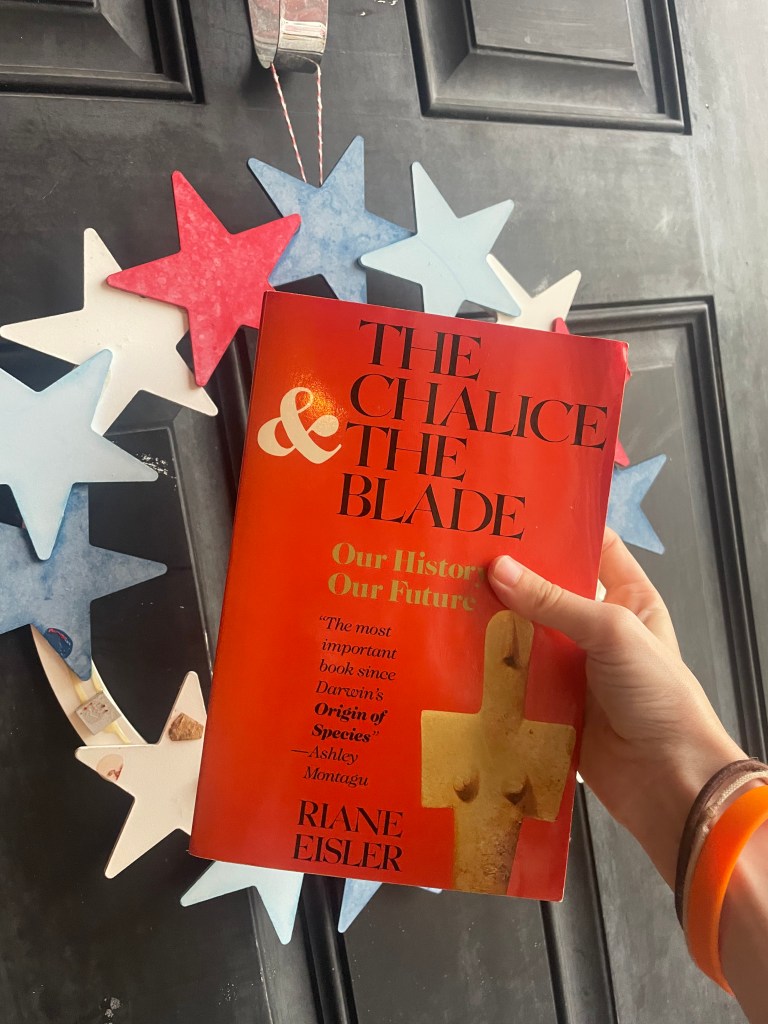
‘The Chalice and the Blade’ Review

“The Chalice and the Blade: Our History, Our Future by Riane Eisler offers a sweeping re-interpretation of human cultural evolution by contrasting two fundamental social models: the equitable, nurturing partnership societies symbolized by the chalice, and the authoritarian, violent dominator societies represented by the blade  . Drawing from archaeology, anthropology, history, religion, and social sciences, Eisler proposes that early human societies—especially in Neolithic Europe—were organized around life-affirming, gender-egalitarian values (gylany), before being overtaken by patriarchal structures featuring hierarchy, violence, and oppression  . Rather than presenting utopia, the book argues that partnership-based social systems are deeply rooted in our past and offer viable pathways for building more peaceful, sustainable futures. It concludes with two divergent visions for society’s trajectory: one continuing on a dominator course, the other reclaiming partnership values for healing and transformation.”

This book was like a lightbulb moment for me. It confirmed and deepened my beliefs about society, where we came from, and how religion developed in the Paleolithic and Neolithic times. Archaeological evidence seems to suggest that these early societies were egalitarian, where everyone was treated equally, with no one group dominating others .It isn’t to show that egalitarian societies are perfect. They don’t have as much war and bloodshed but they still have their issues. There is no perfect societal structure but this system has seemed to prove more beneficial throughout history.In Europe’s first civilization, the Minoans on Crete, we see a lot of evidence pointing in that direction, and I became really fascinated by Crete after reading this book. 

To take it back a few thousand years, men from the outskirts of society banded together through violence. They were the ones who worshipped gods of lightning bolts and hammers, raiding these egalitarian societies. The world chose to respond to violence with violence, and it has been that way ever since. We now live in a society where there has to be a dominator, someone at the top. This book dives into how that happened and discusses various instances in history of how this has been enforced and how it continues today. I also learned how history has cycles. At one point women might come close to being equals with men and then have a fall. A historical example would be Elizabethan England, a queen on the throne and men being able to show more femininity in the likes of Shakespeare. After that time we see the Puritans and witch trials. I cannot help but see it where we are now. During the sixties we saw a societal revolution mainly stemming from the Vietnam War. Now, women’s rights are being taken in the form of body autonomy and abusers having no real punishment. 

Originally published in 1987, I was concerned because so much has happened since the late 1980s. Luckily, I was reading this on my Kindle, which included an epilogue written by the author in April 2017, and she was still addressing the same societal issues I had been thinking about. After reading this book, I found it refreshing to see the same concerns echoed. This book showed the evolution of religion and how society has viewed the role of women. 

Why am I not giving it a five-star rating? It starts with a 26-page introduction that basically explains what every chapter will cover, which was a lot of information to absorb. Some of it went right over my head, making it challenging to take in, especially since I wasn’t familiar with much of this material before reading. The book does become easier to read as it progresses, but I will admit some parts still went over my head. I would highly recommend having a dictionary on hand or reading it on Kindle, as there are terms I wasn’t familiar with. Fortunately, on Kindle, I could hold down a word to see its definition, which was very beneficial for me.

A lot of this has me questioning who writes history, what makes it into the history books, and what is taught in the classroom. I wonder why certain aspects are not discussed or are not confirmed, even if they seem believable to me. That raises a whole other can of worms I will be pondering for a while. Overall, this book was so thought-provoking and eye-opening, and yes, I would highly recommend that you pick it up!

4 out of 5 stars.
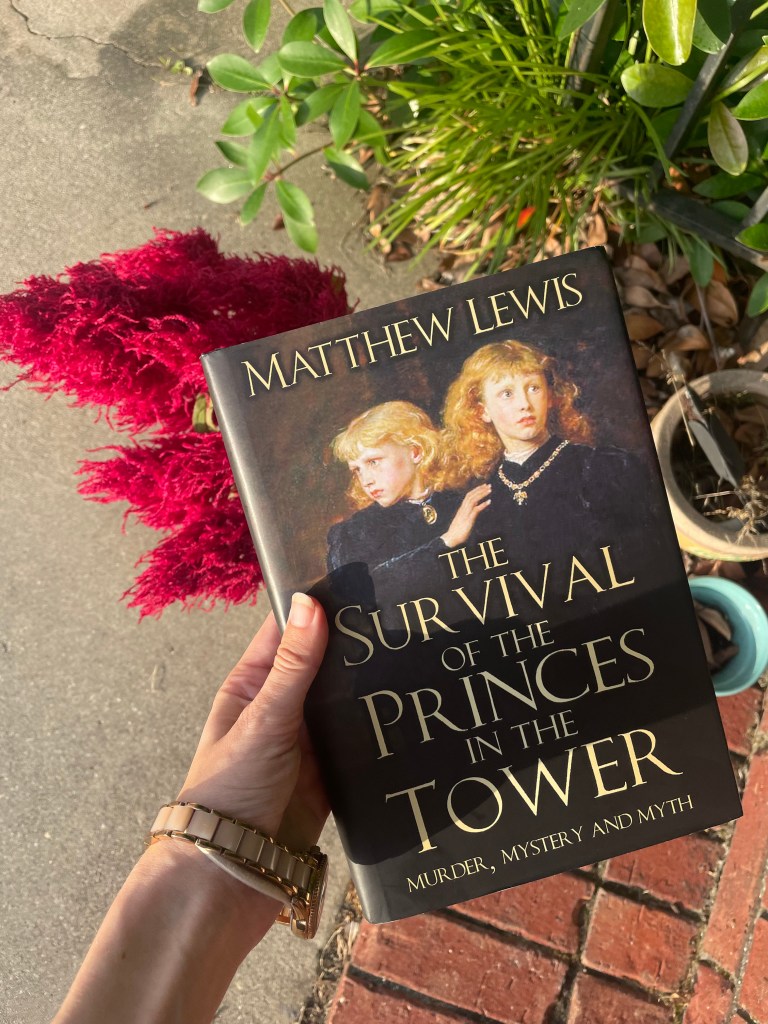
‘The Survival of the Princes in the Tower’ Book Review

The Survival of the Princes in the Tower by Matthew Lewis is a historical investigation into one of England’s most enduring mysteries—the fate of Edward V and his younger brother, Richard, Duke of York. Traditionally believed to have been murdered in the Tower of London in 1483, the book challenges this narrative by examining contemporary sources, political motives, and alternative theories. Lewis explores the possibility that one or both princes may have survived, questioning the role of Richard III and others in their disappearance. Thorough and thought-provoking, the book invites readers to reconsider long-held assumptions about a pivotal moment in English history.”

This book really got interesting when we reached the part that the title describes—the survival of the princes in the tower—not all the different theories about the murders and who the suspects might be. I already knew a lot of that information or at least a good majority of it. I was even aware of some of the imposters who came forward, pretending to be not only the princes but also their cousins. While this book provided me with a bit more knowledge on the topic, it was in the last few chapters, especially the final chapter, where things became truly intriguing. It presented different theories about whether the princes survived but went into hiding, posing no threat to the royal Tudor family because some deals could have been made.

I had never considered this theory before, and some of the evidence supporting it is mind-blowing—like evidence hiding in plain sight within works of art. It’s really intriguing to think about, and I cannot wait to research it further and hear different people’s opinions.

However, my complaints were that I already knew a lot of the information in this book, which made it feel like it was just regurgitating knowledge I was already familiar with. Additionally, especially at the beginning of the book, the writing was rather chaotic and all over the place, with a lot of backtracking. It just wasn’t clear and concise. 

I would recommend this book if you’re new to the Wars of the Roses or the Tudor era in English history. I think this book is well-suited for that audience, but if you’re someone who is already well-versed in that part of history and have consumed a lot of media or other nonfiction books on the topic, this book probably won’t offer you much new insight.

2.75 out of 5 stars.

‘Horse’ Book Review

“Horse” by Geraldine Brooks is a historical novel that intertwines multiple narratives across different time periods, centering around the life of a remarkable thoroughbred racehorse named Lexington. The story explores themes of art, history, and the bond between humans and animals, particularly through the perspectives of various characters, including a 19th-century painter, a contemporary art curator, and a young Black man in the present day. Through the lens of Lexington’s legacy, Brooks delves into issues of race, class, and the complexities of love and ambition, ultimately showcasing how the past continues to shape the present. The novel highlights the intersection of personal and collective histories, revealing deeper truths about society and the human experience.

These characters could have been so much more. We are first introduced to our characters in the modern plotline in 2019. They really didn’t bring anything new to me. Yes, they are interesting roles, as one is a scientist at the Smithsonian and the other is a PhD student. However, there is a lack of emotional connection to these characters, and I found them to be quite irritating by the time the novel is over. As for the historical characters, I really wish the bond between man and animal, specifically between Jarrett and Lexington, had been deeper; there would’ve been more depth there. Again, it lacked emotional connection.

I did really enjoy the atmosphere of going through all these different time periods, with our main focus being the ones in the 1800s and then in 2019. You can really tell that the author did her research on the locations and historical figures involved. I don’t have anything strong to say about the writing; it was fine, but this was incredibly slow to get through, making it a very slow-paced book.

I love the idea of this plot, how all the storylines across centuries are connected to one another. They’re all linked by this one horse, one of the greatest racehorses of all time. How could an author screw that up? Well, they managed to create a slow-paced and boring book with characters lacking emotional depth. My favorite plotline was personally the one about how the painting was connected to the story. However, this is the one that we saw the least of on the page. As I stated before, the slowness really made me bored, and the book was lacking intrigue. I have to mention that the last 50 pages of this book are so bizarre; the author really wants to hone in on our current times of police brutality and COVID. Those are important topics and do need to be addressed in fiction, but I don’t think this book was the place to do it. This was a fine book, but it was overall lacking in many categories and did not live up to my five-star expectations of it.

3 out of 5 stars.

‘Sapiens’ Book Review

‘Sapiens’ starts many millennia ago, so far back to when there were multiple kinds of human species roaming the savannas of Africa. Harari starts with how humans gained cognitive skills to make us different than our chimp cousins. From there, how we developed agriculture to money, empires, and religions. Lastly, we see what might be in the future for the human race, even if there is a human race in the future.

There are so many great conversation points brought up by the author that just make your mind go in laps until it explodes with so many questions! Later, in the post, I will bring up some of the points that fascinated me the most. This would be a great book to read with a friend because of all the conversation that can stem from it. This book is very accessible as there is also a graphic novel edition that I read previously, they cover almost the exact same material. I also like that it never seemed that the author was criticizing a culture or religion, putting down their beliefs as silly. He really laid out the facts and held no personal judgment, something I find rare in today’s society. I learned a lot from this book and that is my goal when I read. I thoroughly enjoyed ‘Sapiens’.

Now onto some of the things that I learned while finishing my first book of 2023.

  1. How much we do not know about ourselves as humans. There is still so much to learn about ourselves as a species.
  2. How everything impacts well, everything. Our ancestors on the African continent would find a sweet fruit tree and have to eat as much of the fruit as possible before other wildlife would get there. This is why we are so fond of sugar and have a sweet tooth today. One quote stated, “Even today, scholars in this field claim our brains and minds are adapted to a life of hunting and gathering.”
  3. Chapter five discussed animal cruelty and how it has been a part of agriculture for thousands of years. I won’t go into too much detail but I am shocked by some of the things that were being done to animals back then before big slaughterhouses were around.
  4. One quote even mentioned how money, human rights, and the United States of America are all man made constructs. This is something that I have thought about in the past but to actually read about it in depth really made me think about it.
  5. That there has always been some kind of hierarchy since the start of time and that it might be based on religion.
  6. No one knows why patriarchies seem to be the dominant kind of society.

4/5 stars.

‘The Book of Lost Friends’ Book Review

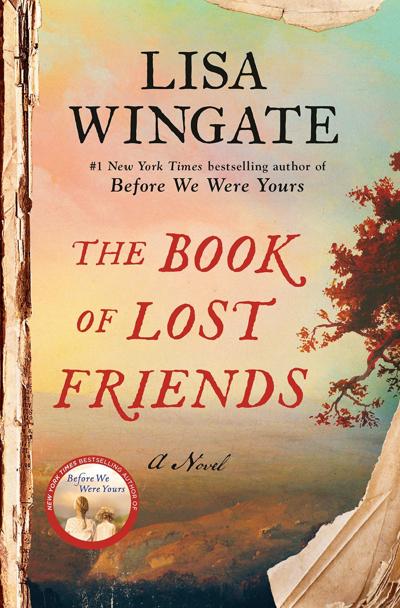
Our story starts out in Louisiana in the year of 1875. Lavinia is the daughter of a plantation owner, her half, illegitimate sister is Juneau Jane, and then lastly there is Hannie who is the former slave of Lavinia. The three have set out on a quest that sends them to the wild frontier of Texas. Lavinia’s father has gone missing and they have to find out who the plantation and other lands that the Gosset family owns, will pass down to.

In 1987, the same Louisiana town, Benny Silva has moved in as a first year teacher. From living all over the United States she has a hard time understanding how hard the lives are of her students in this poor southern town. She tries to connect them all with the history of the old planation right in their hometown.

I connected more with Hannie as a character than I did with Benny which is kind of funny as a I live in a time closer to Benny’s but it might be because I am closer in age with Hannie than I am Benny. I just felt like the 1875 chapters had so much more emotion to them. I really cared about what would happen to all of the characters. They all developed and changed throughout the novel. That’s not to say that our more modern counterparts were dull, they were absolutely well written as well.

America was at a really awkward stage at this point in history. Well, maybe the whole world was. Technology was rapidly being invented and changing as we had the industrial revolution take way in cities, the old world was becoming the modern world. In America, however, we were just getting out of a civil war. Tensions were still looming (and still are, if you ask me.) and it was not necessarily a safe place, especially for three female travelers like we see here. No one really writes in this time period, at least in American history, you will find a ton of books set in England during this time period but that is a different story. I really think this is an interesting time in our history and that it should be written about more, I applaud Lisa Wingate for doing so.

As I talked about the characters, the plot had a different impact on me. I preferred Benny’s plot to Hannie’s. I think it was just because the digging and the researching of Augustine, Louisiana’s history. As most of you know, I love to research the history of my local area and my family. The plot with Hannie however is powerful and one that I will not forget, it just made me so emotional, this whole book made me feel that way, especially at the very end. Just seeing the stories of different people and knowing that people in real life lived lives so similar to these characters, it breaks my heart. One of the main plots is that slavery separated so many families, mother’s from their young children, and just tearing these families apart. It is so hard to put into words how it feels to read that and to know that it is not fiction. This book really opens the eyes of the reader to the history of our country and that we cannot change the past but we can make the future better so we do not go back and make those same mistakes again.

I did not want to put this book down, I actually had my biggest reading day of the month, around 150 pages read. I was wanting to know so bad how the two plots would really connect. If you are a fan of ancestry, history, and even the game Red Dead Redemption, then you will enjoy this book. However, I think that everyone needs to pick up this book. It is so powerful and moving. It will definitely stick with the reader. I am so glad that I picked up this book on a whim at Target. I can only hope that you will pick up ‘The Book of Lost Friends’.

5 out of 5 stars.

‘Lilac Girls’ Book Review

Caroline works at the French consulate in New York City. Her job for years has been helping French people get adjusted to life in America. She had also helped by sending care packages to orphanages across France. The work gets heavier and harder when war breaks out in Europe in 1939.

Kasia is a teenager in Poland, the country that Hitler has set his eyes on. Her youth is taken from her as her country is taken over by Germans. She does everything she can to help her country overcome these attacks. She joins the underground resistance.

Herta is a female German doctor who is just trying to get by and help her family. She finds a job within the government. She comes into a world filled with horror and secrets.

All of these women’s lives come together through the concentration camp of Ravensbruck.

The characters in this story just took it to another level. I felt so many emotions towards them. I am not certain how much I just felt such a connection with all of them rather it be hatred or love. They were all so real and sometimes I was yelling at them and other times I was just so worried for them. This book was an emotional ride and I think that has to do so much with these characters. I did not know when I started this novel but two of these women were actual people in history. I am definitely going to be reading up on their Wikipedia pages tonight!

The atmosphere of this book was just pure haunting. It was dark and emotional. It really showcases how evil this world can be but also how strong we can be as humans. It is a setting that I will not forget.

My only complaint is that in some of the chapters, mainly Caroline’s, I felt that the pacing was sporadic. It was just big time jumps between paragraphs. I am assuming it’s because she was always at a different setting, for the majority of the novel, unlike the other two viewpoints. The chapters did flow together nicely though and that was noted between the first two chapters.

The plot of this novel was unlike any other war novel that I had read. I feel like most take place in France. I had very little knowledge about the happenings in Poland in WWII, only that Hitler invading is what set the wheel rolling. I learned so much from this book, it was so moving. Obviously, I knew that terrible things were done in these labor camps across Europe but this just opened my eyes so much more to the true horrors of it. If you are a fan of The Book Thief or The Nightingale then you will like Lilac Girls.

I was on the edge of my seat throughout this reading experience. I did not realize that until halfway through. The read just gets so immersed into this story. I was constantly wanting to read more to know what would happen to the characters.

Some of the best logic that I have seen in a book. The character’s actually had consequences from their actions. Every little detail meant something, I loved the foreshadowing. There were no loose ends.

I thoroughly enjoyed my three day dive into the World War II era. I had medium expectations for this book as it does have an average 4.27 star rating on Goodreads. Lilac Girls definitely does live up to those standards. I cannot wait to pick up the next book that is in this series and to do my own research on the women featured in this story.

5 out of 5 stars

My Youtube channel; Izzy Rain – YouTube

My Facebook page: Izzy Rain | Facebook

Canterbury Tales Review

PhotoRoom_20200810_133634

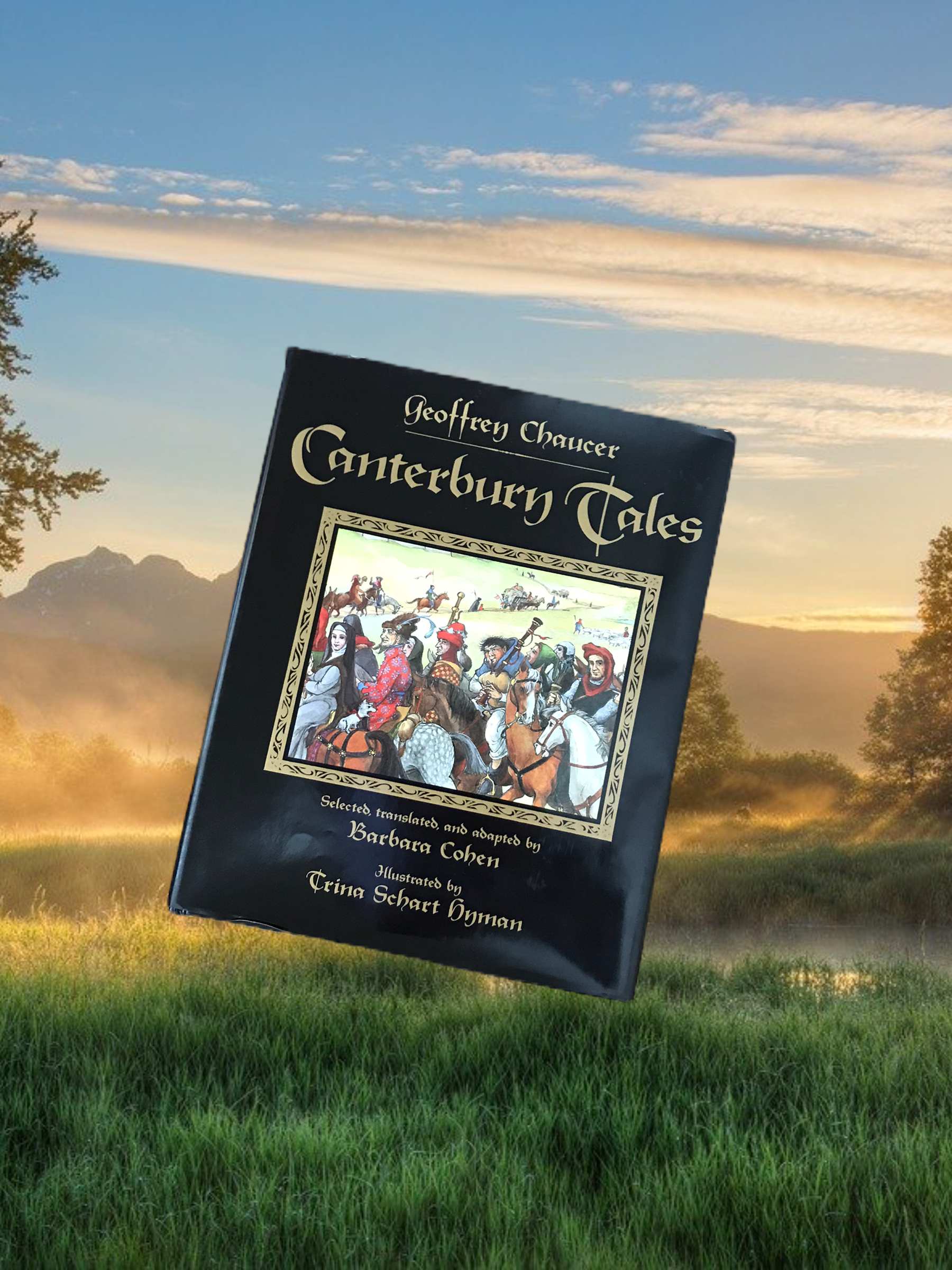
This is a retelling of the Canterbury Tales. This is not the original. Barbara Cohen took four of the original tales and made them easier for us to understand in modern times. This is done in prose and not poetry like the original.

The first tale that we are told is the one of ‘The Nun’s Priest’s Tale‘. It is a fable which uses animals to get its point across. The reader learns in this that if someone is too prideful they might not see their own faults or anyone’s around them. This could lead to their downfall.

Then we come to ‘The Pardoner’s Tale‘, this is a tale to teach the readers about greed and what corruption that it can lead to. However I found that it could also teach us you get what you deserve and treating others how you want to be treated.

Ah, now the tale that I remember the most from reading this in high school, ‘The Wife of Bath’s Tale’. In this tale we really see how women were as people and how they were treated in fourteenth century Europe. I do think this is a feminist story, we see how women want to be treated in a relationship and also that there is more to a woman than just her face and body. Something that I really wish men would understand.

The last tale that we come across in this short book is, ‘The Franklin’s Tale‘. This is a tale on relying on someone else, having faith in that person. It can also be seen as staying true to yourself. It is a story of honor, very much Stark and Tully manner.

When I purchased this book on Amazon, a year ago, I thought it was all the Canterbury Tales and the original version. Not a version that is made for young readers to understand and get a general idea of Chaucer. This is my fault! This is all a me problem and not the book problem.

I found that the way the prologues are done to be awkward. They mention tales that the reader will not read in this bind up, I found myself being confused by this. I know that I did not go into too much detail about what the tales are actually about but when they are around ten pages long I feel like there is not much that I can say without spoiling it.

Should I find a copy of the actual Canterbury Tales to read it? If so, do you have a certain one that you recommend? Again, everything here is a me problem so I felt like I should just give the book an average rating of a three star.

Pride and Prejudice Book Review

pride-and-prejudice

The Bennet family is derived of five daughters, the home will pass to a male cousin as this is set in the late 1700s or early 1800s. The daughters need to be put into good marriages as they might not have somewhere to go once their father, Mr. Bennet, passes away. Jane is the eldest daughter and the most beautiful in the eyes of society, then there is Elizabeth or “Lizzy” Bennet she is very witty and intelligent, Mary who is tucked away in her studies, and then the  two younger and wilder daughters, Catherine “Kitty” and Lydia Bennet.

One day in the small, sleepy village of Meryton, a big to do happens when an old estate is purchased by a young bachelor from London. This obviously widens Mrs. Bennet’s eyes as she is trying to get her daughters into good and respectable marriages.

The man who moves into Netherfield Park is Mr. Bingley. He brings a big entourage from London with him, including his best friend and then his sisters. A ball is hosted to celebrate their arrival and Mr. Bingley dances with Jane not once but twice.  Mrs. Bennet is thrilled. Therefore the relationship between Jane Bennet and Mr. Bingley begins. At the party there is Mr. Mystery or otherwise known as Mr. Darcy. He refuses to dance with any of the women from the Meryton area, even saying that he does not wish to dance with Miss. Elizabeth Bennet. All of the locals find him prideful and that he thinks himself to high mighty to converse with commoners. He gets a bad name in the village and surrounding areas.

The story is a slow burn romance starting at that ball and going through months of denying having feelings for each other over ranks in society, and in fact over pride and prejudice against Mr. Darcy and Miss. Bennet.

This is very much a character driven novel! I really enjoyed the character of Elizabeth Bennet. I felt as though she had more of a head on her shoulders than the other women in her family. As stated before she has wit and intellect to her, she does not see herself as one just to settle down and be any man’s wife, she refused two proposals in this book! I think she was very ahead of her time.

Mr. Darcy, a literary favorite of many. This man is loved by so many people, and I am certainly glad that he did not let me down. I think he was very similar to Elizabeth he had wit and was intelligent. He was not just the good looking man with money like his friend, Mr. Bingley. Darcy was a very complex character that we got to unravel throughout the novel. I think he is the reason for the “bad boy” trope that we see in many romance novels in modern day.

Characters got a five out of five for me. There were some characters like Mrs. Bennet and Lady Catherine that I did not like but I believe they were written that way.

The atmosphere did not impress me too much. It was average, just a small little English town that soldiers would sometimes get stationed in and people would come to live in, in the winter or summer. The writing could have saved this but I was not too impressed with Austen’s writing either, very average and dull. Both atmosphere and writing got a three out of five.

The plot was going smoothly for the first fifty percent, but when I picked it up for the last twenty chapters it just seemed to drag. I felt like Austen was throwing in some drama, with Lydia, that did not necessarily need to be there and I felt like it had no real impact on the story. Remember, this is a character driven novel and I felt as though that made up for when the plot was lacking at times. The plot got a three out of five.

Going into Pride and Prejudice by Jane Austen, I did not think I would like it. This classic is very hyped, and a favorite of many. If you follow me on Goodreads, you know that I have had a hard time with romances in the past and this is one of the most iconic romance books of all time. I was scared. I did however very much enjoy it. I love a nice slow burn love story and then the two love interests being a bit feisty is always good! I can totally see so many tropes that came to be inspired from this book. I think this is a very influential book and inspired many. I cannot wait to read more from Jane Austen.

Overall this was a 3.75 out of five star review.


February TBR

My February TBR is here, the first blog post of 2020! This month I plan on reading five books to bring me closer to my 2020 reading goal of 63 books! In February I will be participating in the Explore-A-Thon! I will leave a link to their twitter at the end of this post!

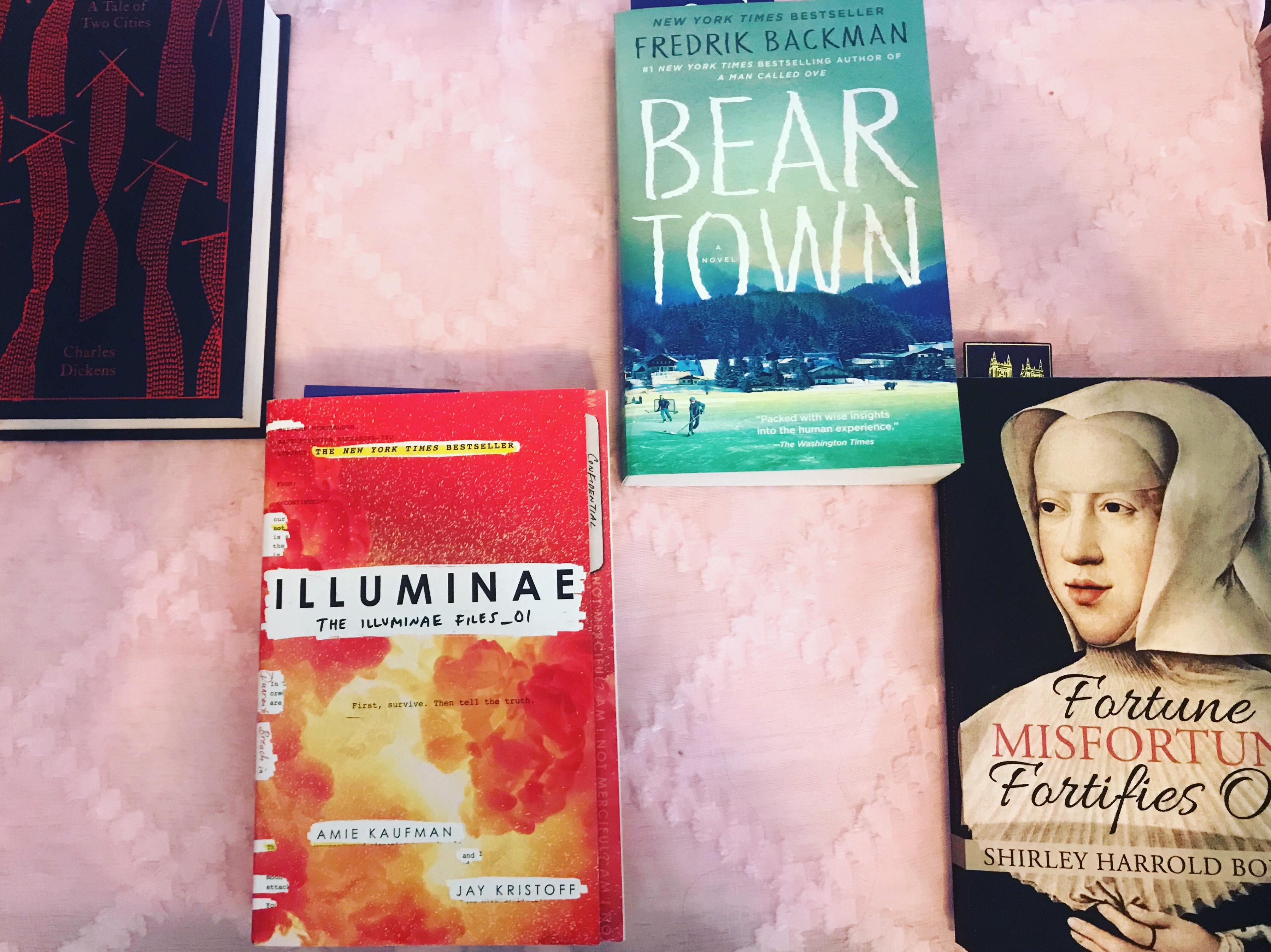
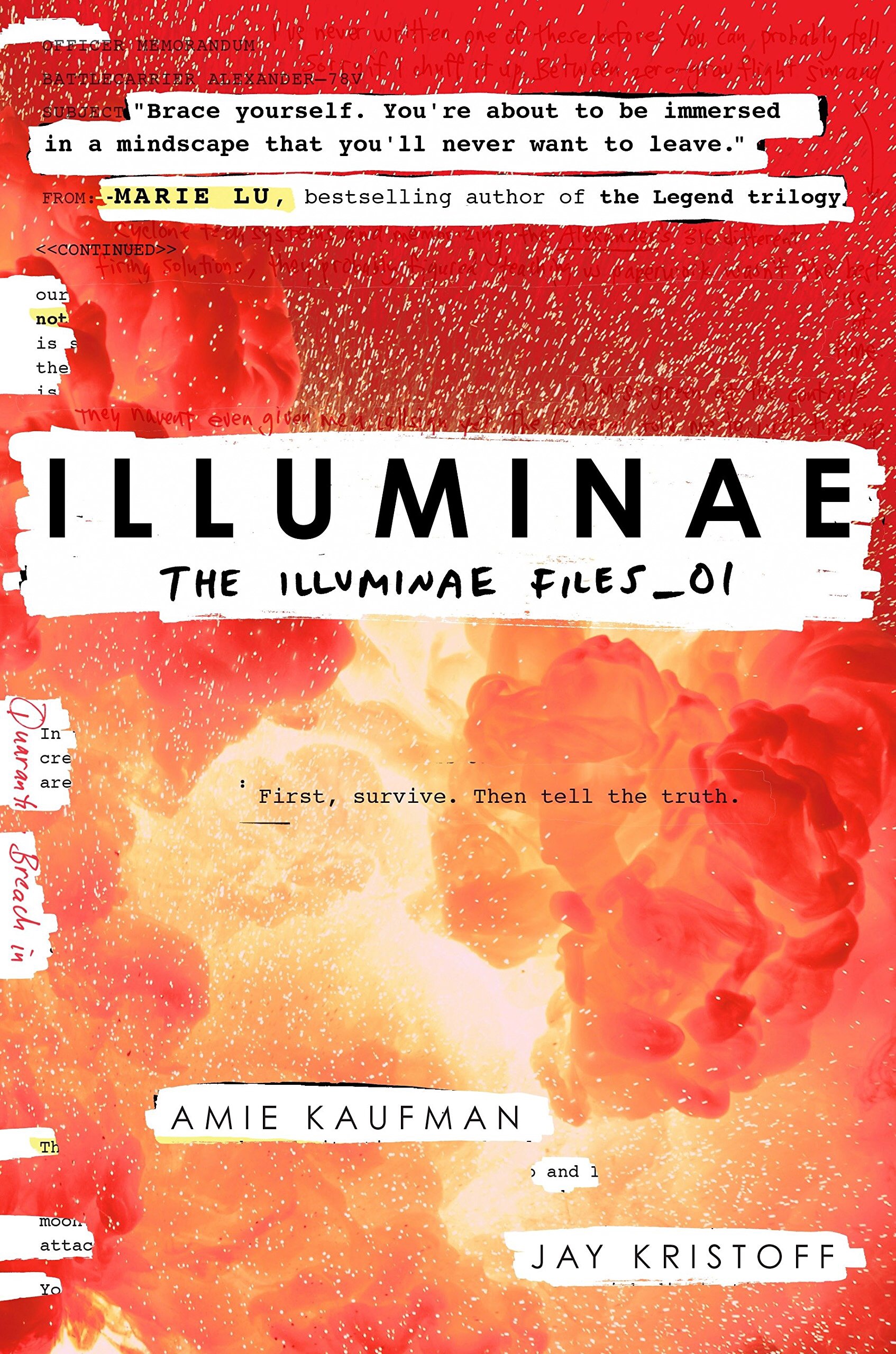
The first book I plan to read this month is a booktube favorite, the first book in the Illuminae Files trilogy, written by popular authors Amie Kaufman and Jay Kristoff. This book is written in a multimedia format and I’ve been told the audiobook format is the route to take as you follow along.

This story takes place in the unimaginable year of 2575, following two main characters, Kady and Ezra. They were once lovers but the relationship did not seem to work out for the pair. Their planet gets taken over by an enemy civilization, they both have to find their way to an evacuation craft. An enemy ship tails at them, willing to end it all at any second. That is a worry until a plague breaks out among the evacuees. Kady has to get to the bottom of how it all started, the artificial intelligence is supposed to be protecting them from such things. She has to try to break into the system but it is almost impossible to hack through all the codes and files of data. There is one person who can help her and that is no other than Ezra.

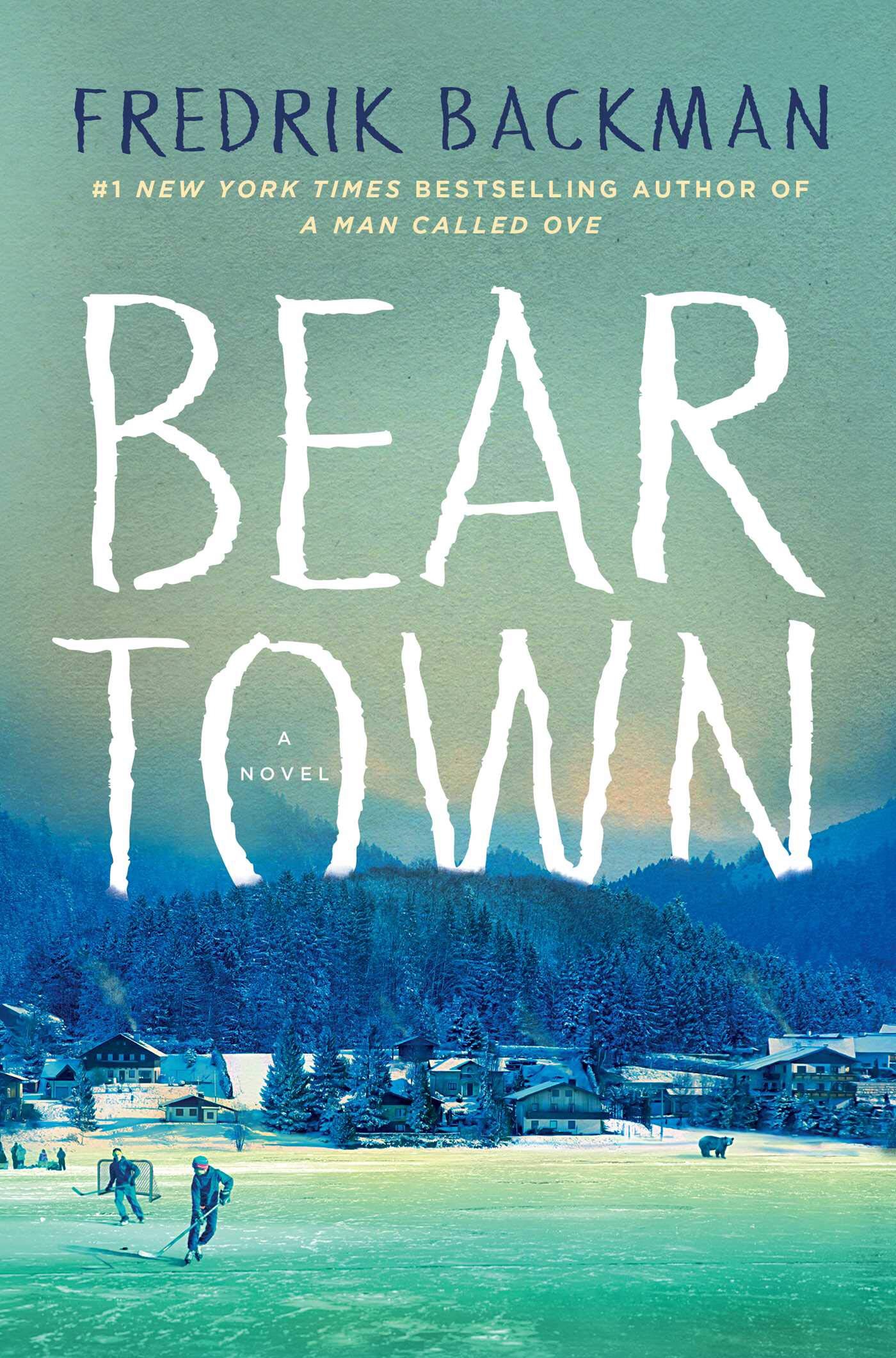
Beartown is a work of fiction that is translated from Swedish. It is also one of the longest time books on my TBR, it has been on my shelves for at least two years and I am so ready to get to it!

A small village nestled by a forest, that’s what Beartown is. Everything revolves around the ice rink that was built years ago by the town’s founders. Their local team is making its way into the national hockey playoffs. If the team of teenagers could win, that would wake up this sleepy town again. A violent incident comes upon a young girl, that could change everything for the town. Tempers are flying with fingers being pointed, all the hopes and dreams of Beartown could come crashing down.

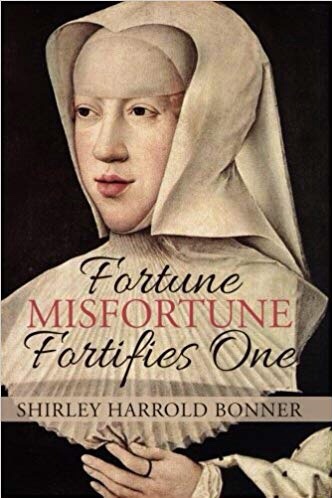
I found out about this nonfiction book from Claire Ridgeway on YouTube! If you are fascinated by Tudor England, I highly recommend checking out her channel. She has written several books on English history as well.

Margaret of Austria played and important role in Middle Ages Europe. She was an influence to one of the most notorious consorts in English history. Margaret was well educated and spent her youth in various courts across Europe. She was regent of the Low Countries and cared greatly for the arts and humanities. Margaret showed what it was like to be a strong ruler.

February TBR Video

ExploreAThon

October 2019 Wrap Up

DF1F3A6B-301B-44B8-969E-B4EDDF678E53.JPG

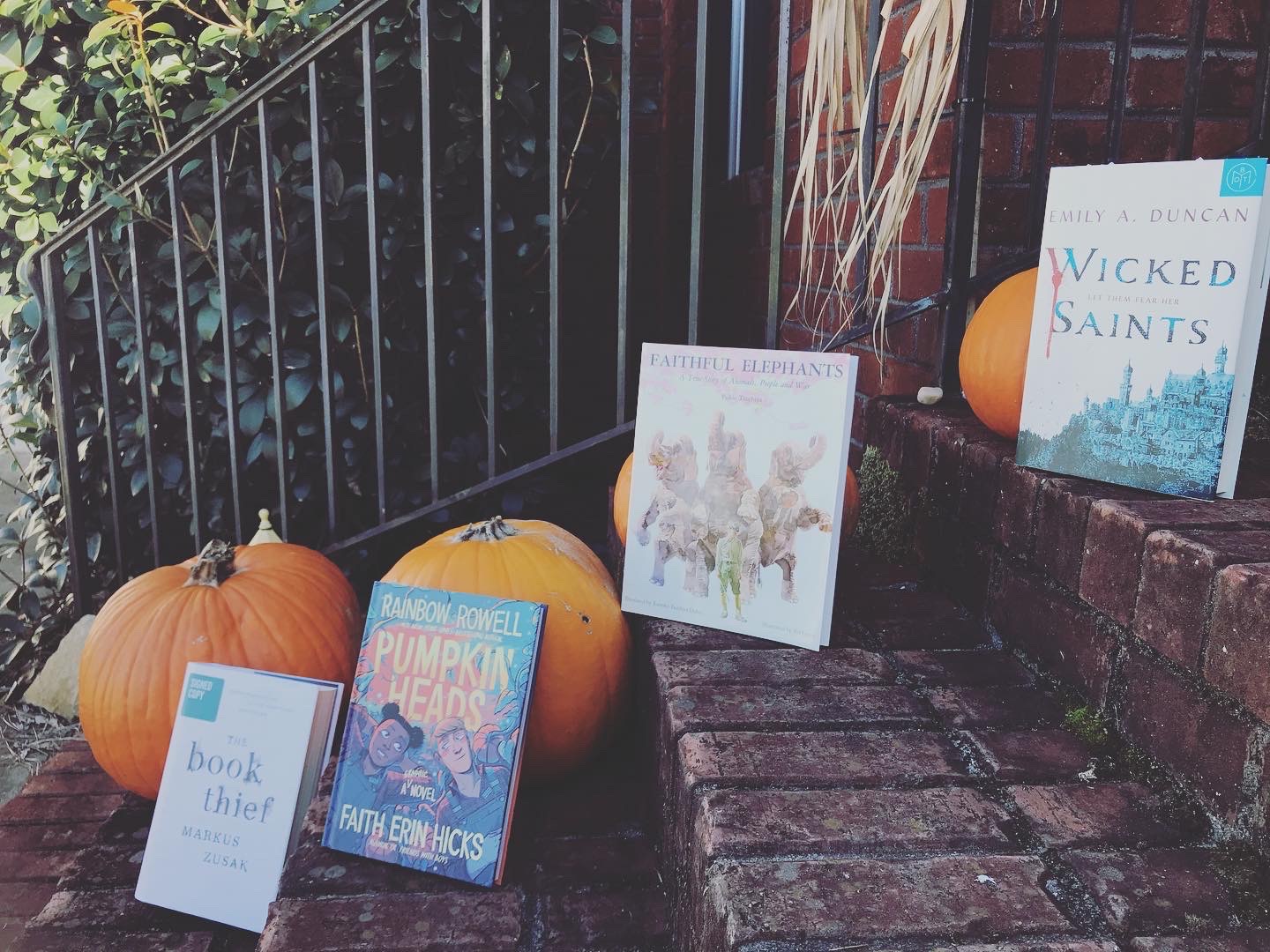
In October, I finished four books. That adds up to 1,357 pages. I don’t give rankings to graphic novels or children’s books, so overall the ratings I gave these books made it be a very good book month!

  • The Book Thief by Markus Zusak 4/5 stars
  • Wicked Saints by Emily A. Duncan 4/5 stars

I also took part in the Witch-a-thon on book tube. The challenges I completed and which books I used will be listed down below.

  1. Pick a book that features your heritage: The Book Thief as I am 30.9% German.

4.  Pick a book that involves a pantheon of deities: Wicked Saints as our main character can communicate with the gods.

October TBR

All the Books I Read in October